Mercado e Títulos de Renda Fixa e de Renda Variável (Coursera)

Offered by FIA Business School,
Mercado e Títulos de Renda Fixa e de Renda Variável (Coursera)

Nossas boas-vindas ao Curso Mercado e Títulos de Renda Fixa e de Renda Variável. Neste curso, você aprenderá sobre mercado de renda fixa, mercado de renda variável e derivativos, análise crítica dos fatos e acontecimentos econômicos e suas relações com o mercado financeiro e a gestão empresarial. Também serão abordadas as características gerais dos ativos financeiros negociados no Brasil.

Class Deals by MOOC List - Click here and see Coursera's Active Discounts, Deals, and Promo Codes.

Ao final deste curso, você será capaz de

  • Identificar os principais conceitos e características de instrumentos de renda fixa;
  • Reconhecer os títulos públicos e privados;
  • Identificar os principais conceitos e características de instrumentos de renda variável;
  • Identificar os principais conceitos e características de instrumentos de derivativos.

Este curso é composto por quatro módulos, disponibilizados em semanas de aprendizagem. Cada módulo é composto por vídeos, leituras e testes de verificação de aprendizagem. Ao final de cada módulo, temos uma avaliação de verificação dos conhecimentos.
Estamos muito felizes com sua presença neste curso e esperamos que você tire o máximo de proveito dos conceitos aqui apresentados.
Bons estudos!
Course 2 of 4 in the Mercado de Capitais Specialization

Syllabus

WEEK 1
Instrumentos de Renda Fixa, títulos emitidos pelo Governo Federal
O mercado de renda fixa compreende as operações com títulos emitidos pelo Governo Federal. Existem títulos com característica de Curto e Longo Prazo nessas operações.

WEEK 2
Instrumentos de Renda Fixa, títulos emitidos pelos Instituições Financeiras e por empresas privadas
O mercado de renda fixa compreende as operações com títulos emitidos por instituições financeiras e empresas privadas, principalmente sociedades de capital, como S.A (Sociedade Anônima).

WEEK 3
Principais Conceitos e Características de Instrumentos de Renda Variável
Veremos os dois lados deste mercado: (i) o lado da emissão de ações e suas características com foco na relação entre a empresa, o acionista controlador e os acionistas minoritários; e (ii) o lado da transação das ações, onde veremos alguns conceitos de apreçamento de ações e o papel da bolsa de valores.

WEEK 4
Principais Conceitos e Características de Instrumentos de Derivativos
Serão abordados os principais conceitos e informações relacionados ao mercado de Derivativos e seus produtos, além do uso estratégico das principais operações que são realizadas pelos investidores.

Go to Class
MOOC List is learner-supported. When you buy through links on our site, we may earn an affiliate commission.

Related Courses

Why Business? What is the Role of Business in a Just and Humane Society (Coursera) Coursera
University of Notre Dame

Why Business? What is the Role of Business in a Just and Humane Society (Coursera)

The course examines the common perceptions of business (both positive and negative) and the role of business in a market economy by first introducing the main elements of a market economy, and then presenting opposing points of view of this economic model.The course encourages reflection upon the possibility that business can be honorable and play a role in a just and humane society.

Oct 19th 2026
4 Weeks
Trading Algorithms (Coursera) Coursera
Indian School of Business - ISB

Trading Algorithms (Coursera)

This course covers two of the seven trading strategies that work in emerging markets. The seven include strategies based on momentum, momentum crashes, price reversal, persistence of earnings, quality of earnings, underlying business growth, behavioral biases and textual analysis of business reports about the company.

Oct 12th 2026
4 Weeks
Issues in Supply Chain Management (Coursera) Coursera
University of Illinois at Urbana-Champaign

Issues in Supply Chain Management (Coursera)

Learners in this course will examine global trade agreements -- including policies, barriers, and regulations -- of agricultural commodities, and discuss implications of world and economic disruptions on the food supply chain. Throughout this course, learners will also discuss issues of sustainability, technology, and the environment as it relates to the supply and distribution of food products.

Oct 12th 2026
5-12 Weeks
Mercados financieros (Coursera) Coursera
Yale University

Mercados financieros (Coursera)

Una síntesis de las ideas, métodos e instituciones que permiten que la sociedad humana pueda gestionar los riesgos y promover la actividad empresarial. Un énfasis en las habilidades de liderazgo con conocimientos financieros profundos. Descripción de las prácticas actuales y el análisis de prospectos a futuro. Introducción a los principios de gestión de riesgos y de las finanzas conductuales para comprender el funcionamiento en el mundo real de las industrias de valores, seguros y el sector bancario.

Oct 12th 2026
5-12 Weeks
Sales Training: Sales Team Management (Coursera) Coursera
HubSpot Academy

Sales Training: Sales Team Management (Coursera)

In this course, you will learn how to define your target market, create a scalable sales process, and build training, coaching, hiring, and onboarding programs to help your sales team grow better. Whether you're already managing a sales team, or aspire to manage one at some point in your career, this course will explain what's involved when it comes to setting up a sales process, coaching your team, hiring new team members, and getting those team members up to speed as fast as possible.

Oct 12th 2026
2 Weeks
Pricing Options with Mathematical Models (Coursera) Coursera
Caltech

Pricing Options with Mathematical Models (Coursera)

This is an introductory course on options and other financial derivatives, and their applications to risk management. We will start with defining derivatives and options, continue with discrete-time, binomial tree models, and then develop continuous-time, Brownian Motion models. A basic introduction to Stochastic, Ito Calculus will be given. The benchmark model will be the Black-Scholes-Merton pricing model, but we will also discuss more general models, such as stochastic volatility models.

Sep 29th 2026
5-12 Weeks
Doing Business in Europe (Coursera) Coursera
ESCP Europe

Doing Business in Europe (Coursera)

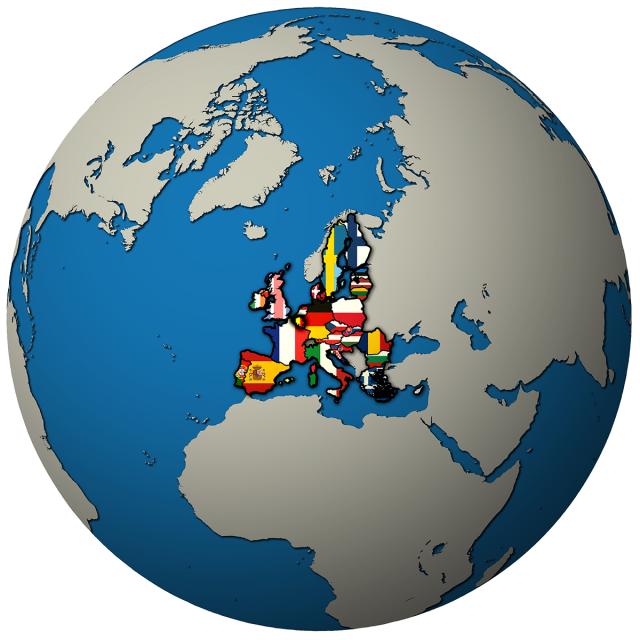
Europe is a major world trade partner as well as a place where to acquire significant business experience. This is the reason why this MOOC has been designed with the view to explaining and guiding you in doing business in Europe. Do you really know Europe? How should you consider and approach the European continent? What business lessons can be drawn in a European perspective?

Oct 19th 2026
5-12 Weeks
Economics of Money and Banking (Coursera) Coursera
Columbia University

Economics of Money and Banking (Coursera)

The last three or four decades have seen a remarkable evolution in the institutions that comprise the modern monetary system. The financial crisis of 2007-2009 is a wakeup call that we need a similar evolution in the analytical apparatus and theories that we use to understand that system. Produced and sponsored by the Institute for New Economic Thinking, this course is an attempt to begin the process of new economic thinking by reviving and updating some forgotten traditions in monetary thought that have become newly relevant.

Oct 26th 2026
13-24 Weeks
Finance for Everyone: Markets (Coursera) Coursera
McMaster University

Finance for Everyone: Markets (Coursera)

Markets begins with one of the most common and important elements of the financial system – interest rates. You will learn why interest rates have always been a key barometer in determining the value of everything. You will explore the changing influence of interest rates; the impact of interest rates on consumption, investment and economic growth; and the bizarre realities of negative interest rates. Markets explains how interest rates change the value of all financial instruments, highlighting the role of the bond and stock markets that have toppled empires

Oct 19th 2026
4 Weeks
The Power of Markets III: Input Markets and Promoting Efficiency (Coursera) Coursera
University of Rochester

The Power of Markets III: Input Markets and Promoting Efficiency (Coursera)

The final module of the Power of Markets course begins by further exploring firm behavior in imperfectly competitive market settings: how firms with monopoly power can increase profits through price discrimination; and the price-output combinations we can expect firms to select in cases of monopolistic competition and oligopoly. We will also analyze monopolies from an efficiency perspective and look at the effects of imperfect information on firm and consumer behavior. We will next turn to exploring input markets and what determines the demand for an input by a firm, an industry, and the overall market.

Oct 26th 2026
4 Weeks
Microeconomics: The Power of Markets (Coursera) Coursera
University of Pennsylvania

Microeconomics: The Power of Markets (Coursera)

We make economics decisions every day: what to buy, whether to work or play, what to study. We respond to markets all the time: prices influence our decisions, markets signal where to put effort, they direct firms to produce certain goods over others. Economics is all around us. This course is an introduction to the microeconomic theory of markets: why we have them, how they work, what they accomplish.

Oct 26th 2026
5-12 Weeks