Maths Puzzles: Cryptarithms, Symbologies and Secret Codes (FutureLearn)

Maths Puzzles: Cryptarithms, Symbologies and Secret Codes (FutureLearn)

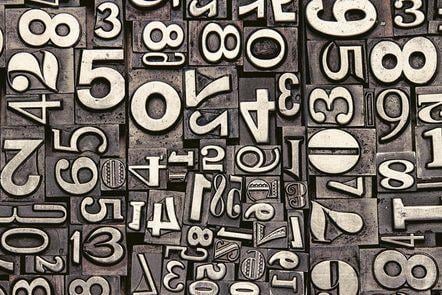
Explore and solve encrypted maths puzzles, in which numbers are replaced by letters or symbols, with this free online course. Discover maths puzzles, explore their history and practise problem-solving techniques. You’ll explore: + Cryptarithms - puzzles where the digits have been replaced by letters. + Symbologies - puzzles where numbers are represented by symbols. + Mathematical operator puzzles - puzzles where the numbers are given, but the mathematical operator is missing (for example, what does the asterisk stand for in *1320=6?).

Class Deals by MOOC List - Click here and see FutureLearn's Active Discounts, Deals, and Promo Codes.

Through the course you will develop problem-solving skills, gain knowledge about the history, art and methodology of encrypted puzzles, and exercise your brain with fun challenges.

What topics will you cover?

  • Encoding maths puzzles, secret codes and symbologies
  • Solving and creating cryptarithms - puzzles where numbers in a mathematical expressions are encoded
  • Genres of cryptarithm including, ancient Hindu problems and alphametics
  • Special and unique cryptarithms, including prime numbers, logarithms, square roots and powers
  • Symbologies from ancient times to modern bar codes
  • The language of computers including, binary, ternary and gray codes
  • Decrypting ancient Egyptian number systems, Roman and Greek numerals
  • Barcode puzzles and how to solve them
  • Different types of operator puzzles including unary, binary and ternary
  • Modern operators including, logic operators, text operators and operators in Excel

What will you achieve?
By the end of the course, you'll be able to...

  • Solve different kinds of cryptarithms and decipher symbologies
  • Synthesise the knowledge gained from all the different steps into a coherent view of the art of information concealment
  • Demonstrate puzzle solving skills
  • Improve problem solving skills and out-of-the-box thinking
  • Collaborate with other learners to solve problems
  • Apply problem solving strategies in new situations

Who is the course for?
The course is designed for anyone who enjoys popular science, recreational maths and solving maths puzzles and crosswords. It will be especially useful for parents or teachers looking to inspire a love of math and do fun math activities with young people.

Go to Class
MOOC List is learner-supported. When you buy through links on our site, we may earn an affiliate commission.

Related Courses

Precalculus: the Mathematics of Numbers, Functions and Equations (FutureLearn) FutureLearn
University of Padova

Precalculus: the Mathematics of Numbers, Functions and Equations (FutureLearn)

Get an introduction to the essential mathematical knowledge and skills required to take a first course in calculus. This course is the first of two precalculus courses from the University of Padova, providing you with an introduction to the fundamental mathematical skills required to complete a first course in calculus.

Sep 14th 2020
5-12 Weeks
World Class Maths: Asian Teaching Practice (FutureLearn) FutureLearn
Macmillan Education

World Class Maths: Asian Teaching Practice (FutureLearn)

Learn how to create lessons plans based on Asian maths teaching methods, and develop your maths teaching practice. Integrate world-class maths teaching methods into your own teaching practice. Get an introduction to Asian maths teaching methods for primary education, with this course from Macmillan Education and University of Southampton.

No sessions available
4 Weeks
Mathematical Foundations for Cryptography (Coursera) Coursera
University of Colorado System

Mathematical Foundations for Cryptography (Coursera)

Welcome to Course 2 of Introduction to Applied Cryptography. In this course, you will be introduced to basic mathematical principles and functions that form the foundation for cryptographic and cryptanalysis methods. These principles and functions will be helpful in understanding symmetric and asymmetric cryptographic methods examined in Course 3 and Course 4. These topics should prove especially useful to you if you are new to cybersecurity. It is recommended that you have a basic knowledge of computer science and basic math skills such as algebra and probability.

Jun 22nd 2026
4 Weeks
Cracking Mechanics: Further Maths for Engineers (FutureLearn) FutureLearn
University of Bristol

Cracking Mechanics: Further Maths for Engineers (FutureLearn)

Practise the maths, learn the physics, and find out how engineers use both to solve real world problems. The aim of this free online course is to introduce you to some of the physics and maths that engineers find useful. The content comprises: parts of A-level maths and further maths (mechanics); the physical laws which this maths is used to model; and examples of how these skills are employed in mechanical, aerospace, civil, environmental, materials and electrical engineering.

No sessions available
5-12 Weeks
Flexagons and the Math Behind Twisted Paper (FutureLearn) FutureLearn
Weizmann Institute of Science

Flexagons and the Math Behind Twisted Paper (FutureLearn)

Learn how to make flexagons - beautiful and unique paper constructions - and explore the math behind them. Discover the unusual math of twisted strips of paper. Flexagons are twisted strips of folded paper, which reveal their properties when flexed. This online course will explain what flexagons are, their history and their naming conventions. You’ll find out how to create your own flexagons and be able to share them with our global community of learners.

Dec 14th 2020
3 Weeks
Mathematics for Computer Science: Essential Skills (FutureLearn) FutureLearn
University of Hull

Mathematics for Computer Science: Essential Skills (FutureLearn)

Strengthen key maths skills needed in computer science, including Venn diagrams, algebra techniques and set theory notation. Gain confidence in mathematics to kickstart your career in computer science. If you are approaching or considering degree-level study in computer science, you may wish to strengthen your understanding of key mathematical techniques.

Available now
3 Weeks
World of Spies: Keeping Secrets (FutureLearn) FutureLearn
Purdue University

World of Spies: Keeping Secrets (FutureLearn)

Get a taste of spy training, and learn how you can keep your secrets safe with a course designed for 13-18 year olds. What does it take to be a spy? Strong critical thinking and communication skills, a firm grasp of logic, and a love of puzzles are all useful. This course will help you develop those abilities while exploring the exciting world of espionage. You’ll learn about code-making and breaking, encryption, logical thinking and more as you find out whether you would make a good spy.

No sessions available
4 Weeks
Matrix Methods (Coursera) Coursera
University of Minnesota

Matrix Methods (Coursera)

Mathematical Matrix Methods lie at the root of most methods of machine learning and data analysis of tabular data. Learn the basics of Matrix Methods, including matrix-matrix multiplication, solving linear equations, orthogonality, and best least squares approximation. Discover the Singular Value Decomposition that plays a fundamental role in dimensionality reduction, Principal Component Analysis, and noise reduction.

Jun 22nd 2026
5-12 Weeks
Algebra: Elementary to Advanced - Functions & Applications (Coursera) Coursera
Johns Hopkins University

Algebra: Elementary to Advanced - Functions & Applications (Coursera)

After completing this course, students will learn how to successfully apply functions to model different data and real world occurrences. This course reviews the concept of a function and then provide multiple examples of common and uncommon types of functions used in a variety of disciplines. Formulas, domains, ranges, graphs, intercepts, and fundamental behavior are all analyzed using both algebraic and analytic techniques. From this core set of functions, new functions are created by arithmetic operations and function composition.

Jun 22nd 2026
3 Weeks
Matrix Algebra for Engineers (Coursera) Coursera
The Hong Kong University of Science and Technology - HKUST

Matrix Algebra for Engineers (Coursera)

This course is all about matrices, and concisely covers the linear algebra that an engineer should know. The mathematics in this course is presented at the level of an advanced high school student, but typically students should take this course after completing a university-level single variable calculus course. There are no derivatives or integrals in this course, but students are expected to have attained a sufficient level of mathematical maturity. Nevertheless, anyone who wants to learn the basics of matrix algebra is welcome to join.

Jun 22nd 2026
4 Weeks