Maths for Humans: Inverse Relations and Power Laws (FutureLearn)

Maths for Humans: Inverse Relations and Power Laws (FutureLearn)

Strengthen your algebra, geometry and thinking skills by learning about fascinating mathematical relations from daily life.

Class Deals by MOOC List - Click here and see FutureLearn's Active Discounts, Deals, and Promo Codes.

What’s the connection between the size of a city and the number of gas stations in it? How would you describe this relationship? How would you try to visualise and understand it?

Study real-world connections using algebra and geometry
In this free online course, we’ll look at a wide spectrum of interesting, and often surprising, mathematical relationships in our everyday world. We’ll be studying inverse relations, which complement direct relationships; power laws that occur in economics, physics and biology; as well as curious applications of the logarithm function. We’ll visualise these real-world interconnections using graph paper and pencil, and also modern graphing software such as GeoGebra and Desmos.
The functions and graphs in this course help us to make predictions, evaluate actions and test theories about population distributions, the frequencies of common words in texts, scaling laws in biology and much more. We’ll even see some applications to detecting fraud!

Explore inverse and power relationships
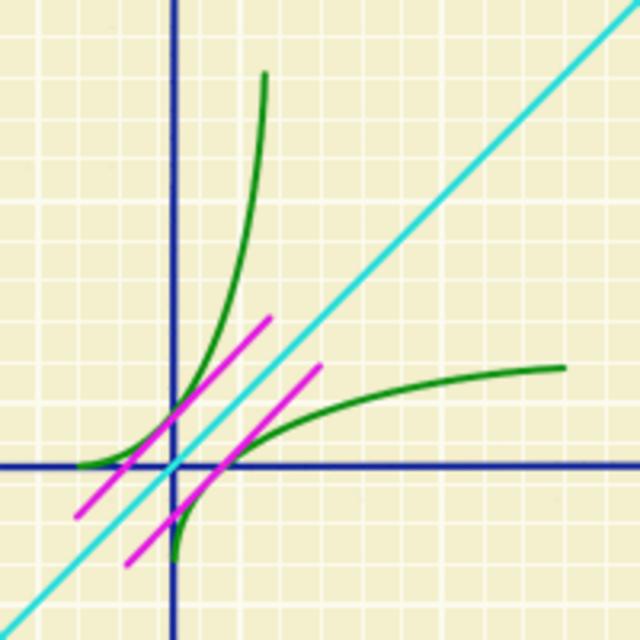
In Week 1 you’ll meet hyperbolas and inverse relations, which are complementary to the direct proportionality that we studied in Maths for Humans: Linear and Quadratic Relations. You’ll learn to represent such relationships algebraically, and understand them geometrically in the Cartesian plane in a direct visual way.
In subsequent weeks, we’ll look at Zipf’s law and Benford’s law, check out applications in engineering and physics, investigate power relations and higher degree polynomials, and explore allometry in biology. You will see the history, look at lots of examples, and get useful insights into: lifespans, whether exercise really is good for you, the distribution of wealth, and the crazy claw of the Fiddler crab. And lots of other juicy applications of advanced high school mathematics.

Gain valuable skills for further study
Understanding basic mathematical relationships is vital to many fields of study: biology, engineering, business, economics, political science and design. By the end of this course, you’ll have hands-on experience with a wide range of explicit examples, be familiar with a core area of pre-calculus mathematics, and be ready to go on to more advanced study of calculus or linear algebra.
Whether you’re encountering these topics for the first time or brushing up on your high school mathematics, we hope you’ll actively join our community on this journey through some fascinating and practical topics that have contributed much to our understanding of the world around us.
Go to Class
MOOC List is learner-supported. When you buy through links on our site, we may earn an affiliate commission.

Related Courses

Flexagons Galore: Advanced Flexagon Fun (FutureLearn) FutureLearn
Weizmann Institute of Science

Flexagons Galore: Advanced Flexagon Fun (FutureLearn)

Learn a systematic approach to making, flexing, and exploring a vast number of flexagons using paper as well as flexagon software. Challenge your maths skills through the magical art of paper folding. Flexagons are twisted strips of folded paper which reveal their properties when flexed. On this course, you’ll learn how to build flexagons ‘bottom-up’ and explore how this approach can significantly increase the number of flexagons that you’re able to build.

Jun 7th 2021
5-12 Weeks
Precalculus: the Mathematics of Numbers, Functions and Equations (FutureLearn) FutureLearn
University of Padova

Precalculus: the Mathematics of Numbers, Functions and Equations (FutureLearn)

Get an introduction to the essential mathematical knowledge and skills required to take a first course in calculus. This course is the first of two precalculus courses from the University of Padova, providing you with an introduction to the fundamental mathematical skills required to complete a first course in calculus.

Sep 14th 2020
5-12 Weeks
Understanding Maths and Logic in Computer Science (FutureLearn) FutureLearn
Raspberry Pi Foundation

Understanding Maths and Logic in Computer Science (FutureLearn)

Improve your understanding and ability to teach maths and logic in computing while building elements of an escape room. Become more familiar with maths and logic in computer science. The mathematical aspects of computer science can be difficult to understand and teach. On this course, you will be introduced to maths and logic in computing in an engaging way.

Nov 1st 2021
3 Weeks
Maths Puzzles: Cryptarithms, Symbologies and Secret Codes (FutureLearn) FutureLearn
Weizmann Institute of Science

Maths Puzzles: Cryptarithms, Symbologies and Secret Codes (FutureLearn)

Explore and solve encrypted maths puzzles, in which numbers are replaced by letters or symbols, with this free online course. Discover maths puzzles, explore their history and practise problem-solving techniques. You’ll explore: + Cryptarithms - puzzles where the digits have been replaced by letters. + Symbologies - puzzles where numbers are represented by symbols. + Mathematical operator puzzles - puzzles where the numbers are given, but the mathematical operator is missing (for example, what does the asterisk stand for in *1320=6?).

Available Now
3 Weeks
Mathematical Foundations for Cryptography (Coursera) Coursera
University of Colorado System

Mathematical Foundations for Cryptography (Coursera)

Welcome to Course 2 of Introduction to Applied Cryptography. In this course, you will be introduced to basic mathematical principles and functions that form the foundation for cryptographic and cryptanalysis methods. These principles and functions will be helpful in understanding symmetric and asymmetric cryptographic methods examined in Course 3 and Course 4. These topics should prove especially useful to you if you are new to cybersecurity. It is recommended that you have a basic knowledge of computer science and basic math skills such as algebra and probability.

Jun 22nd 2026
4 Weeks
Advanced Precalculus: Geometry, Trigonometry and Exponentials (FutureLearn) FutureLearn
University of Padova

Advanced Precalculus: Geometry, Trigonometry and Exponentials (FutureLearn)

Explore advanced precalculus topics and gain the mathematical knowledge and skills required to take a first course in calculus. This course is the second of two precalculus courses from the University of Padova, providing you with the advanced mathematical skills required to complete a first course in calculus.

Available now
4 Weeks
Constructivism and Mathematics, Science, and Technology Education (Coursera) Coursera
University of Illinois at Urbana-Champaign

Constructivism and Mathematics, Science, and Technology Education (Coursera)

This course is designed to help participants examine the implications of constructivism for learning and teaching in science, mathematics, and technology focused areas. Course readings, discussions, and assignments will examine constructivist views of learning, research on students' ideas and idea-based interactions, research on instructional approaches taking student ideas into account, and challenges in implementing constructivist perspectives in instruction.

Jun 22nd 2026
5-12 Weeks
World Class Maths: Asian Teaching Practice (FutureLearn) FutureLearn
Macmillan Education

World Class Maths: Asian Teaching Practice (FutureLearn)

Learn how to create lessons plans based on Asian maths teaching methods, and develop your maths teaching practice. Integrate world-class maths teaching methods into your own teaching practice. Get an introduction to Asian maths teaching methods for primary education, with this course from Macmillan Education and University of Southampton.

No sessions available
4 Weeks
Mathematical Biostatistics Boot Camp 1 (Coursera) Coursera
Johns Hopkins University

Mathematical Biostatistics Boot Camp 1 (Coursera)

This class presents the fundamental probability and statistical concepts used in elementary data analysis. It will be taught at an introductory level for students with junior or senior college-level mathematical training including a working knowledge of calculus. A small amount of linear algebra and programming are useful for the class, but not required.

Jun 22nd 2026
4 Weeks
Data Manipulation at Scale: Systems and Algorithms (Coursera) Coursera
University of Washington

Data Manipulation at Scale: Systems and Algorithms (Coursera)

Data analysis has replaced data acquisition as the bottleneck to evidence-based decision making --- we are drowning in it. Extracting knowledge from large, heterogeneous, and noisy datasets requires not only powerful computing resources, but the programming abstractions to use them effectively. The abstractions that emerged in the last decade blend ideas from parallel databases, distributed systems, and programming languages to create a new class of scalable data analytics platforms that form the foundation for data science at realistic scales.

Jun 22nd 2026
4 Weeks