Machine Learning: Unsupervised Learning (Udacity)

Machine Learning: Unsupervised Learning (Udacity)

Conversations on Analyzing Data. Ever wonder how Netflix can predict what movies you'll like? Or how Amazon knows what you want to buy before you do? The answer can be found in Unsupervised Learning! Closely related to pattern recognition, Unsupervised Learning is about analyzing data and looking for patterns. It is an extremely powerful tool for identifying structure in data. This course focuses on how you can use Unsupervised Learning approaches -- including randomized optimization, clustering, and feature selection and transformation -- to find structure in unlabeled data.

Class Deals by MOOC List - Click here and see Udacity's Active Discounts, Deals, and Promo Codes.

Series Information: Machine Learning is a graduate-level series of 3 courses, covering the area of Artificial Intelligence concerned with computer programs that modify and improve their performance through experiences.
The entire series is taught as an engaging dialogue between two eminent Machine Learning professors and friends: Professor Charles Isbell (Georgia Tech) and Professor Michael Littman (Brown University).

What You Will Learn

Lesson 1
Randomized optimization

  • Optimization
  • randomized
  • Hill climbing
  • Random restart hill climbing
  • Simulated annealing
  • Annealing algorithm
  • Properties of simulated annealing
  • Genetic algorithms
  • GA skeleton
  • Crossover example
  • What have we learned
  • MIMIC
  • MIMIC: A probability model
  • MIMIC: Pseudo code
  • MIMIC: Estimating distributions

-Finding dependency trees

  • Probability distribution

Lesson 2
Clustering

  • Clustering and expectation maximization
  • Basic clustering problem
  • Single linkage clustering (SLC)
  • Running time of SLC
  • Issues with SLC
  • K-means clustering
  • K-means in Euclidean space
  • K-means as optimization
  • Soft clustering
  • Maximum likelihood Gaussian
  • Expectation Maximization (EM)
  • Impossibility theorem

Lesson 3
Feature Selection

  • Algorithms
  • Filtering and Wrapping
  • Speed
  • Searching
  • Relevance
  • Relevance vs. Usefulness

Lesson 4
Feature Transformation

  • Feature Transformation
  • Words like Tesla
  • Principal Components Analysis
  • Independent Components Analysis
  • Cocktail Party Problem
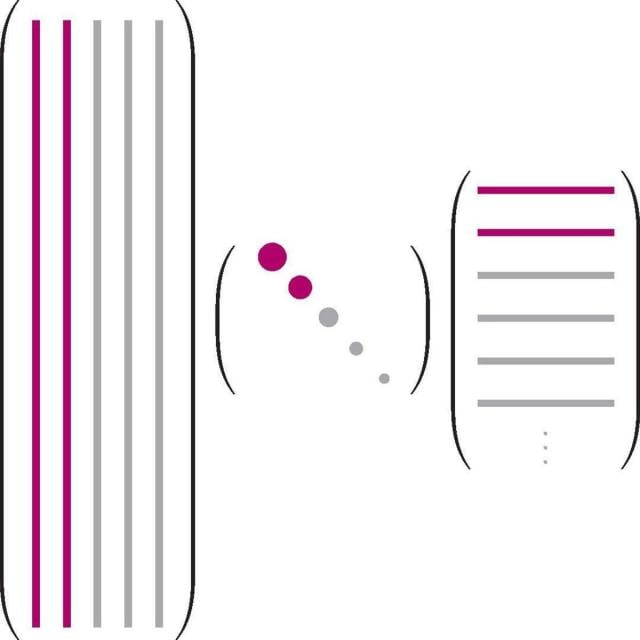
  • Matrix
  • Alternatives

Lesson 5
Information Theory

  • History -Sending a Message
  • Expected size of the message

-Information between two variables

  • Mutual information
  • Two Independent Coins
  • Two Dependent Coins
  • Kullback Leibler Divergence

Lesson 6
Unsupervised Learning Project

Prerequisites and Requirements
This class will assume that you have programming experience as you will be expected to work with python libraries such as numpy and scikit. A good grasp of probability and statistics is also required. Udacity's Intro to Statistics, especially Lessons 8, 9 and 10, may be a useful refresher. An introductory course like Udacity'sIntroduction to Artificial Intelligence also provides a helpful background for this course.

Why Take This Course
You will learn about and practice a variety of Unsupervised Learning approaches, including: randomized optimization, clustering, feature selection and transformation, and information theory.
You will learn important Machine Learning methods, techniques and best practices, and will gain experience implementing them in this course through a hands-on final project in which you will be designing a movie recommendation system (just like Netflix!).

Go to Class
MOOC List is learner-supported. When you buy through links on our site, we may earn an affiliate commission.

Related Courses

Introduction to Generative AI with Google Cloud (Udacity) Udacity
Udacity,Google Cloud

Introduction to Generative AI with Google Cloud (Udacity)

Learn what Generative AI is, how it is used, and how it differs from traditional machine learning methods. This is an introductory level course aimed at explaining what Generative AI is, how it is used, and how it differs from traditional machine learning methods. It also covers Google Tools to help you develop your own Gen AI apps. This course is estimated to take less than an hour to complete.

Self Paced
Self-Paced
Spark (Udacity) Udacity
Udacity,Insight

Spark (Udacity)

Master how to work with big data and build machine learning models at scale using Spark! In this course, you’ll learn how to use Spark to work with big data and build machine learning models at scale, including how to wrangle and model massive datasets with PySpark, the Python library for interacting with Spark. In the first lesson, you will learn about big data and how Spark fits into the big data ecosystem. In lesson two, you will be practicing processing and cleaning datasets to get comfortable with Spark’s SQL and dataframe APIs. In the third lesson, you will debug and optimize your Spark code when running on a cluster. In lesson four, you will use Spark’s Machine Learning Library to train machine learning models at scale.

Self Paced
Self-Paced
Machine Learning: Regression (Coursera) Coursera
University of Washington

Machine Learning: Regression (Coursera)

Case Study - Predicting Housing Prices. In our first case study, predicting house prices, you will create models that predict a continuous value (price) from input features (square footage, number of bedrooms and bathrooms,...). This is just one of the many places where regression can be applied. Other applications range from predicting health outcomes in medicine, stock prices in finance, and power usage in high-performance computing, to analyzing which regulators are important for gene expression.

Jun 22nd 2026
5-12 Weeks
Practical Predictive Analytics: Models and Methods (Coursera) Coursera
University of Washington

Practical Predictive Analytics: Models and Methods (Coursera)

Statistical experiment design and analytics are at the heart of data science. In this course you will design statistical experiments and analyze the results using modern methods. You will also explore the common pitfalls in interpreting statistical arguments, especially those associated with big data. Collectively, this course will help you internalize a core set of practical and effective machine learning methods and concepts, and apply them to solve some real world problems.

Jun 22nd 2026
4 Weeks
AWS DeepRacer (Udacity) Udacity
Udacity,AWS

AWS DeepRacer (Udacity)

Learn the fundamentals of machine learning and reinforcement learning in a fun and engaging way through autonomous driving with AWS DeepRacer. This course will prepare you to create, train, and fine-tune reinforcement learning models in the AWS DeepRacer 3D racing simulator. You will be able to utilize the car's tech specs, assembly, and calibration to train and deploy your racing model using AWS in both simulated and real-world tracks.

Self Paced
Self-Paced
Machine Learning Foundations: A Case Study Approach (Coursera) Coursera
University of Washington

Machine Learning Foundations: A Case Study Approach (Coursera)

Do you have data and wonder what it can tell you? Do you need a deeper understanding of the core ways in which machine learning can improve your business? Do you want to be able to converse with specialists about anything from regression and classification to deep learning and recommender systems? In this course, you will get hands-on experience with machine learning from a series of practical case-studies.

Jun 22nd 2026
5-12 Weeks
Intro to Artificial Intelligence (Udacity) Udacity
Udacity

Intro to Artificial Intelligence (Udacity)

This course will introduce you to the basics of AI. Topics include machine learning, probabilistic reasoning, robotics, computer vision, and natural language processing. Artificial Intelligence (AI) is a field that has a long history but is still constantly and actively growing and changing. In this course, you’ll learn the basics of modern AI as well as some of the representative applications of AI.

Self Paced
Self-Paced
Introduction to Machine Learning using Microsoft Azure (Udacity) Udacity
Udacity,Microsoft Azure

Introduction to Machine Learning using Microsoft Azure (Udacity)

Gain a high-level introduction to the field of machine learning and prepare to use Azure Machine Learning Studio to train machine learning models. Plus, learn how to perform a variety of tasks on Azure Machine Learning labs — from data import, transformation and management to training, validating and evaluating models. Access to the Azure Machine Learning Labs will close after a predetermined number of students have completed the course.

Self Paced
Self-Paced
Introduction to Machine Learning (Coursera) Coursera
Duke University

Introduction to Machine Learning (Coursera)

This course will provide you a foundational understanding of machine learning models (logistic regression, multilayer perceptrons, convolutional neural networks, natural language processing, etc.) as well as demonstrate how these models can solve complex problems in a variety of industries, from medical diagnostics to image recognition to text prediction.

Jun 26th 2026
5-12 Weeks
Text Retrieval and Search Engines (Coursera) Coursera
University of Illinois at Urbana-Champaign

Text Retrieval and Search Engines (Coursera)

Recent years have seen a dramatic growth of natural language text data, including web pages, news articles, scientific literature, emails, enterprise documents, and social media such as blog articles, forum posts, product reviews, and tweets. Text data are unique in that they are usually generated directly by humans rather than a computer system or sensors, and are thus especially valuable for discovering knowledge about people’s opinions and preferences, in addition to many other kinds of knowledge that we encode in text.

Jun 22nd 2026
5-12 Weeks