Logistic Regression and Prediction for Health Data (Coursera)

Logistic Regression and Prediction for Health Data (Coursera)

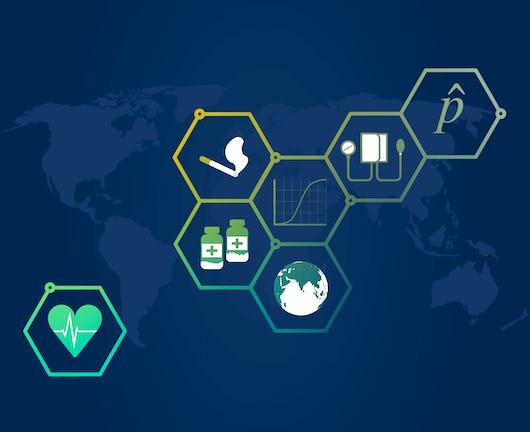
This course introduces learners to the analysis of binary/dichotomous outcomes. Learners will become familiar with fundamental tests for two-group comparisons and statistical inference plus prediction more broadly using logistic regression. They will understand the connection between prevalence, risk ratios, and odds ratios. By the end of this course, learners will be able to understand how binary outcomes arise, how to use R to compare proportions between two groups, how to fit logistic regressions in R, how to make predictions using logistic regression, and how to assess the quality of these predictions.

Class Deals by MOOC List - Click here and see Coursera's Active Discounts, Deals, and Promo Codes.

All concepts taught in this course will be covered with multiple modalities: slide-based lectures, guided coding practice with the instructor, and independent but structured exercises.
This course is part of the Data Science for Health Research Specialization.

What you'll learn

  • Understand how binary outcomes arise and know the difference between prevalence, risk ratios, and odds ratios
  • Use logistic regression to estimate and interpret the association between one or more predictors and a binary outcome
  • Understand the principles for using logistic regression to make predictions and assessing the quality of those predictions

Syllabus

Simple Comparisons of Binary Outcomes
Module 1
This module introduces you to binary outcomes, including how they arise, how to calculate proportions, and how to compare proportions between two groups.

Introducing Logistic Regression
Module 2
In this module, you will be introduced to the ubiquitous logistic regression, one of the most common tools for measuring the association between one or more predictors and a binary outcome.

Assessing the Predictive Accuracy of Logistic Regression Models
Module 3
This module introduces you to tools for assessing the quality of a fitted logistic regression model.


Go to Class
MOOC List is learner-supported. When you buy through links on our site, we may earn an affiliate commission.

Related Courses

Gender Foundations in Health Data: A Data for Health Course (Coursera) Coursera
Johns Hopkins University

Gender Foundations in Health Data: A Data for Health Course (Coursera)

Welcome to Gender Foundations in Health Data: A Data for Health course. This course was developed from an online seminar series of the same name, that was hosted by Johns Hopkins University Bloomberg School of Health in 2021-22. The course instructors are Drs. Michelle Kaufman and Tahilin Sanchez Karver. This course will raise learners' awareness of the necessity of utilizing a gender lens in global public health data, policy, and practice, feature how-tos and key examples of integration of gender in data collection, analysis, and use from Data for Health partners.

Jun 8th 2026
1 Week
Prediction and Control with Function Approximation (Coursera) Coursera
University of Alberta,Alberta Machine Intelligence Institute

Prediction and Control with Function Approximation (Coursera)

In this course, you will learn how to solve problems with large, high-dimensional, and potentially infinite state spaces. You will see that estimating value functions can be cast as a supervised learning problem---function approximation---allowing you to build agents that carefully balance generalization and discrimination in order to maximize reward.

Jun 15th 2026
4 Weeks
Analysis and Interpretation of Data (Coursera) Coursera
Queen Mary University of London

Analysis and Interpretation of Data (Coursera)

This course focuses on the analysis and interpretation of data. The focus will be placed on data preparation and description and quantitative and qualitative data analysis. The course commences with a discussion of data preparation, scale internal consistency, appropriate data analysis and the Pearson correlation.

Jun 8th 2026
4 Weeks
Logistic Regression in R for Public Health (Coursera) Coursera
Imperial College London

Logistic Regression in R for Public Health (Coursera)

Why logistic regression for public health rather than just logistic regression? Well, there are some particular considerations for every data set, and public health data sets have particular features that need special attention. In a word, they're messy. Like the others in the series, this is a hands-on course, giving you plenty of practice with R on real-life, messy data, with predicting who has diabetes from a set of patient characteristics as the worked example for this course.

Jun 15th 2026
4 Weeks
Multiple Regression Analysis in Public Health (Coursera) Coursera
Johns Hopkins University

Multiple Regression Analysis in Public Health (Coursera)

Biostatistics is the application of statistical reasoning to the life sciences, and it's the key to unlocking the data gathered by researchers and the evidence presented in the scientific public health literature. In this course, you'll extend simple regression to the prediction of a single outcome of interest on the basis of multiple variables.

Jun 15th 2026
4 Weeks
Variable Selection, Model Validation, Nonlinear Regression (Coursera) Coursera
Illinois Tech

Variable Selection, Model Validation, Nonlinear Regression (Coursera)

If you have a technical background in mathematics/statistics/computer science/engineering and or are pursuing a career change to jobs or industries that are data-driven, this course is for you. Those industries might be finance, retail, tech, healthcare, government, or many others. The opportunity is endless.

Jun 8th 2026
4 Weeks
Using clinical health data for better healthcare (Coursera) Coursera
The University of Sydney

Using clinical health data for better healthcare (Coursera)

Digital health is rapidly being realised as the future of healthcare. While this is placing emphasis on the input of quality health data in digital records and systems, the delivery of safe and quality healthcare relies not only on the input of data, but also the ability to access and derive meaning from data to generate evidence, inform decision making and drive better health outcomes.

Jun 15th 2026
4 Weeks
Predictive Modeling with Logistic Regression using SAS (Coursera) Coursera
SAS

Predictive Modeling with Logistic Regression using SAS (Coursera)

This course covers predictive modeling using SAS/STAT software with emphasis on the LOGISTIC procedure. This course also discusses selecting variables and interactions, recoding categorical variables based on the smooth weight of evidence, assessing models, treating missing values, and using efficiency techniques for massive data sets. You learn to use logistic regression to model an individual's behavior as a function of known inputs, create effect plots and odds ratio plots, handle missing data values, and tackle multicollinearity in your predictors. You also learn to assess model performance and compare models.

Jun 8th 2026
5-12 Weeks
Foundations of Machine Learning (Coursera) Coursera
Fractal Analytics

Foundations of Machine Learning (Coursera)

In a world where data-driven insights are reshaping industries, mastering the foundations of machine learning is a valuable skill that opens doors to innovation and informed decision-making. In this comprehensive course, you will be guided through the core concepts and practical aspects of machine learning. Complex algorithms and techniques will be demystified and broken down into digestible knowledge, empowering you to wield the capabilities of machine learning confidently.

Jun 8th 2026
5-12 Weeks