Knowledge Engineering with Semantic Web Technologies (openHPI)

Knowledge Engineering with Semantic Web Technologies (openHPI)

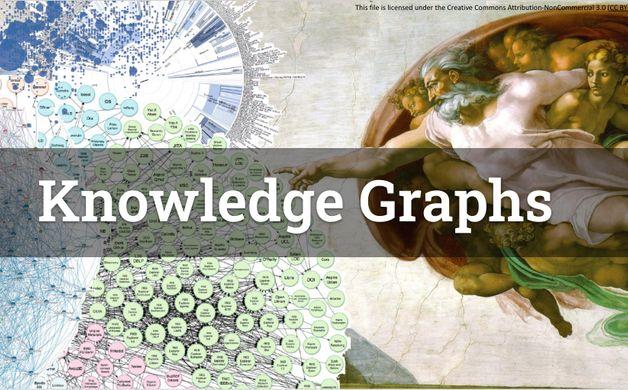
The knowledge contained in the World Wide Web is available in interlinked documents written in natural language. To make use of this knowledge, technologies such as natural language processing, information retrieval, data and knowledge mining must be applied. Semantic Web technologies follow an alternative approach by complementing web documents with explicit semantics based on formal knowledge representations, such as e.g. ontologies. In this course, you will learn the fundamentals of Semantic Web technologies and how they are applied for knowledge representation in the World Wide Web. You will learn how to represent knowledge with ontologies and how to access and benefit from semantic data on the Web. Furthermore, you will also learn how to make use of Linked Data and the Web of Data, currently the most popular applications based on Semantic Web technologies.

The Web has become an object of our daily life and the amount of information in the web is ever growing. Besides plain texts, especially multimedia information such as graphics, audio or video have become a predominant part of the web's information traffic. But, how can we find useful information within this huge information space? How can we make use of the knowledge contained in those web documents? Traditional search engines for example will reach the limits of their power, when it comes to understanding information content. The Semantic Web is an extension of the traditional web in the sense that information in the form of natural language text in the web will be complemented by its explicit semantics based on a formal knowledge representation. Thus, the meaning of information expressed in natural language can be accessed in an automated way and interpreted correctly, i.e. it can be ‘understood’ by machines.
Semantic Web technologies enable the explicit representation of knowledge and its further processing to deduce new knowledge from implicitly hidden knowledge. Thus, information access and information search will be more precise and more complete compared to today's traditional information retrieval technology. Previously heterogeneous data can be mapped and combined based on common knowledge representation and schemata easily extended in a dynamic way.
In this course, you will learn the fundamentals of Semantic Web technologies and how they are applied for knowledge representation in the World Wide Web. You will learn how to represent knowledge with ontologies and how to access and benefit from semantic data on the Web. Furthermore, you will also learn how to make use of Linked Data and the Web of Data, currently the most popular applications based on Semantic Web technologies.
Requirements for this course:

  • a basic knowledge of the foundations of mathematical logics, i.e. propositional logics and first order logics
  • a basic understanding of web technologies, such as URL, http, HTML, and XML-based technologies
  • a basic knowledge of database technology, esp. relational databases
  • and SQL query language.
Go to Class
MOOC List is learner-supported. When you buy through links on our site, we may earn an affiliate commission.

Related Courses

Zum Web-Experten in 3 Schritten - Prüfung (openHPI) OpenHPI
Hasso-Plattner-Institut

Zum Web-Experten in 3 Schritten - Prüfung (openHPI)

In diesem Prüfungskurs können Sie Ihr Wissen zum Thema Webtechnologien unter Beweis stellen. Die Fragen umfassen sowohl Basiswissen zum World Wide Web als auch Fragen zu bekannten Web-Anwendungen wie der Google Suche oder Online-Zahlungsmechanismen. Darüber hinaus gibt es einen praktischen Prüfungsteil (Peer Assessment), in dem Sie Ihre Fähigkeiten in der Web-Programmierung zeigen können. Wir wünschen Ihnen schon jetzt viel Erfolg!

Oct 20th 2021
3 Weeks
Digitalisation in the Aerospace Industry (Coursera) Coursera
Technische Universität München - TUM

Digitalisation in the Aerospace Industry (Coursera)

The online course Digitalisation in Aerospace aims at making you aware of special production requirements connected with digitalisation. You will learn about the role of robotics and automation in manufacturing and gain a better understanding of differing perspectives on research and manufacturing as well as the points where these intersect.

Jun 29th 2026
3 Weeks
Introduction to solar cells (Coursera) Coursera
Technical University of Denmark - DTU

Introduction to solar cells (Coursera)

How do solar cells work, why do we need, and how can we measure their efficiency? These are just some of the questions Introduction to solar cells tackles. Whether you are looking for general insight in this green technology or your ambition is to pursue a career in solar, “Introduction to Solar Cells” is an excellent starting point. The course is a tour through the fundamental disciplines including solar cell history, why we need solar energy, how solar cells produce power, and how they work. During the course we cover mono- and multi-crystalline solar cells, thin film solar cells, and new emerging technologies.

Jun 29th 2026
5-12 Weeks
Wie das Web technisch funktioniert (openHPI) OpenHPI
Hasso-Plattner-Institut

Wie das Web technisch funktioniert (openHPI)

Das World Wide Web (kurz WWW) hat unser Zusammenleben revolutioniert. Viele Menschen nutzen den Begriff, der die wohl wichtigste Anwendung im Internet beschreibt, sogar synonym für Internet – so fest ist es in unserem Sprachgebrauch inzwischen verankert. Werfen Sie mit uns in diesem Kurs einen Blick hinter die Kulissen der Webtechnologie! Lernen Sie mehr darüber, wie das Web technisch funktioniert.

Self Paced
Self-Paced
Introduction to Engineering Mechanics (Coursera) Coursera
Georgia Institute of Technology

Introduction to Engineering Mechanics (Coursera)

This course is an introduction to learning and applying the principles required to solve engineering mechanics problems. Concepts will be applied in this course from previous courses you have taken in basic math and physics. The course addresses the modeling and analysis of static equilibrium problems with an emphasis on real world engineering applications and problem solving.

Jun 29th 2026
5-12 Weeks
Capstone Project: Teaching Impacts of Technology (Coursera) Coursera
University of California, San Diego

Capstone Project: Teaching Impacts of Technology (Coursera)

In this project-based course you’ll review the Advanced Placement Computer Science Principles course and exam description guide to prepare for the “Explore Task”, where students must research a recent computing innovation and and analyze its impacts on the world. You’ll also review the description of this task from the student perspective and complete the task yourself. Then you’ll assess sample secondary student work by following the APCSP scoring guidelines as well as provide feedback to a fellow learner on their submitted task and receive the same from fellow learners.

Jul 1st 2026
5-12 Weeks
Surviving Disruptive Technologies (On Demand) (Coursera) Coursera
University of Maryland, College Park

Surviving Disruptive Technologies (On Demand) (Coursera)

The purpose of this course is to help individuals and organizations survive when confronted with disruptive technologies that threaten their current way of life. We will look at a general model of survival and use it to analyze companies and industries that have failed or are close to failing. Examples of companies that have not survived include Kodak, a firm over 100 years old, Blockbuster and Borders.

Jun 29th 2026
4 Weeks
Creating a Startup Company (Coursera) Coursera
University of Colorado Boulder

Creating a Startup Company (Coursera)

The course starts by exploring entrepreneurial ecosystems and systems thinking. The Technology Adoption Life Cycle is introduced to help explain market dynamics and support developing business strategy. Market research concepts and tools are presented that learners will apply to their course projects. Founder, key manager, and board member considerations are examined, and the qualities of effective leadership are reviewed. The operational structures and processes of a tech startup are identified, and the Balanced Scorecard is presented as a tool for tracking critical performance metrics. Learners will create a first draft of Product, Market, and Management & Operations Plans for their new product or service ideas.

Jun 29th 2026
5-12 Weeks
Social Computing (Coursera) Coursera
University of California, San Diego

Social Computing (Coursera)

People are social creatures and the modern Internet reflects that. Technology has made collaboration at a distance possible in new ways that present their own set of challenges. This course will introduce you to the major challenges and opportunities for creating online communities. What does the future hold? Learn how social computing can create collaboration experiences that go beyond what’s possible face to face.

Jun 29th 2026
3 Weeks
Logging, Monitoring and Observability in Google Cloud (Coursera) Coursera
Google Cloud

Logging, Monitoring and Observability in Google Cloud (Coursera)

This three-day instructor-led course teaches participants techniques for monitoring, troubleshooting, and improving infrastructure and application performance in Google Cloud. Guided by the principles of Site Reliability Engineering (SRE), and using a combination of presentations, demos, hands-on labs, and real-world case studies, attendees gain experience with full-stack monitoring, real-time log management, and analysis, debugging code in production, tracing application performance bottlenecks, and profiling CPU and memory usage.

Jun 29th 2026
3 Weeks
Sichere Email (openHPI) OpenHPI
Hasso-Plattner-Institut,University of Potsdam

Sichere Email (openHPI)

E-Mail ist eines der wichtigsten Kommunikationsmittel unserer Zeit. Dennoch lässt die Technologie hinsichtlich Sicherheit deutlich zu wünschen übrig. Als E-Mail-Nutzer kann man sich weder sicher sein, dass niemand die Nachrichten mitliest, noch dass diese auch unverändert beim Empfänger ankommen. Um geeignete Sicherheitsmaßnahmen - die sogenannte Ende-zu-Ende-Verschlüsselung sowie digitale Signaturen - muss sich jeder einzelne Nutzer selbst kümmern.

Self Paced
Self-Paced
Teaching Impacts of Technology: Relationships (Coursera) Coursera
University of California, San Diego

Teaching Impacts of Technology: Relationships (Coursera)

In this course you’ll focus on how “smart” devices have changed how we interact with others in personal ways, impacting how we stay connected in our increasingly mobile society. This will be done through a series of paired teaching sections, exploring a specific “Impact of Computing” in your typical day and the “Technologies and Computing Concepts” that enable that impact, all at a K12-appropriate level.

Jul 1st 2026
4 Weeks