Know Thyself - The Value and Limits of Self-Knowledge: The Examined Life (Coursera)

Know Thyself - The Value and Limits of Self-Knowledge: The Examined Life (Coursera)

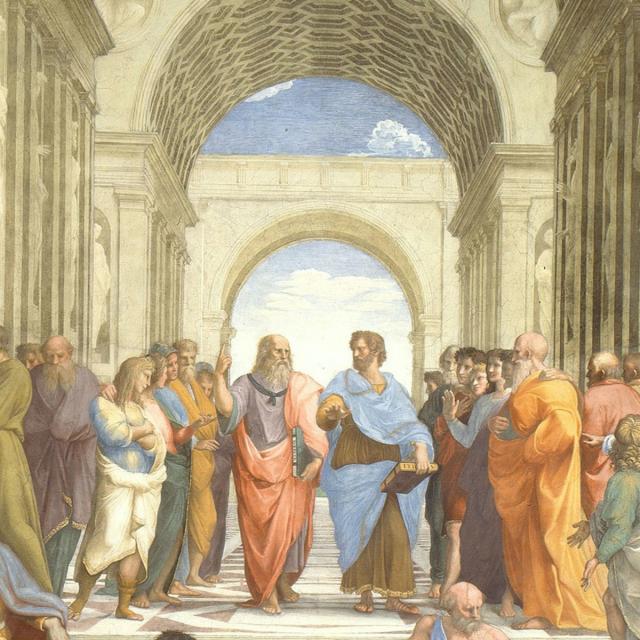
According to legend, inscribed on walls of the temple on the sacred site of Delphi in Ancient Greece were two premier injunctions: NOTHING IN EXCESS, and KNOW THYSELF. This course will be an examination of the latter injunction in an effort to discover what self-knowledge is, why it might be valuable, and what, if any, limitations it might face.

Class Deals by MOOC List - Click here and see Coursera's Active Discounts, Deals, and Promo Codes.

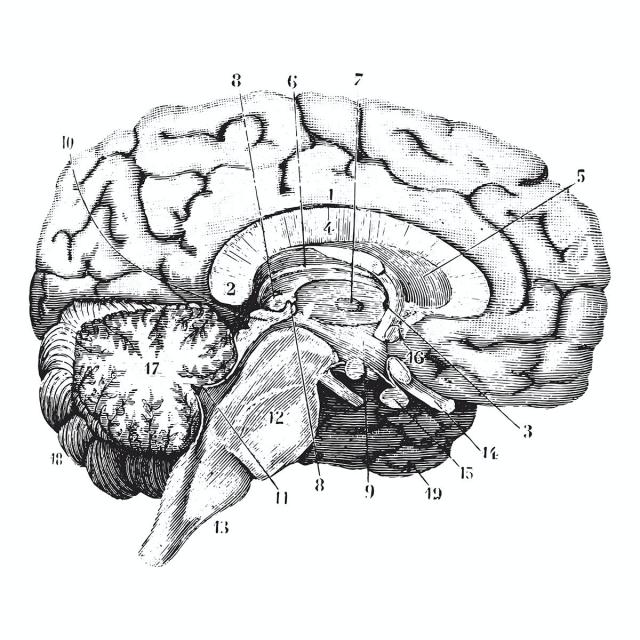
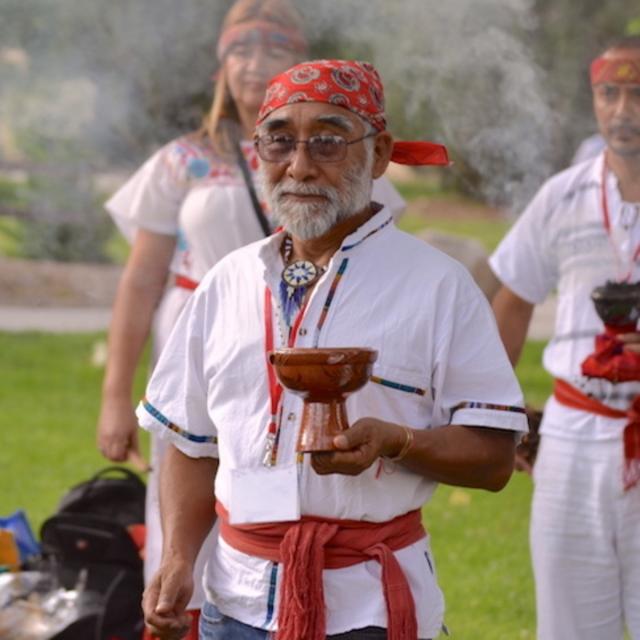
What is missing from a person lacking in self-knowledge that makes her less wise, virtuous, or competent in certain areas than others who have this capacity, and what if anything might she do to fill that gap? Historical sources as well as recent research in philosophy, experimental social psychology, and neuroscience will inform our investigation, in the course of which we will become students of our own dreams, and cultivate some meditative practices.
Learning Outcomes:
Learners will gain familiarity with prominent themes from Western, classical Chinese, and Buddhist approaches to our knowledge of ourselves. In the course of doing so, they will gain an appreciation of the relation of self-knowledge to wisdom, of the value of intellectual humility, as well as of methods of learning about oneself that do not depend on introspection.
Learners will also become familiar with contemporary research in experimental social psychology, philosophy, and neuroscience into the emotions, the unconscious, the role of affect in decision making, and self-deception. They will also gain an appreciation of a challenge to the assumption of a coherent, unified self that derives from the Buddhist tradition.

Syllabus

WEEK 1
Getting started
Socrates and the Examined Life
At his trial, charged with corrupting the Athenian youth, Socrates isn't exactly apologetic. He tells the jury to their faces that they only charged him because they don't like that he forces them to confront uncomfortable truths. Somewhat unsurprisingly, the jury sentences him to death. Socrates accepts the sentence unfazed, famously stating that he'd rather die than stop making people think, as 'an unexamined life is not worth living'. In this module we will examine this dictum and ask: was Socrates right to throw shade on the unexamimed life?

WEEK 2
Descartes' Essence
Are you dreaming right now? How do you know you're not? Rene Descartes set himself a pretty titanic task: to doubt absolutely everything he cannot be certain of - even that the world exists! - and then try to see if we can rebuild our knowledge of ourselves and the world only from what we can be really certain of. In the process, he formulated some provocative thoughts on the radical separation of the mind from the body.

WEEK 3
A re-casting of the Mind/Body problem
Descartes' dualistic picture of the mind-body relation was highly influential for centuries. A vocal minority of thinkers challenged dualism, but only in the Twentieth Century did Gilbert Ryle manage to discern how Descartes' dualistic reasoning went wrong. In understanding Ryle's approach, we will also gain an appreciation of how know-how is a legitimate form of knowledge, and of how one way of gaining self-knowledge is by looking outward rather than looking inward.

WEEK 4
MIND AND SELF: Some Aspects of Human Nature
Is there such a thing as a human nature? And if there is, how can we know what it is? In this module we will look at how the concept of human nature is used and potentially misused, and what can all this tell us about ourselves. And finally: can human nature be changed?
Final assessment

Go to Class
MOOC List is learner-supported. When you buy through links on our site, we may earn an affiliate commission.

Related Courses

Philosophy, Science and Religion: Religion and Science (Coursera) Coursera
University of Edinburgh

Philosophy, Science and Religion: Religion and Science (Coursera)

Philosophy, Science and Religion mark three of the most fundamental modes of thinking about the world and our place in it. Are these modes incompatible? Put another way: is the intellectually responsible thing to do to ‘pick sides’ and identify with one of these approaches at the exclusion of others? Or, are they complementary or mutually supportive? As is typical of questions of such magnitude, the devil is in the details. For example, it is important to work out what is really distinctive about each of these ways of inquiring about the world. In order to gain some clarity here, we’ll be investigating what some of the current leading thinkers in philosophy, science and religion are actually doing.

Jun 16th 2026
5-12 Weeks
Constructores de Paz (Coursera) Coursera
Universidad de los Andes

Constructores de Paz (Coursera)

El curso Constructores Paz surgió como resultado de la preocupación de algunos profesores de la Universidad de los Andes por hacer un aporte al proceso de construcción de paz en nuestro país y en el mundo, a partir de prácticas personales y cotidianas. En este curso tendrás la oportunidad de reflexionar permanentemente acerca de ti mismo, de tus actitudes y de tus comportamientos, y de cómo tu manera de abordar diferentes situaciones de la vida diaria te llevan a construir paz.

Jun 15th 2026
5-12 Weeks
Mindfulness and Well-being: Living with Balance and Ease (Coursera) Coursera
Rice University

Mindfulness and Well-being: Living with Balance and Ease (Coursera)

This is the sequel course to Foundations of Mindfulness that will continue to provide a broad overview of the fundamental concepts, principles, and practices of mindfulness. With interactive exercises to help students explore their own attitudes, mental habits and behaviors, Foundations of Mindfulness series offers a pathway for living with more freedom, authenticity and ease. Featured components of the course include experiential exercises, guided meditations, personal reflection and interactive discussions.

Jun 22nd 2026
4 Weeks
Planning with Climate Change in Mind (Coursera) Coursera
University of Colorado Boulder

Planning with Climate Change in Mind (Coursera)

This course focuses on the climate impacts occurring and expected to occur across the United States. Our approach will be regional and sectoral, with consideration of impacts on water resources, transportation, energy, agriculture, forests, health, and coastal/marine resources. We will also look at how you can apply information about climate risks to motivate climate action in your household, in your community, or in your workplace.

Jun 15th 2026
3 Weeks
Leading Oneself with Self-Knowledge (Coursera) Coursera
University of Colorado Boulder

Leading Oneself with Self-Knowledge (Coursera)

Before we can lead others well, we must first learn to lead ourselves well. Knowing thyself is the starting point on this journey. In this course, you will come to understand the importance of three forms of awareness, craft a personal identity, gain understanding of how you work best, learn to be strategic with your time and energy, manage cognitive biases, mental models and better understand your worldview.

Jun 22nd 2026
5-12 Weeks
Medical Neuroscience (Coursera) Coursera
Duke University

Medical Neuroscience (Coursera)

Medical Neuroscience explores the functional organization and neurophysiology of the human central nervous system, while providing a neurobiological framework for understanding human behavior. In this course, you will discover the organization of the neural systems in the brain and spinal cord that mediate sensation, motivate bodily action, and integrate sensorimotor signals with memory, emotion and related faculties of cognition. The overall goal of this course is to provide the foundation for understanding the impairments of sensation, action and cognition that accompany injury, disease or dysfunction in the central nervous system. The course will build upon knowledge acquired through prior studies of cell and molecular biology, general physiology and human anatomy, as we focus primarily on the central nervous system.

Jun 22nd 2026
13-24 Weeks
Philosophy, Science and Religion: Philosophy and Religion (Coursera) Coursera
University of Edinburgh

Philosophy, Science and Religion: Philosophy and Religion (Coursera)

Philosophy, Science and Religion mark three of the most fundamental modes of thinking about the world and our place in it. Are these modes incompatible? Put another way: is the intellectually responsible thing to do to ‘pick sides’ and identify with one of these approaches at the exclusion of others? Or, are they complementary or mutually supportive? As is typical of questions of such magnitude, the devil is in the details. For example, it is important to work out what is really distinctive about each of these ways of inquiring about the world. In order to gain some clarity here, we’ll be investigating what some of the current leading thinkers in philosophy, science and religion are actually doing.

Jun 22nd 2026
5-12 Weeks
Relativism (Coursera) Coursera
University of California, Irvine

Relativism (Coursera)

Relativism is an ancient philosophical doctrine which has recurred time and again in the history of philosophy. It has also transcended the boundaries of that discipline, for it has shaped much of the methodology in anthropology and sociology, as well as in critical theory and literary studies. While often advocated for its supposed tolerance of differences, relativism has profound consequences for how we think of reality, for the possibility of knowledge, both in the factual and in the moral domain, and may engender the practice of double standard.

Jun 22nd 2026
4 Weeks
Principles of Secure Coding (Coursera) Coursera
University of California, Davis

Principles of Secure Coding (Coursera)

This course introduces you to the principles of secure programming. It begins by discussing the philosophy and principles of secure programming, and then presenting robust programming and the relationship between it and secure programming. We'll go through a detailed example of writing robust code and we'll see many common programming problems and show their connection to writing robust, secure programs in general.

Jun 15th 2026
4 Weeks
Mind Control: Managing Your Mental Health During COVID-19 (Coursera) Coursera
University of Toronto

Mind Control: Managing Your Mental Health During COVID-19 (Coursera)

Never in the history of humanity have so many people been feeling intense anxiety related to COVID-19 and the world it will leave in its wake. The intent of this course is to give you a deeper understanding of the anxiety reaction as it relates to various aspects of our current life, ranging from our consumption of news to the way we talk to our children about this. I will also give you clear strategies for managing and, in fact, turning off the anxiety response at least for short periods.

Jun 15th 2026
4 Weeks