Java Data Access - SQL Primer (Coursera)

Offered by LearnQuest,
Java Data Access - SQL Primer (Coursera)

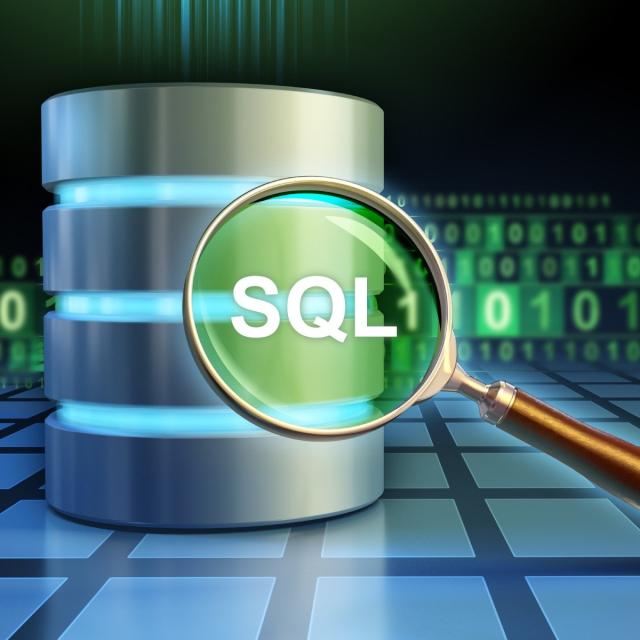
This course will introduce the student to the basic concepts of SQL for interaction with Relational Databases. It will illustrate basic SQL statements to create and query tables, leverage table relationships through joins and subqueries, insert and update table rows.

Class Deals by MOOC List - Click here and see Coursera's Active Discounts, Deals, and Promo Codes.

It is, however, only intended to cover the basics needed in order for the student to progress onto the Java Database Connectivity (JDBC) and Jakarta Persistence (JPA) courses in the Data Access Specialization.
Course 3 of 4 in the Java Database Connectivity Specialization.

Syllabus

WEEK 1
Create Database, Tables and Queries
In this module we will introduce basic SQL Syntax, Interact with a database its tables to via SQL Queries and Updates to give you enough understanding of SQL for the Java Database Connectivity (JDBC) and Jakarta Persistence (JPA) courses

WEEK 2
Putting it together, Joins and SubQueries
In this module you will apply more complex where clauases in your SQL Statements. You will then move onto the concept of joining tables through SQL Join Queries and also SubQueries

Go to Class
MOOC List is learner-supported. When you buy through links on our site, we may earn an affiliate commission.

Related Courses

Managing Big Data in Clusters and Cloud Storage (Coursera) Coursera
Cloudera

Managing Big Data in Clusters and Cloud Storage (Coursera)

In this course, you'll learn how to manage big datasets, how to load them into clusters and cloud storage, and how to apply structure to the data so that you can run queries on it using distributed SQL engines like Apache Hive and Apache Impala. You’ll learn how to choose the right data types, storage systems, and file formats based on which tools you’ll use and what performance you need.

Aug 3rd 2026
5-12 Weeks
Uso de bases de datos con Python (Coursera) Coursera
University of Michigan

Uso de bases de datos con Python (Coursera)

Este curso presentará a los estudiantes los conceptos básicos del lenguaje de consulta estructurado (Structured Query Language, SQL), así como el diseño básico de bases de datos para almacenar datos como parte de una iniciativa de varios pasos para recopilar, analizar y procesar datos. El curso utilizará SQLite3 como base de datos. También crearemos rastreadores web y procesos de visualización y recopilación de datos de varios pasos. Utilizaremos la biblioteca D3.js para realizar la visualización básica de datos.

Aug 17th 2026
5-12 Weeks
Relational Database Support for Data Warehouses (Coursera) Coursera
University of Colorado System

Relational Database Support for Data Warehouses (Coursera)

Relational Database Support for Data Warehouses is the third course in the Data Warehousing for Business Intelligence specialization. In this course, you'll use analytical elements of SQL for answering business intelligence questions. You'll learn features of relational database management systems for managing summary data commonly used in business intelligence reporting. Because of the importance and difficulty of managing implementations of data warehouses, we'll also delve into storage architectures, scalable parallel processing, data governance, and big data impacts. In the assignments in this course, you can use either Oracle or PostgreSQL.

Aug 3rd 2026
5-12 Weeks
Oracle SQL Basics (Coursera) Coursera
LearnQuest

Oracle SQL Basics (Coursera)

This course, Oracle SQL Basics is the third course in the Oracle specialization. It is designed to help you learn the key elements of the Structured Query Language specific to Oracle. We recommend that you have completed the first two courses (Oracle Database Foundations and Oracle Database Platform) prior to beginning this one.

Aug 3rd 2026
2 Weeks
SQL for Data Science with R (Coursera) Coursera
IBM

SQL for Data Science with R (Coursera)

Much of the world's data resides in databases. SQL (or Structured Query Language) is a powerful language which is used for communicating with and extracting data from databases. A working knowledge of databases and SQL is a must if you want to become a data scientist. The purpose of this course is to introduce relational database concepts and help you learn and apply foundational knowledge of the SQL and R languages. It is also intended to get you started with performing SQL access in a data science environment.

Aug 3rd 2026
5-12 Weeks
Scripting with Python and SQL for Data Engineering (Coursera) Coursera
Duke University

Scripting with Python and SQL for Data Engineering (Coursera)

In this third course of the Python, Bash and SQL Essentials for Data Engineering Specialization, you will explore techniques to work effectively with Python and SQL. We will go through useful data structures in Python scripting and connect to databases like MySQL. Additionally, you will learn how to use a modern text editor to connect and run SQL queries against a real database, performing operations to load and extract data.

Aug 3rd 2026
4 Weeks
Introduction to Structured Query Language (SQL) (Coursera) Coursera
University of Michigan

Introduction to Structured Query Language (SQL) (Coursera)

In this course, you'll walk through installation steps for installing a text editor, installing MAMP or XAMPP (or equivalent) and creating a MySql Database. You'll learn about single table queries and the basic syntax of the SQL language, as well as database design with multiple tables, foreign keys, and the JOIN operation. Lastly, you'll learn to model many-to-many relationships like those needed to represent users, roles, and courses.

Aug 3rd 2026
4 Weeks
Exam Prep DP-300: Azure Database Administrator Associate (Coursera) Coursera
Whizlabs

Exam Prep DP-300: Azure Database Administrator Associate (Coursera)

Database administration is one of the basic necessities of every enterprise. The growth of cloud and On-premises relational databases continues to create the need for professional database administrators. Therefore, an updated certification such as DP-300 could open up favorable options for employment of database administrators.

Aug 17th 2026
5-12 Weeks
BigQuery Fundamentals for Teradata Professionals (Coursera) Coursera
Google Cloud

BigQuery Fundamentals for Teradata Professionals (Coursera)

This course covers BigQuery fundamentals for professionals who are familiar with SQL-based cloud data warehouses in Teradata and want to begin working in BigQuery. Through interactive lecture content and hands-on labs, you learn how to provision resources, create and share data assets, ingest data, and optimize query performance in BigQuery. Drawing upon your knowledge of Teradata, you also learn about similarities and differences between Teradata and BigQuery to help you get started with data warehouses in BigQuery.

Aug 17th 2026
2 Weeks
Snowflake - SnowPro Core Certification Preparation (Coursera) Coursera
Board Infinity

Snowflake - SnowPro Core Certification Preparation (Coursera)

"Snowflake - SnowPro Core Certification Preparation" is a comprehensive course meticulously crafted to guide learners through the essentials of Snowflake, preparing them for the SnowPro Core Certification. Spanning three modules, the course begins with the fundamentals of Snowflake, exploring its architecture, data loading, and modeling. The second module delves into operational and management aspects, including account management, performance optimization, and security.

Aug 17th 2026
3 Weeks
Data Manipulation at Scale: Systems and Algorithms (Coursera) Coursera
University of Washington

Data Manipulation at Scale: Systems and Algorithms (Coursera)

Data analysis has replaced data acquisition as the bottleneck to evidence-based decision making --- we are drowning in it. Extracting knowledge from large, heterogeneous, and noisy datasets requires not only powerful computing resources, but the programming abstractions to use them effectively. The abstractions that emerged in the last decade blend ideas from parallel databases, distributed systems, and programming languages to create a new class of scalable data analytics platforms that form the foundation for data science at realistic scales.

Aug 3rd 2026
4 Weeks