SQL: A Practical Introduction for Querying Databases (Coursera)

Offered by IBM,
SQL: A Practical Introduction for Querying Databases (Coursera)

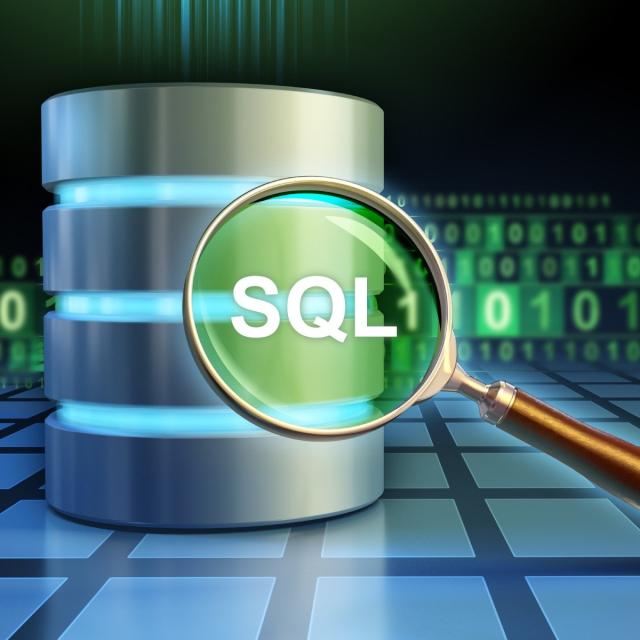
Much of the world's data lives in databases. SQL (or Structured Query Language) is a powerful programming language that is used for communicating with and manipulating data in databases. A working knowledge of databases and SQL is a must for anyone who wants to start a career in Data Engineering, Data Warehousing, Data Analytics, Data Science or Business Intelligence. The purpose of this course is to help you learn and apply foundational and intermediate knowledge of the SQL language, and become familiar with many relational database (RDBMS) concepts along the way.

Class Deals by MOOC List - Click here and see Coursera's Active Discounts, Deals, and Promo Codes.

You will start with performing basic Create, Read, Update and Delete (CRUD) operations using CREATE, SELECT, INSERT, UPDATE and DELETE statements. You will then learn to filter, order, sort, and aggregate data. You will work with functions, perform sub-selects and nested queries, as well as JOIN data in multiple tables. You will also work with VIEWS, transactions and create stored procedures.
The emphasis in this course is on hands-on, practical learning. As such, you will work with real database systems, use real tools, and real-world datasets. You will create a database instance in the cloud. Through a series of hands-on labs, you will practice building and running SQL queries. At the end of the course you will apply and demonstrate your skills with a final project.
The SQL skills you learn in this course will be applicable to a variety of RDBMSes such as MySQL, PostgreSQL, IBM Db2, Oracle, SQL Server and others.
No prior knowledge of databases, SQL or programming is required, however some basic data literacy is beneficial.

What You Will Learn

  • Analyze data within a database using SQL.
  • Create a relational database on Cloud and work with tables.
  • Write SQL statements including SELECT, INSERT, UPDATE, and DELETE.
  • Build more powerful queries with advanced SQL techniques like views, transactions, stored procedures and joins.
Syllabus

WEEK 1
Getting Started with SQL
In this module, you will be introduced to databases. You will create a database instance on the cloud. You will learn some of the basic SQL statements. You will also write and practice basic SQL hands-on on a live database.

WEEK 2
Introduction to Relational Databases and Tables
In this module, you will explore the fundamental concepts behind databases, tables, and the relationships between them. You will then create an instance of a database, discover SQL statements that allow you to create and manipulate tables, and then practice them on your own live database.

WEEK 3
Intermediate SQL
In this module, you will learn how to use string patterns and ranges to search data and how to sort and group data in result sets. You will also practice composing nested queries and execute select statements to access data from multiple tables.

WEEK 4
Working with real-world data sets, Final Project & Exam
In this assignment, you will be working with multiple real world datasets for the city of Chicago. You will be asked questions that will help you understand the data just as you would in the real wold. You will be assessed on the correctness of your SQL queries and results.

WEEK 5
Advanced SQL (Honors)
This module covers some advanced SQL techniques that will be useful for Data Engineers. If you are following the Data Engineering track, you must complete this module. Completion of this module is not required for those completing the Data Science or Data Analyst tracks. In this module, you will learn how to build more powerful queries with advanced SQL techniques like views, transactions, stored procedures and joins.

Go to Class
MOOC List is learner-supported. When you buy through links on our site, we may earn an affiliate commission.

Related Courses

Big Data Integration and Processing (Coursera) Coursera
University of California, San Diego

Big Data Integration and Processing (Coursera)

At the end of the course, you will be able to: Retrieve data from example database and big data management systems; Describe the connections between data management operations and the big data processing patterns needed to utilize them in large-scale analytical applications; Identify when a big data problem needs data integration; Execute simple big data integration and processing on Hadoop and Spark platforms.

Jun 15th 2026
5-12 Weeks
Database Management Essentials (Coursera) Coursera
University of Colorado System

Database Management Essentials (Coursera)

Database Management Essentials provides the foundation you need for a career in database development, data warehousing, or business intelligence, as well as for the entire Data Warehousing for Business Intelligence specialization. In this course, you will create relational databases, write SQL statements to extract information to satisfy business reporting requests, create entity relationship diagrams (ERDs) to design databases, and analyze table designs for excessive redundancy.

Jun 15th 2026
5-12 Weeks
Business Metrics for Data-Driven Companies (Coursera) Coursera
Duke University

Business Metrics for Data-Driven Companies (Coursera)

In this course, you will learn best practices for how to use data analytics to make any company more competitive and more profitable. You will be able to recognize the most critical business metrics and distinguish them from mere data. You’ll get a clear picture of the vital but different roles business analysts, business data analysts, and data scientists each play in various types of companies. And you’ll know exactly what skills are required to be hired for, and succeed at, these high-demand jobs.

Jun 15th 2026
4 Weeks
Process Data from Dirty to Clean (Coursera) Coursera
Google

Process Data from Dirty to Clean (Coursera)

This is the fourth course in the Google Data Analytics Certificate. These courses will equip you with the skills needed to apply to introductory-level data analyst jobs. In this course, you’ll continue to build your understanding of data analytics and the concepts and tools that data analysts use in their work. You’ll learn how to check and clean your data using spreadsheets and SQL as well as how to verify and report your data cleaning results. Current Google data analysts will continue to instruct and provide you with hands-on ways to accomplish common data analyst tasks with the best tools and resources.

Jun 16th 2026
5-12 Weeks
Digital Marketing Analytics in Practice (Coursera) Coursera
University of Illinois at Urbana-Champaign

Digital Marketing Analytics in Practice (Coursera)

Successfully marketing brands today requires a well-balanced blend of art and science. This course introduces students to the science of web analytics while casting a keen eye toward the artful use of numbers found in the digital space. The goal is to provide the foundation needed to apply data analytics to real-world challenges marketers confront daily. Students will learn to identify the web analytic tool right for their specific needs; understand valid and reliable ways to collect, analyze, and visualize data from the web; and utilize data in decision making for agencies, organizations or clients.

Jun 15th 2026
4 Weeks
Social Media Data Analytics (Coursera) Coursera
University of Washington

Social Media Data Analytics (Coursera)

Learner Outcomes: After taking this course, you will be able to: utilize various Application Programming Interface (API) services to collect data from different social media sources such as YouTube, Twitter, and Flickr; process the collected data - primarily structured - using methods involving correlation, regression, and classification to derive insights about the sources and people who generated that data; analyze unstructured data - primarily textual comments - for sentiments expressed in them; use different tools for collecting, analyzing, and exploring social media data for research and development purposes.

Jun 15th 2026
4 Weeks
Data Science in Real Life (Coursera) Coursera
Johns Hopkins University

Data Science in Real Life (Coursera)

Have you ever had the perfect data science experience? The data pull went perfectly. There were no merging errors or missing data. Hypotheses were clearly defined prior to analyses. Randomization was performed for the treatment of interest. The analytic plan was outlined prior to analysis and followed exactly. The conclusions were clear and actionable decisions were obvious. Has that every happened to you? Of course not. Data analysis in real life is messy. How does one manage a team facing real data analyses? In this one-week course, we contrast the ideal with what happens in real life. By contrasting the ideal, you will learn key concepts that will help you manage real life analyses.

Jun 15th 2026
1 Week
The Structured Query Language (SQL) (Coursera) Coursera
University of Colorado Boulder

The Structured Query Language (SQL) (Coursera)

In this course you will learn all about the Structured Query Language ("SQL".) We will review the origins of the language and its conceptual foundations. But primarily, we will focus on learning all the standard SQL commands, their syntax, and how to use these commands to conduct analysis of the data within a relational database. Our scope includes not only the SELECT statement for retrieving data and creating analytical reports, but also includes the DDL ("Data Definition Language") and DML ("Data Manipulation Language") commands necessary to create and maintain database objects.

Jun 16th 2026
5-12 Weeks
Statistical Inference (Coursera) Coursera
Johns Hopkins University

Statistical Inference (Coursera)

Statistical inference is the process of drawing conclusions about populations or scientific truths from data. There are many modes of performing inference including statistical modeling, data oriented strategies and explicit use of designs and randomization in analyses. Furthermore, there are broad theories (frequentists, Bayesian, likelihood, design based, …) and numerous complexities (missing data, observed and unobserved confounding, biases) for performing inference.

Jun 15th 2026
4 Weeks
Teaching Impacts of Technology: Data Collection, Use, and Privacy (Coursera) Coursera
University of California, San Diego

Teaching Impacts of Technology: Data Collection, Use, and Privacy (Coursera)

In this course you’ll focus on how constant data collection and big data analysis have impacted us, exploring the interplay between using your data and protecting it, as well as thinking about what it could do for you in the future. This will be done through a series of paired teaching sections, exploring a specific “Impact of Computing” in your typical day and the “Technologies and Computing Concepts” that enable that impact, all at a K12-appropriate level.

Jun 17th 2026
4 Weeks
Data Management and Visualisation (Coursera) Coursera
Wesleyan University

Data Management and Visualisation (Coursera)

Whether being used to customize advertising to millions of website visitors or streamline inventory ordering at a small restaurant, data is becoming more integral to success. Too often, we’re not sure how use data to find answers to the questions that will make us more successful in what we do. In this course, you will discover what data is and think about what questions you have that can be answered by the data – even if you’ve never thought about data before. Based on existing data, you will learn to develop a research question, describe the variables and their relationships, calculate basic statistics, and present your results clearly.

Jun 15th 2026
4 Weeks