Introduction to Software Development and Applications (Coursera)

Introduction to Software Development and Applications (Coursera)

The primary objectives of this course are to introduce software engineering techniques and their application to real-world business problems. You will be equipped with practical design and programming techniques for the purpose of modeling significant business applications quickly.

Class Deals by MOOC List - Click here and see Coursera's Active Discounts, Deals, and Promo Codes.

In a step-by-step manner, the instructor will take you through the process of systematically combining object-oriented programming techniques, business processes, and complex data models to assemble models that are user friendly and meet business requirements.
You will learn how to employ systems thinking, the object-oriented paradigm, the visual programming technique, as well as productivity tools to put together complicated, powerful designs. We will practice simple and smart ways of making software programming enjoyable.
This course is part of the Information Systems Foundations Specialization.

Syllabus

Introduction to the Software Development Cycle and Applications
In this first module of the course, we will begin with focusing on a general overview of the Software Development Life cycle. It is important as you explore and learn about development, that you understand how the skills learned in this course can translate into your current and future professional experiences. As developers, it is important to reflect on managing user expectations and understanding user needs - which may take several iterations of design and development to completely understand. This is why we focus on iterative development instead of a waterflow approach. We will learn more about these approaches and the key phases of the development lifecycle in this module. Then we will dive into exploring software applications and the need to anticipate risk, the potential for problems, and how to transform the software lifecycle into an actual application. We will learn more about the different components and algorithms in systems and review different real-world examples of the necessary connection between social and application systems. The most important thing to keep in mind is that there is always a social problem that must be solved and that is the key to developing effective application systems.

Application Design Principles
This module, we will begin exploring the design principles associated with designing application systems. the video delves into the challenges faced by modern hospitals due to the complexity of patient movements throughout the day. In this module we will explore how adopting a system view in software engineering can offer innovative solutions to enhance patient care and address these critical issues.

Object-Oriented Programming
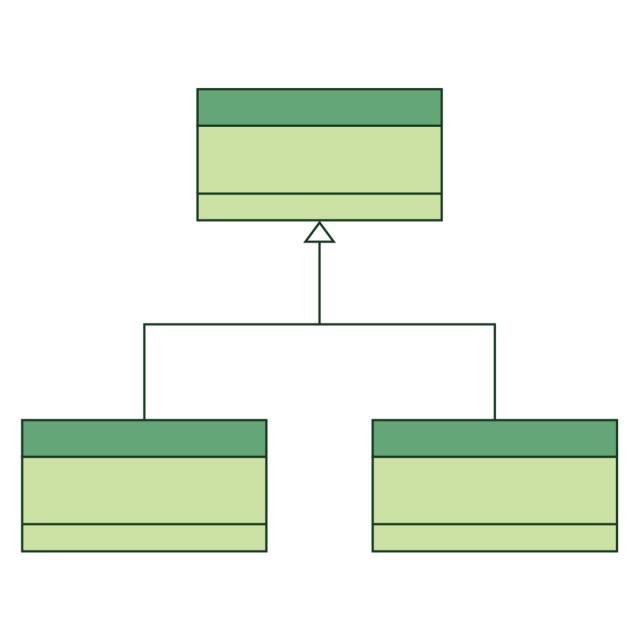
This module, we will dive deeper into exploring how relationships are intertwined in application development, now focusing on an important component of application system design: the object-oriented paradigm, or OOP. We will learn about different component structures and the relationships between objects, structures, attributes, and behaviors. We will reflect on the complexities of the OOP and how it differs from simple algorithm creation.

Business Design Principles
This module, we will explore the connection between businesses and web application development, focusing on the importance of understanding successful enterprises. Exploring the fundamental principles of their operations, we will reflect on how business design plays a pivotal role in shaping software code and digital design. By examining the customer-centric approach of these companies and the emphasis on prioritizing customer experience, we explore key insights on how to create efficient and user-friendly applications with simple code. In this module you will also begin applying what you are learning about business design principles in a lab assignment that focuses on evaluating a campus build model.


Go to Class
MOOC List is learner-supported. When you buy through links on our site, we may earn an affiliate commission.

Related Courses

Desenvolvimento Ágil com Padrões de Projeto (Coursera) Coursera
Instituto Tecnológico de Aeronáutica

Desenvolvimento Ágil com Padrões de Projeto (Coursera)

Neste curso, assumimos que você já sabe projetar e desenvolver programas mais complexos em Java, graças às boas práticas e princípios exercitados nos cursos anteriores; mas você talvez não se sinta ainda confortável em lidar com cenários mais complexos, onde é difícil desenvolver software com código de qualidade com flexibilidade suficiente para facilitar a implementação de mudanças repentinas de requisitos.

Sep 7th 2026
4 Weeks
Platform Thinking: exploiting data through platforms (Coursera) Coursera
Politecnico di Milano

Platform Thinking: exploiting data through platforms (Coursera)

(Digital) data are often considered the new oil. Companies often exploit them building platforms, involving different sets of users that generate data – for example, enjoying a digital service through a mobile app – and other organizations that see value in those data and wish to leverage them. This module of the “Platform Thinking” series aims to assess the role of data in digital platforms.

Sep 21st 2026
4 Weeks
Development of Real-Time Systems (Coursera) Coursera
EIT Digital

Development of Real-Time Systems (Coursera)

This course is intended for the Master's student and computer engineer who likes practical programming and problem solving! After completing this course, you will have the knowledge to plan and set-up a real-time system both on paper and in practice. The course centers around the problem of achieving timing correctness in embedded systems, which means to guarantee that the system reacts within the real-time requirements.

Sep 21st 2026
5-12 Weeks
Advanced Modeling for Discrete Optimization (Coursera) Coursera
University of Melbourne,The Chinese University of Hong Kong

Advanced Modeling for Discrete Optimization (Coursera)

Optimization is a common form of decision making, and is ubiquitous in our society. Its applications range from solving Sudoku puzzles to arranging seating in a wedding banquet. The same technology can schedule planes and their crews, coordinate the production of steel, and organize the transportation of iron ore from the mines to the ports. Good decisions in manpower and material resources management also allow corporations to improve profit by millions of dollars.

Sep 14th 2026
5-12 Weeks
Advanced R Programming (Coursera) Coursera
Johns Hopkins University

Advanced R Programming (Coursera)

This course covers advanced topics in R programming that are necessary for developing powerful, robust, and reusable data science tools. Topics covered include functional programming in R, robust error handling, object oriented programming, profiling and benchmarking, debugging, and proper design of functions.

Sep 7th 2026
4 Weeks
Audio Signal Processing for Music Applications (Coursera) Coursera
Stanford University,Universitat Pompeu Fabra

Audio Signal Processing for Music Applications (Coursera)

In this course you will learn about audio signal processing methodologies that are specific for music and of use in real applications. We focus on the spectral processing techniques of relevance for the description and transformation of sounds, developing the basic theoretical and practical knowledge with which to analyze, synthesize, transform and describe audio signals in the context of music applications.

Sep 14th 2026
5-12 Weeks
An Introduction to Interactive Programming in Python (Part 2) (Coursera) Coursera
Rice University

An Introduction to Interactive Programming in Python (Part 2) (Coursera)

This two-part course is designed to help students with very little or no computing background learn the basics of building simple interactive applications. Our language of choice, Python, is an easy-to learn, high-level computer language that is used in many of the computational courses offered on Coursera. To make learning Python easy, we have developed a new browser-based programming environment that makes developing interactive applications in Python simple.

Sep 7th 2026
4 Weeks
Software Architecture (Coursera) Coursera
University of Alberta

Software Architecture (Coursera)

The way that software components — subroutines, classes, functions, etc. — are arranged, and the interactions between them, is called architecture. In this course you will study the ways these architectures are represented, both in UML and other visual tools. We will introduce the most common architectures, their qualities, and tradeoffs. We will talk about how architectures are evaluated, what makes a good architecture, and an architecture can be improved. We'll also talk about how the architecture touches on the process of software development.

Sep 7th 2026
4 Weeks
Database Management Essentials (Coursera) Coursera
University of Colorado System

Database Management Essentials (Coursera)

Database Management Essentials provides the foundation you need for a career in database development, data warehousing, or business intelligence, as well as for the entire Data Warehousing for Business Intelligence specialization. In this course, you will create relational databases, write SQL statements to extract information to satisfy business reporting requests, create entity relationship diagrams (ERDs) to design databases, and analyze table designs for excessive redundancy.

Sep 7th 2026
5-12 Weeks