Introduction to Practical Microbiology (FutureLearn)

Introduction to Practical Microbiology (FutureLearn)

Discover the basics of microbiology and the principles of antimicrobial stewardship from a practical standpoint. Learn about the basics of microbiology and clinical pharmacology. On this four-week course, you’ll discover the basic concepts of microbiology from a practical perspective. Get to know how to identify microbes, what antimicrobial resistance is, and how you can analyse and interpret data in a laboratory setting, as well as advice for both low and higher resource settings.

Class Deals by MOOC List - Click here and see FutureLearn's Active Discounts, Deals, and Promo Codes.

Build a foundation in microbiology practices
This course teaches you about all the basic concepts of microbiology. Develop a solid foundation base for further study and practice in the field of microbiology by learning how to define microbes, antimicrobials, and antibiotics. Confidently navigate every basic topic, name, principle, and process of microbiology.
By the end of this course, you won’t just have a confident understanding of the classification, structure, and roles of microbes, but will also be familiar with their laboratory identification and the common sites of infection.

Discover the concepts of antimicrobial stewardship and antimicrobial resistance (AMR)
On this course you’ll learn how to define antimicrobial resistance, its mechanisms, drivers, and co-resistance. Learn how microbes and antimicrobials work, and how antimicrobial resistance (AMR) happens.
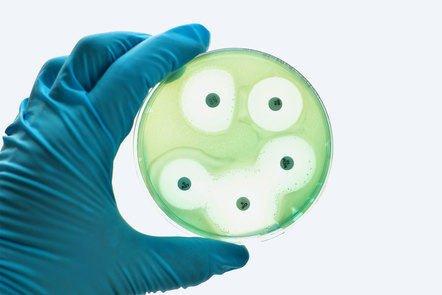
Discover the basic concepts of ‘superbugs’, and analyse the results of Antimicrobial Susceptibility Testing (AST), including their different breaking points, cut-off settings, and their application in the clinical context.

Learn antimicrobial laboratory techniques
Decipher how to take samples and specimens to detect microbes, as well as methods to study antimicrobial susceptibility in the laboratory setting.
Learn to compare bactericidal and bacteriostatic substances, see how they move through the body by studying PK/PD models, and learn how to increase the efficacy of antimicrobials based on the results.

What topics will you cover?

  • The basics of microbes, including classification, structure, their roles, and sites of infection.
  • Antimicrobial classification and basic mechanisms, PK/PD, and how to increase efficacy of antimicrobials.
  • Antimicrobial resistance – definitions, mechanisms, drivers, co-resistance, and how ‘superbugs’ occur. Antimicrobial agents and antimicrobial use principles.
  • Antimicrobial susceptibility testing – laboratory techniques and how to use the information/data gained.
  • Capacity and capability of resources – what can be done with both low resources and situations where resources are more available.

What will you achieve?
By the end of the course, you‘ll be able to...

  • Identify the common microbes, their classification and role, where they may colonise and where they may cause common infections
  • Demonstrate understanding of the most important microbials and how they work, basic concepts of AMR, how bacteria before resistant and “super-bugs”
  • Explain the different methods used for antimicrobial susceptibility testing and basic concepts about analysis and interpreting the results of AST
  • Justify the importance of quality management and assurance of AST including use of guidelines

Who is the course for?
This course is for healthcare professionals, laboratory personnel, anti-infectives commercial staff, researchers, students or others in training.
The course is intended for those with some basic knowledge of microbiology, but this is not a prerequisite.

Go to Class
MOOC List is learner-supported. When you buy through links on our site, we may earn an affiliate commission.

Related Courses

Tackling Antimicrobial Resistance: A Social Science Approach (FutureLearn) FutureLearn
British Society for Antimicrobial Chemotherapy - BSAC,Imperial College London

Tackling Antimicrobial Resistance: A Social Science Approach (FutureLearn)

Are you a health professional new to social science research? Find out how you can fight antimicrobial resistance on this course. Learn the key aspects of successful antimicrobial stewardship. Antimicrobial resistance is a complex problem in today’s medicine that requires a unique approach. On this course, you will build your knowledge of how a social science perspective can fight the problem of antimicrobial resistance.

Nov 14th 2022
3 Weeks
Stories of Infection (Coursera) Coursera
Stanford University

Stories of Infection (Coursera)

This course introduces learners to a variety of infectious diseases using a patient-centered, story-based approach. Through illustrated, short videos, learners will follow the course of each patient’s illness, from initial presentation to resolution. Integrating the relevant microbiology, pathophysiology and immunology, this course aims to engage and entice the learner towards future studies in microbiology, immunology and infectious diseases.

Jun 22nd 2026
5-12 Weeks
Genome Sequencing (Bioinformatics II) (Coursera) Coursera
University of California, San Diego

Genome Sequencing (Bioinformatics II) (Coursera)

You may have heard a lot about genome sequencing and its potential to usher in an era of personalized medicine, but what does it mean to sequence a genome? Biologists still cannot read the nucleotides of an entire genome as you would read a book from beginning to end. However, they can read short pieces of DNA. In this course, we will see how graph theory can be used to assemble genomes from these short pieces. We will further learn about brute force algorithms and apply them to sequencing mini-proteins called antibiotics.

Jun 22nd 2026
5-12 Weeks
Antimicrobial Stewardship for Africa (FutureLearn) FutureLearn
British Society for Antimicrobial Chemotherapy - BSAC,ICAN - Infection Control Africa Network,College of Medicine, University of Lagos

Antimicrobial Stewardship for Africa (FutureLearn)

Improve your knowledge of the spread of antimicrobial resistance in Africa and how to reduce it. Learn how to tackle antimicrobial resistance in Africa. Communicable diseases remain to be a leading cause of death in African countries (WHO). This course will look at the threat of antimicrobial resistance in Africa and how best to tackle it.

Apr 26th 2021
3 Weeks
Introducción a la microbiología práctica (FutureLearn) FutureLearn
British Society for Antimicrobial Chemotherapy - BSAC

Introducción a la microbiología práctica (FutureLearn)

Conoce lo básico de la microbiología y los principios para optimizar el uso de antimicrobianos desde un punto de vista práctico. Asienta las bases de las prácticas en la microbiología. Este curso te enseña todos los conceptos básicos de la microbiología. Desarrolla una base sólida para futuros estudios y prácticas en el campo de la microbiología aprendiendo a definir los microbios, los antimicrobianos y los antibióticos. Adéntrate con confianza en todos los temas, nombres, principios y procesos básicos de la microbiología.

Available now
4 Weeks
Diagnostics for AMR: Building Back Better from the COVID-19 Pandemic (FutureLearn) FutureLearn
London School of Hygiene & Tropical Medicine

Diagnostics for AMR: Building Back Better from the COVID-19 Pandemic (FutureLearn)

Gain insight into the global response to the COVID-19 pandemic, and how innovations can be used to leverage AMR diagnostics. What lessons can the antimicrobial (AMR) response take from COVID-19 events? As the world continues to deal with COVID-19, its impact on other public health issues must also be considered. This three-week course provides valuable insight into how COVID-19 affected different countries’ One Health efforts in general, and their antimicrobial resistance responses in particular.

Jan 10th 2022
3 Weeks
Understanding Penicillin Allergy Assessment and Delabelling (FutureLearn) FutureLearn
British Society for Antimicrobial Chemotherapy - BSAC

Understanding Penicillin Allergy Assessment and Delabelling (FutureLearn)

Discover how to effectively manage patients with penicillin allergy labels to develop your career as a healthcare professional. This three-week course will enhance your skills in assessing and managing patients with a suspected penicillin allergy, and approaching false penicillin allergy labels.

Nov 20th 2023
3 Weeks
e-Bug Health Educator Training (FutureLearn) FutureLearn
British Society for Antimicrobial Chemotherapy - BSAC,Public Health England

e-Bug Health Educator Training (FutureLearn)

Improve your ability to teach children and young people how to prevent the spread of infection and to use antibiotics responsibly. Learn how to use the e-Bug teaching resource. e-Bug is operated by Public Health England (PHE) as a free educational resource for teaching young people aged 4-18 about the spread, prevention, and treatment of infections and antibiotic use.

Feb 15th 2021
3 Weeks
OPAT: Outpatient Parenteral Antimicrobial Therapy (FutureLearn) FutureLearn
British Society for Antimicrobial Chemotherapy - BSAC

OPAT: Outpatient Parenteral Antimicrobial Therapy (FutureLearn)

Learn how patients with a serious infection can be managed in outpatient settings with the help of an OPAT service. Discover the function, role and limitations of an OPAT service. OPAT is a clinical service which enables patients with serious infection to be managed in an outpatient setting. The service aims to facilitate admission avoidance or early hospital discharge. On this course, you will be introduced to the concept of OPAT. You’ll start by looking at the roles and responsibilities within the multi-disciplinary OPAT team.

Available now
2 Weeks
Intravenous to Oral Switch: Within Outpatient Parenteral Antibiotic Therapy (IVOST) (FutureLearn) FutureLearn
British Society for Antimicrobial Chemotherapy - BSAC

Intravenous to Oral Switch: Within Outpatient Parenteral Antibiotic Therapy (IVOST) (FutureLearn)

Are you involved in the prescribing/administration of antibiotics? Explore the benefits and barriers of IVOST and COPAT. Discover the principles and practices supporting IVOST and COPAT. The use of intravenous antimicrobials and complex oral antimicrobial regimes within outpatient clinical environments is helping with non-admission to and early discharge from hospital. The course will lead you through the principles underlying these therapies, how to determine their suitability, and key practices for prescribers.

Available now
4 Weeks
Antibiotic Stewardship (Coursera) Coursera
Stanford University

Antibiotic Stewardship (Coursera)

Antibiotics are among the most frequently prescribed classes of drugs and it is estimated that approximately 50% of antibiotic use, in both the outpatient and inpatient settings, is inappropriate. At the same time, in contrast to any other class of drugs, every antibiotic use has a potential public health consequence – inappropriate use may not harm only the individual patient, but contributes to societal harm by exerting an unnecessary selective pressure that may lead to antibiotic resistance among bacteria. This video based course will introduce learners to the basic principles of appropriate antibiotic use, demonstrate how to apply these principles to the management of common infections, and outline how to develop and maintain an antimicrobial stewardship program.

Jun 22nd 2026
4 Weeks