Introduction to Formal Concept Analysis (Coursera)

Introduction to Formal Concept Analysis (Coursera)

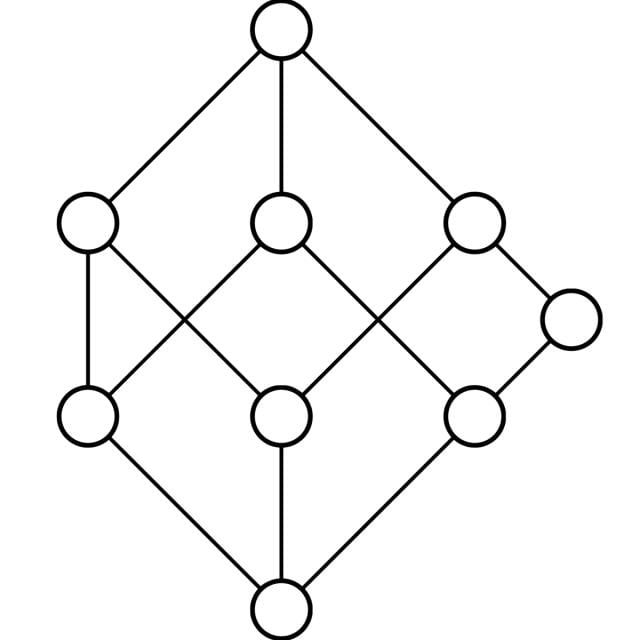
This course is an introduction into formal concept analysis (FCA), a mathematical theory oriented at applications in knowledge representation, knowledge acquisition, data analysis and visualization. It provides tools for understanding the data by representing it as a hierarchy of concepts or, more exactly, a concept lattice. FCA can help in processing a wide class of data types providing a framework in which various data analysis and knowledge acquisition techniques can be formulated. In this course, we focus on some of these techniques, as well as cover the theoretical foundations and algorithmic issues of FCA.

Class Deals by MOOC List - Click here and see Coursera's Active Discounts, Deals, and Promo Codes.

Upon completion of the course, the students will be able to use the mathematical techniques and computational tools of formal concept analysis in their own research projects involving data processing. Among other things, the students will learn about FCA-based approaches to clustering and dependency mining.
The course is self-contained, although basic knowledge of elementary set theory, propositional logic, and probability theory would help.
End-of-the-week quizzes include easy questions aimed at checking basic understanding of the topic, as well as more advanced problems that may require some effort to be solved.

Syllabus

WEEK 1
Formal concept analysis in a nutshell
This week we will learn the basic notions of formal concept analysis (FCA). We'll talk about some of its typical applications, such as conceptual clustering and search for implicational dependencies in data. We'll see a few examples of concept lattices and learn how to interpret them. The simplest data structure in formal concept analysis is the formal context. It is used to describe objects in terms of attributes they have. Derivation operators in a formal context link together object and attribute subsets; they are used to define formal concepts. They also give rise to closure operators, and we'll talk about what these are, too. We'll have a look at software called Concept Explorer, which is good for basic processing of formal contexts. We'll also talk a little bit about many-valued contexts, where attributes may have many values. Conceptual scaling is used to transform many-valued contexts into "standard", one-valued, formal contexts.

WEEK 2
Concept lattices and their line diagrams
This week we'll talk about some mathematical properties of concepts. We'll define a partial order on formal concepts, that of "being less general". Ordered in this way, the concepts of a formal concept constitute a special mathematical structure, a complete lattice. We'll learn what these are, and we'll see, through the basic theorem on concept lattices, that any complete lattice can, in a certain sense, be modelled by a formal context. We'll also discuss how a formal context can be simplified without loosing the structure of its concept lattice.

WEEK 3
Constructing concept lattices
We will consider a few algorithms that build the concept lattice of a formal context: a couple of naive approaches, which are easy to use if one wants to build the concept lattice of a small context; a more sophisticated approach, which enumerates concepts in a specific order; and an incremental strategy, which can be used to update the concept lattice when a new object is added to the context. We will also give a formal definition of implications, and we'll see how an implication can logically follow from a set of other implications.

WEEK 4
Implications
This week we'll continue talking about implications. We'll see that implication sets can be redundant, and we'll learn to summarise all valid implications of a formal context by its canonical (Duquenne–Guigues) basis. We'll study one concrete algorithm that computes the canonical basis, which turns out to be a modification of the Next Closure algorithm from the previous week. We'll also talk about what is known in database theory as functional dependencies, and we'll show how they are related to implications.

WEEK 5
Interactive algorithms for learning implications
What if we don't have a direct access to a formal context, but still want to compute its concept lattice and its implicational theory? This can be done if there is a domain expert (or an oracle) willing to answer our queries about the domain. We'll study an approach known as learning with queries that addresses this setting. We'll get to know a few standard types of queries, and we'll see how an implication set can be learnt in time polynomial of its size with so called membership and equivalence queries. We'll then introduce attribute exploration, a method from formal concept analysis, which may require exponential time, but which uses different queries, more suitable for building implicational theories and representative samples of subject domains.

WEEK 6
Working with real data
A concept lattice can be exponentially large in the size of its formal context. Sometimes this can be due to noise in data. We'll study a few heuristics to filter out noisy concepts or select the most interesting concepts in a large lattice built from real data: stability and separation indices, concept probability, iceberg lattices. We will also talk about association rules, which is a name for implications that are supported by strong evidence, but may still have counterexamples in data.
Go to Class
MOOC List is learner-supported. When you buy through links on our site, we may earn an affiliate commission.

Related Courses

Approximation Algorithms (Coursera) Coursera
EIT Digital

Approximation Algorithms (Coursera)

Many real-world algorithmic problems cannot be solved efficiently using traditional algorithmic tools, for example because the problems are NP-hard. The goal of this course is to become familiar with important algorithmic concepts and techniques needed to effectively deal with such problems. These techniques apply when we don't require the optimal solution to certain problems, but an approximation that is close to the optimal solution. We will see how to efficiently find such approximations.

Jun 26th 2026
4 Weeks
Unordered Data Structures (Coursera) Coursera
University of Illinois at Urbana-Champaign

Unordered Data Structures (Coursera)

The Unordered Data Structures course covers the data structures and algorithms needed to implement hash tables, disjoint sets and graphs. These fundamental data structures are useful for unordered data. For example, a hash table provides immediate access to data indexed by an arbitrary key value, that could be a number (such as a memory address for cached memory), a URL (such as for a web cache) or a dictionary.

Jun 24th 2026
4 Weeks
Data Structures (Coursera) Coursera
University of California, San Diego,Higher School of Economics - HSE University

Data Structures (Coursera)

A good algorithm usually comes together with a set of good data structures that allow the algorithm to manipulate the data efficiently. In this course, we consider the common data structures that are used in various computational problems. You will learn how these data structures are implemented in different programming languages and will practice implementing them in our programming assignments.

Jun 22nd 2026
5-12 Weeks
Exploratory Data Analysis (Coursera) Coursera
Johns Hopkins University

Exploratory Data Analysis (Coursera)

This course covers the essential exploratory techniques for summarizing data. These techniques are typically applied before formal modeling commences and can help inform the development of more complex statistical models. Exploratory techniques are also important for eliminating or sharpening potential hypotheses about the world that can be addressed by the data.

Jun 22nd 2026
4 Weeks
Business Intelligence Concepts, Tools, and Applications (Coursera) Coursera
University of Colorado System

Business Intelligence Concepts, Tools, and Applications (Coursera)

This is the fourth course in the Data Warehouse for Business Intelligence specialization. Ideally, the courses should be taken in sequence. In this course, you will gain the knowledge and skills for using data warehouses for business intelligence purposes and for working as a business intelligence developer. You’ll have the opportunity to work with large data sets in a data warehouse environment and will learn the use of MicroStrategy's Online Analytical Processing (OLAP) and Visualization capabilities to create visualizations and dashboards.

Jun 22nd 2026
5-12 Weeks
Graph Analytics for Big Data (Coursera) Coursera
University of California, San Diego

Graph Analytics for Big Data (Coursera)

Want to understand your data network structure and how it changes under different conditions? Curious to know how to identify closely interacting clusters within a graph? Have you heard of the fast-growing area of graph analytics and want to learn more? This course gives you a broad overview of the field of graph analytics so you can learn new ways to model, store, retrieve and analyze graph-structured data.

Jun 22nd 2026
5-12 Weeks
Machine Learning: Regression (Coursera) Coursera
University of Washington

Machine Learning: Regression (Coursera)

Case Study - Predicting Housing Prices. In our first case study, predicting house prices, you will create models that predict a continuous value (price) from input features (square footage, number of bedrooms and bathrooms,...). This is just one of the many places where regression can be applied. Other applications range from predicting health outcomes in medicine, stock prices in finance, and power usage in high-performance computing, to analyzing which regulators are important for gene expression.

Jun 22nd 2026
5-12 Weeks
Statistical Inference (Coursera) Coursera
Johns Hopkins University

Statistical Inference (Coursera)

Statistical inference is the process of drawing conclusions about populations or scientific truths from data. There are many modes of performing inference including statistical modeling, data oriented strategies and explicit use of designs and randomization in analyses. Furthermore, there are broad theories (frequentists, Bayesian, likelihood, design based, …) and numerous complexities (missing data, observed and unobserved confounding, biases) for performing inference.

Jun 22nd 2026
4 Weeks
Algorithmic Toolbox (Coursera) Coursera
University of California, San Diego,Higher School of Economics - HSE University

Algorithmic Toolbox (Coursera)

The course covers basic algorithmic techniques and ideas for computational problems arising frequently in practical applications: sorting and searching, divide and conquer, greedy algorithms, dynamic programming. We will learn a lot of theory: how to sort data and how it helps for searching; how to break a large problem into pieces and solve them recursively; when it makes sense to proceed greedily; how dynamic programming is used in genomic studies. You will practice solving computational problems, designing new algorithms, and implementing solutions efficiently (so that they run in less than a second).

Jun 22nd 2026
5-12 Weeks
Introduction to Spreadsheets and Models (Coursera) Coursera
University of Pennsylvania

Introduction to Spreadsheets and Models (Coursera)

The simple spreadsheet is one of the most powerful data analysis tools that exists, and it’s available to almost anyone. Major corporations and small businesses alike use spreadsheet models to determine where key measures of their success are now, and where they are likely to be in the future. But in order to get the most out of a spreadsheet, you have know how to use it. This course is designed to give you an introduction to basic spreadsheet tools and formulas so that you can begin harness the power of spreadsheets to map the data you have now and to predict the data you may have in the future.

Jun 22nd 2026
4 Weeks
Leadership Through Marketing (Coursera) Coursera
Northwestern University

Leadership Through Marketing (Coursera)

The success of every organization depends on attracting and retaining customers. Although the marketing concepts for doing so are well established, digital technology has empowered customers, while producing massive amounts of data, revolutionizing the processes through which organizations attract and retain customers. In this course, students will learn how to identify new opportunities to create value for empowered consumers, develop strategies that yield an advantage over rivals, and develop the data science skills to lead more effectively, allocate resources, and to confront this very challenging environment with confidence.

Jun 28th 2026
4 Weeks