Introducing Robotics: Robotics and Society (FutureLearn)

Introducing Robotics: Robotics and Society (FutureLearn)

How do you feel about robots? Learn how robotics is used today and explore how it might help solve the big issues of our time. Once only found in fiction, robots are being applied in an increasing array of ways in society, from mechanisation of industrial tasks to exploring places humans can’t go. This course starts with your perceptions of robotics, describes different types of robots, and leads into a discussion of the future: knowing we can use robots, should we?

Class Deals by MOOC List - Click here and see FutureLearn's Active Discounts, Deals, and Promo Codes.

We will use case studies to show how robotics is being applied to help solve key issues facing society today: food production, aging populations, transport, and environmental change.

Get an introduction to robots
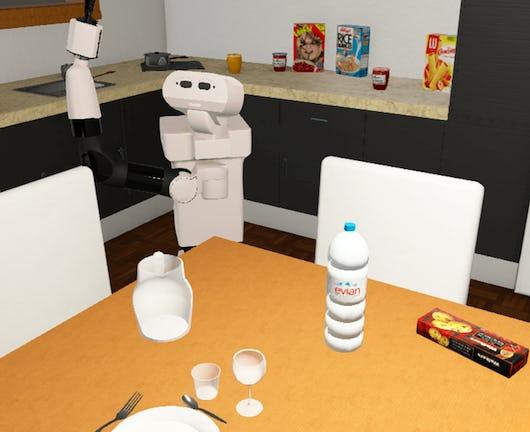
What’s your favourite robot? We explore how books, movies and television have influenced our perceptions of robotics and ask you to define a robot. From our shared understanding, we’ll then discuss how and why robotics impacts society and the ethics of using robots.

Learn about different types of robots
You might be surprised to learn where and how robots are used in our society today. You’ll explore examples of real robots – from manufacturing to the military – before considering what the future might hold for humans and robots alike.

Understand how robotics is solving world challengesOur world is facing some serious challenges and the pressures are only increasing as the population grows and ages. You’ll consider the practicalities and ethics of using robotics to address four of these big issues and learn how the usefulness of robots is limited only by the capacity of human intelligence.
Go to Class
MOOC List is learner-supported. When you buy through links on our site, we may earn an affiliate commission.

Related Courses

Computational Geometry (Coursera) Coursera
Saint Petersburg State University

Computational Geometry (Coursera)

This course represents an introduction to computational geometry – a branch of algorithm theory that aims at solving problems about geometric objects. Its application areas include computer graphics, computer-aided design and geographic information systems, robotics, and many others. You will learn to apply to this end various algorithmic approaches, and asses their strong and weak points in a particular context, thus gaining an ability to choose the most appropriate method for a concrete problem.

May 16th 2022
5-12 Weeks
Artificial Intelligence (AI) (edX) EdX
Columbia University,ColumbiaX

Artificial Intelligence (AI) (edX)

Learn the fundamentals of Artificial Intelligence (AI), and apply them. Design intelligent agents to solve real-world problems including, search, games, machine learning, logic, and constraint satisfaction problems. What do self-driving cars, face recognition, web search, industrial robots, missile guidance, and tumor detection have in common? They are all complex real world problems being solved with applications of intelligence (AI).

This course is archived
5-12 Weeks
Begin Robotics (FutureLearn) FutureLearn
University of Reading

Begin Robotics (FutureLearn)

Learn robotics by exploring the history, anatomy and intelligence of robots and test drive robots using exciting simulations Explore our introduction to robotics. Robots today are roving Mars, hoovering our floors, building cars and entertaining us in films. You may even share Stephen Hawking’s world view that super-intelligent ones may one day bring about the end of the human race.

Jan 16th 2023
4 Weeks
Robotic Mapping and Trajectory Generation (Coursera) Coursera
University of Colorado Boulder

Robotic Mapping and Trajectory Generation (Coursera)

In this second course of the Introduction to Robotics specialization, "Robotic Mapping and Trajectory Generation", you will learn how to perform basic inverse kinematics of (non-)holonomic systems using a feedback control approach. You will also learn how to process multi-dimensional sensor signals such as laser range scanners for mapping. Additionally, you will apply the overarching focus of mechanisms and sensors as sources of uncertainty and gain techniques to how to model and control them.

Jun 15th 2026
5-12 Weeks
Factory Automation: Shaping the Future of Manufacturing (Coursera) Coursera
Starweaver

Factory Automation: Shaping the Future of Manufacturing (Coursera)

This course provides a comprehensive understanding of factory automation, covering foundational concepts to practical applications. Participants explore the evolution of automation technology, including robotics and control systems, witnessing its role in optimizing production processes and enhancing productivity. Through real-world case studies, they learn how automation improves efficiency, safety, and innovation in manufacturing.

Jun 22nd 2026
4 Weeks
Modern Robotics, Course 3: Robot Dynamics (Coursera) Coursera
Northwestern University

Modern Robotics, Course 3: Robot Dynamics (Coursera)

Do you want to know how robots work? Are you interested in robotics as a career? Are you willing to invest the effort to learn fundamental mathematical modeling techniques that are used in all subfields of robotics? If so, then the "Modern Robotics: Mechanics, Planning, and Control" specialization may be for you. This specialization, consisting of six short courses, is serious preparation for serious students who hope to work in the field of robotics or to undertake advanced study. It is not a sampler.

Jun 15th 2026
4 Weeks
Robotics: Mobility (Coursera) Coursera
University of Pennsylvania

Robotics: Mobility (Coursera)

How can robots use their motors and sensors to move around in an unstructured environment? You will understand how to design robot bodies and behaviors that recruit limbs and more general appendages to apply physical forces that confer reliable mobility in a complex and dynamic world. We develop an approach to composing simple dynamical abstractions that partially automate the generation of complicated sensorimotor programs.

Jan 6th 2025
4 Weeks
Fundamentals of Robotics & Industrial Automation (Coursera) Coursera
L&T EduTech

Fundamentals of Robotics & Industrial Automation (Coursera)

The "Fundamentals of Robotics & Industrial Automation" course is tailored to provide a comprehensive understanding of essential concepts and practical skills necessary for excelling in the field of collaborative robotics. Through three dynamic modules, participants will explore the intricacies of sensors & transducers in machine tools & robots, servo systems, and interfacing and simulation techniques.

Jun 22nd 2026
3 Weeks