International Trade (saylor.org)

Offered by Saylor.org,
International Trade (saylor.org)

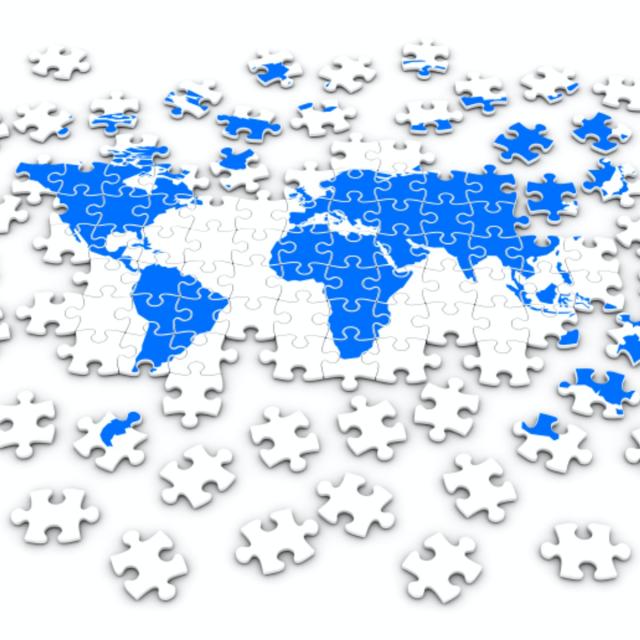
This course will provide you with an analytical framework for the study of international trade.

Historically, international trade has played a critical role in enabling countries to grow, develop, and become economically powerful. Through international trade in goods and services, the economies of different countries are more closely linked to one another now than ever before. At the same time, the world economy is more turbulent now than it has been in decades. Keeping up with the shifting international environment has become a central concern in business strategy and national economic policy. This course uses the same fundamental methods of analysis deployed in other branches of economics, as the motives and behavior of individuals and firms remain the same whether they are in the context of international trade or domestic transactions. You will learn, however, that international trade introduces an entirely new and different set of concerns as well.
This course will cover a broad array of relevant topics. We will explore both theoretical models and empirical studies as we seek to determine a model that best fits “real world” data. This course will frequently compare and contrast competing theories concerning the nature of international trade and the gains or losses thereof. We will work to understand the economic intuition behind technically demanding models and define the assumptions behind various theories before evaluating how well those models fit actual trading economies. We will also explore the relevance and policy implications of various theories/models, especially in terms of growth, income distribution, and development.

Go to Class
MOOC List is learner-supported. When you buy through links on our site, we may earn an affiliate commission.

Related Courses

Riesgos y oportunidades empresariales en una economía globalizada (Coursera) Coursera
IE Business School

Riesgos y oportunidades empresariales en una economía globalizada (Coursera)

Oportunidades y riesgos empresariales en un mundo globalizado» es el tercer y último curso de la especialización «Globalización, crecimiento económico y estabilidad» impartido por la profesora de IE Business School Gayle Allard. En este curso, los alumnos aprovecharán los conocimientos y la teoría de sus dos cursos anteriores y los aplicarán a los eventos que actualmente suceden en el mundo. Además, puede funcionar como curso independiente para quienes quieran saber cómo afectan los factores macroeconómicos a las economías, los gobiernos y los ciudadanos en diversos países.

Oct 19th 2026
5-12 Weeks
Local Economic Development (Coursera) Coursera
Erasmus University Rotterdam

Local Economic Development (Coursera)

Welcome to this MOOC on Local Economic Development (LED). Local economic development refers to the processes by which local governments, businesses, and civil society groups get together to raise income sustainably and improve their lives in a well-defined area. It’s about creating jobs, securing livelihoods, improving infrastructure and managing local resources.

Oct 19th 2026
5-12 Weeks
Unleash Your Potential: Global Citizenship (FutureLearn) FutureLearn
University of Bristol

Unleash Your Potential: Global Citizenship (FutureLearn)

Get an introduction to what it means to be a global citizen and the opportunities it creates. As our world continues to face some grand challenges, how can we act as global citizens to create a fairer society for all? Get an introduction to what global citizenship is, and what it means to be part of a global community, with this online course from the University of Bristol.

Self Paced
4 Weeks
Early Globalizations: East Meets West (1200s-1600s) (saylor.org) Saylor Academy
Saylor.org

Early Globalizations: East Meets West (1200s-1600s) (saylor.org)

This course will introduce you to the history of the world’s major civilizations from medieval times to the early modern era. You will learn about the pivotal political, economic, and social changes that took place in Asia, Africa, the Americas, and Europe during this period. The course will be structured chronologically, with each unit focusing on the expansion or decline of a particular civilization or the interactions and exchanges between civilizations.

Legacy Course
Self-Paced
Sustainable Development: The Post-Capitalist Order (edX) EdX
SDGAcademyX,SDG Academy

Sustainable Development: The Post-Capitalist Order (edX)

Sustainable development represents a shift from our current system of inequitable capitalism to one that prioritizes prosperity for all, while remaining conscious of its environmental impact and sustainability for future generations. Learn why sustainable development has been adopted by countries and multilateral organizations around the world, and how this approach is transforming the way we live, work, and govern our planet.

Self Paced
Self-Paced
Global Intimacies: Sex, Power, Gender and Migration (FutureLearn) FutureLearn
National Tsing Hua University

Global Intimacies: Sex, Power, Gender and Migration (FutureLearn)

Law

Study the evolution of intimacy in the context of global capitalism and probe the intersections of sex, love, labour and mobility. Explore how freedom of movement impacts sex, gender and our ideas of intimacy. In this time of global capitalism, travelling between countries for work and leisure is common. Global mobility has blurred the boundary between strangers and changed the meaning of intimacy.

Self Paced
4 Weeks
Arctic Economy (Coursera) Coursera
University of Alberta,UiT The Arctic University of Norway

Arctic Economy (Coursera)

Arctic communities have diverse histories and roles in local, regional and global economies. However, the scope and scale of globalization has increased so quickly that vulnerable Arctic communities are facing new kinds of challenges to their survival. In this 3-week MOOC, a unique collaboration between the University of Alberta and UiT The Arctic University of Norway, you will investigate the challenges faced by Indigenous, North American, Russian and Nordic Arctic communities in a modern world. So join us as we venture above the 60th parallel North, and explore how these fascinating communities adjust to change while maintaining their ways of life, socio-economic histories, and cultural traditions.

Oct 12th 2026
4 Weeks
Political Economy of Institutions and Development (Coursera) Coursera
Leiden University

Political Economy of Institutions and Development (Coursera)

This course is part of the SDG initiative addressing the UN Sustainable Development Goals, specifically for the following SDGs [1, 8, 10 and 16]. We hope you will join in our efforts to reach the SDG’s in small but measurable and actionable ways, cooperating with Development Done Differently. Expand your impact. You can create a better world. In today’s world, politics and economics are interconnected, but what is the nature of this connectivity?

Nov 2nd 2026
5-12 Weeks
International migrations: a global issue (Coursera) Coursera
Sciences Po

International migrations: a global issue (Coursera)

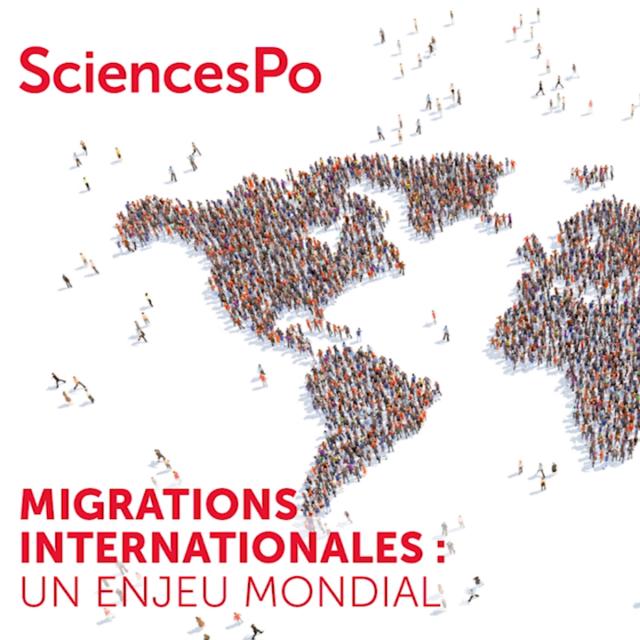
The world is moving, but not all opinions and governments are willing to accept this poorly understood reality. The issue affects both states and the planet, in a process of globalization and of regionalization of migrations, and raises new questions for international relations, now including the South. This course aims at improving knowledge of the subject, addressing the key issues raised by international migration, and assessing the trends of tomorrow.

Oct 19th 2026
5-12 Weeks
Global Marketing: Cultural Frameworks (Coursera) Coursera
University of Illinois at Urbana-Champaign

Global Marketing: Cultural Frameworks (Coursera)

This course reviews the dramatic changes that Globalization has brought to businesses. Markets are growing culturally diverse and companies face the challenge of managing an increasing culturally diverse workforce. It is then increasingly important for managers to incorporate cultural variables into their decision making models.

Oct 19th 2026
4 Weeks