International Business Context (Coursera)

International Business Context (Coursera)

This course on the context of international business provides an overview of the environments in which international business has existed in the past and how it operates in the present. First, the theory and history of international trade and the place of business in global trade are summarized. Next, the parallel topic of globalization and its impact on international business is reviewed. Then, the varied political, economic, and ethical environments in which international business must operate are discussed.

Class Deals by MOOC List - Click here and see Coursera's Active Discounts, Deals, and Promo Codes.

Finally, current international trade agreements and national trade laws and regulations are presented. Without understanding the context of international business, international managers and leaders will indeed find success difficult.
What You Will Learn

  • Interpret the history of human trade, theories of international trade, and the business of trade as antecedents of the current global economy.
  • Critique the pros and cons of recent economic globalization.
  • Evaluate the political, economic, and ethical systems in which international businesses operate.
  • Appraise the many international trade laws and agreements and evaluate national trade laws and regulations currently extant.

Course 1 of 4 in the International Business Specialization.

Syllabus

WEEK 1
International Trade
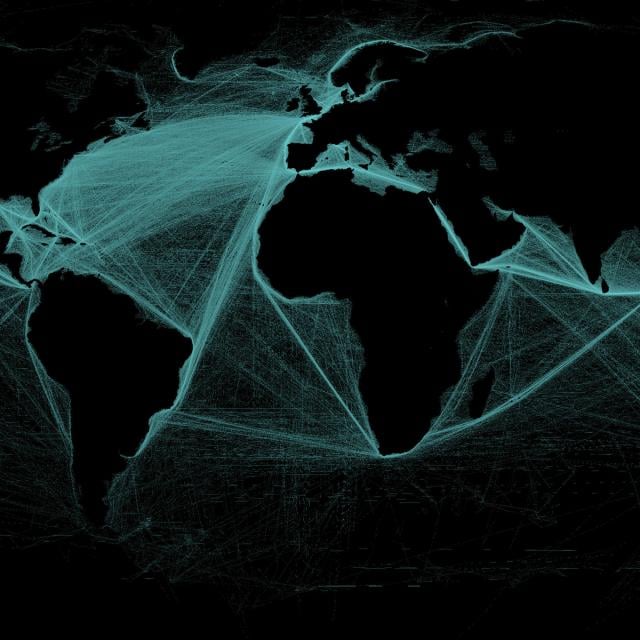
In this first module, we take a quick survey of the long history of global trade and then review some of reasons why international trade has grown so rapidly in recent decades. Next, we review the historical evolution of trade theory and review contemporary trade theories. We argue that International Business is the implementation of International, discuss the motives for engaging in international business, and present the methods that businesses employ to operate globally. Along the way we look at a huge ongoing effort to recreate an ancient trading route; we delve into history to investigate a failed theory of trade that has repercussions to this day; and will explore why one of the world’s largest companies has often failed with its global expansion efforts. So, fasten your seatbelts – we’re taking off!

WEEK 2
Globalization
A hallmark of recent decades has been the very rapid growth of international
trade. This week we will define globalization, survey some of its successes, and will review its challenges and criticisms. We will conclude with a case study of an emerging technology that may well greatly accelerate the rapid pace of globalization!

WEEK 3
International Political, Legal, and Economic Environments
This module examines the varied environments in which international businesses must operate and succeed. We first examine the underpinning of international political and legal systems. Next, we examine the underpinning of international political and legal systems. International managers must understand how these systems work and their implications for conducting international business. Finally, we tackle the challenging topics of international business ethics, corporate social responsibility (CSR), and corruption. These topics are challenging because there are no bright guidelines for defining right from wrong, good from bad, or honest from corrupt in international business. Nonetheless, international managers must frequently make difficult ethical and moral decisions, even without clear guide lines. It is imperative that managers understand these topics and their implications for conducting international operations. If managers do not understand the fundamental rules of a country in which they operate, they won’t be successful there!

WEEK 4
International Trade Law
With this module we examine the many ways that nations build barriers to impede trade to protect their domestic industries and jobs. Then, ironically, we study the many foreign trade agreements and organizations that nations create to reduce and sometimes eliminate those same barriers. We then summarize various national trade laws, such as import and export restrictions imposed by individual countries. Next, we examine Free Trade Zones that countries establish to reduce trade barriers and promote cross-border transactions. Finally, we will focus on national intellectual property laws such as patents, copyrights, and trademarks which has become critically important as much international trade now includes an abundance of high-tech and entertainment products with valuable embedded IP.

WEEK 5
Context of International Business
Go to Class
MOOC List is learner-supported. When you buy through links on our site, we may earn an affiliate commission.

Related Courses

International Business Environment (Coursera) Coursera
University of London

International Business Environment (Coursera)

This course explores the international business environment in which organisations function. You’ll learn about core analysis methods, including PESTLE, SWOT, and Boston Box Matrices, as well as the applications of Porter’s Five Forces. You’ll have the opportunity to participate in discussion forums and access case studies, as well as testing your understanding in quizzes. This course forms part of a specialization from the University of London designed to help you develop and build the essential business, academic, and cultural skills necessary to succeed in international business, or in further study.

Jul 27th 2026
4 Weeks
Local Economic Development (Coursera) Coursera
Erasmus University Rotterdam

Local Economic Development (Coursera)

Welcome to this MOOC on Local Economic Development (LED). Local economic development refers to the processes by which local governments, businesses, and civil society groups get together to raise income sustainably and improve their lives in a well-defined area. It’s about creating jobs, securing livelihoods, improving infrastructure and managing local resources.

Jul 27th 2026
5-12 Weeks
America Through Foreign Eyes (Coursera) Coursera
Rice University

America Through Foreign Eyes (Coursera)

The United States has always been a source of fascination — both attraction and repulsion — for the people of France, Mexico, China, and African countries such as Nigeria, Ghana, and Sudan. "America Through Foreign Eyes" is a rich, interdisciplinary, international course that features Rice University faculty from a variety of disciplines and area studies. Focused on perceptions of America abroad, the course is a cross between World Cultures and American Studies. The course features five core modules, each covering the perceptions and interactions of particular regions with America, Americans and Americanization.

Jul 27th 2026
5-12 Weeks
Global Marketing: Cultural Frameworks (Coursera) Coursera
University of Illinois at Urbana-Champaign

Global Marketing: Cultural Frameworks (Coursera)

This course reviews the dramatic changes that Globalization has brought to businesses. Markets are growing culturally diverse and companies face the challenge of managing an increasing culturally diverse workforce. It is then increasingly important for managers to incorporate cultural variables into their decision making models.

Jul 27th 2026
4 Weeks
Global Strategy I: How The Global Economy Works (Coursera) Coursera
University of Illinois at Urbana-Champaign

Global Strategy I: How The Global Economy Works (Coursera)

This course seeks to help you understand the forces of globalization and how cross-cultural management and the relationship of a multinational organization to various host countries is becoming more and more critical in today’s global economy. This course begins with the discussion of these issues and global relationships and delves into a deeper understanding of business strategy in today’s global business marketplace.

Jul 20th 2026
4 Weeks
International Business II (Coursera) Coursera
University of New Mexico

International Business II (Coursera)

This course, Introduction to the Global Business Environment II, focuses on managing organizations in the international economy. Building on Introduction to the Global Business Environment I, this second course focuses on organizational level and management issues in international settings. The course prepares students with practical as well as research-based knowledge and skills necessary to successfully operating an organizational across borders.

Jul 27th 2026
5-12 Weeks
China’s Economic Transformation Part 1: Economic Reform and Growth in China (Coursera) Coursera
The Hong Kong University of Science and Technology - HKUST

China’s Economic Transformation Part 1: Economic Reform and Growth in China (Coursera)

In 1978, after nearly 30 years of socialist planning under Mao Zedong, China was one of the world’s poorest countries, saddled with an inefficient, inward-looking economy. Today, China is an upper-middle income country and the world’s largest trading nation, contributing more to global economic growth than any other nation. How could such a remarkable transformation take place? This course will examine in detail the reforms that have contributed to China’s economic development and the current challenges facing the Chinese economy.

Jul 27th 2026
5-12 Weeks
International Business I (Coursera) Coursera
University of New Mexico

International Business I (Coursera)

We live in a world of intensifying global relationships, one in which international business has become the key determinant of economic development and prosperity. This course, Global Business Environment, Part I, introduces students to a fundamental understanding of the socioeconomic political, cultural, and linguistic environment in which international businesses operate.

Jul 20th 2026
5-12 Weeks
Moneyball and Globalization (Coursera) Coursera
University of Colorado Boulder

Moneyball and Globalization (Coursera)

This course will explore baseball’s historical connections to money and globalization, two of the most powerful forces in the modern era. Baseball may be a child’s game, but it has been inextricably intertwined with money and profit since its very inception in the late nineteenth century. The Reserve Clause, world tours, collective bargaining, expansion, bringing players from abroad, and realignment have always been driven as much or more by money than anything else.

Jul 27th 2026
4 Weeks
Business Opportunities and Risks in a Globalized Economy (Coursera) Coursera
IE Business School

Business Opportunities and Risks in a Globalized Economy (Coursera)

This is the last of the three courses part of the Globalization, Economic Growth and Stability Specialization.¨Business Opportunities and Risks in a Globalized World¨ is the the 3rd and final course of the ¨Globalization, Economic Growth and Stability¨ Specialization taught by IE Business School's Professor Gayle Allard. This course is designed to help an investor, businessperson or economist approach macroeconomic, institutional and international data and derive information from the indicators that point to the types of opportunities and risks that they present.

Jul 20th 2026
5-12 Weeks