Intermediate Intel® Distribution of OpenVINO™ toolkit for Deep Learning Applications (Coursera)

Offered by Intel Corporation,
Intermediate Intel® Distribution of OpenVINO™ toolkit for Deep Learning Applications (Coursera)

This course is designed for application developers who wants to deploy computer vision inference workloads using the Intel® Distribution of OpenVINOTM toolkit. The course looks at computer vision neural network models from a variety of popular machine learning frameworks and covers writing a portable application capable of deploying inference on a range of compute devices.

Class Deals by MOOC List - Click here and see Coursera's Active Discounts, Deals, and Promo Codes.

The course is targeted for application developers, and places focus on examples and discussion of the development workflow. As such, the discussions include not only the details about how to use the toolkit itself, but topics like how to take benchmarks to compare compute devices or what to do when you encounter issues. The course is made so that it serves as a how-to guide for developing a computer vision inference deployment with the toolkit. By the end of the course, students will have the skillset necessary to deploy their own computer vision application using the toolkit.
What You Will Learn

  • How to use the Model Optimizer to convert models from popular machine learning frameworks.
  • How to run benchmarks and do device comparison and validation.
  • How to use the Inference Engine to deploy to multiple types of devices.
  • How to use the Inference Engine’s asynchronous inference to handle various deployment situations.

Syllabus

WEEK 1: Intermediate Intel® Distribution of OpenVINO™ toolkit for Deep Learning Applications

Go to Class
MOOC List is learner-supported. When you buy through links on our site, we may earn an affiliate commission.

Related Courses

AI Materials (Coursera) Coursera
Korea Advanced Institute of Science and Technology - KAIST

AI Materials (Coursera)

Learn about the materials that have advanced the performance of artificial intelligence, and the machine learning models that could help accelerate the design and development of novel materials. This course defines artificial intelligence (AI) as a machine to which some or all of the functions of the human brain have been delegated. It highlights the need, and explains in an easy-to-understand way how machine learning from artificial intelligence can dramatically accelerate the development of new materials.

Aug 10th 2026
5-12 Weeks
Introducción a la programación en Python I: Aprendiendo a programar con Python (Coursera) Coursera
Pontificia Universidad Católica de Chile

Introducción a la programación en Python I: Aprendiendo a programar con Python (Coursera)

Decía Steve Jobs que “todo el mundo debería aprender a programar un ordenador porque esto te ayuda a pensar”. Hoy en día la programación es una herramienta fundamental para el desarrollo de la tecnología moderna. Este curso te introduce en el mundo de la programación en el lenguaje Python.

Aug 10th 2026
5-12 Weeks
Python and Statistics for Financial Analysis (Coursera) Coursera
The Hong Kong University of Science and Technology - HKUST

Python and Statistics for Financial Analysis (Coursera)

Python is now becoming the number 1 programming language for data science. Due to python’s simplicity and high readability, it is gaining its importance in the financial industry. The course combines both python coding and statistical concepts and applies into analyzing financial data, such as stock data.

Aug 10th 2026
4 Weeks
An Introduction to Interactive Programming in Python (Part 1) (Coursera) Coursera
Rice University

An Introduction to Interactive Programming in Python (Part 1) (Coursera)

This two-part course is designed to help students with very little or no computing background learn the basics of building simple interactive applications. Our language of choice, Python, is an easy-to learn, high-level computer language that is used in many of the computational courses offered on Coursera. To make learning Python easy, we have developed a new browser-based programming environment that makes developing interactive applications in Python simple.

Aug 10th 2026
5-12 Weeks
Probabilistic Graphical Models 1: Representation (Coursera) Coursera
Stanford University

Probabilistic Graphical Models 1: Representation (Coursera)

Probabilistic graphical models (PGMs) are a rich framework for encoding probability distributions over complex domains: joint (multivariate) distributions over large numbers of random variables that interact with each other. These representations sit at the intersection of statistics and computer science, relying on concepts from probability theory, graph algorithms, machine learning, and more. They are the basis for the state-of-the-art methods in a wide variety of applications, such as medical diagnosis, image understanding, speech recognition, natural language processing, and many, many more. They are also a foundational tool in formulating many machine learning problems.

Aug 3rd 2026
5-12 Weeks
Data Processing Using Python (Coursera) Coursera
Nanjing University

Data Processing Using Python (Coursera)

This course is mainly for non-computer majors. It starts with the basic syntax of Python, to how to acquire data in Python locally and from network, to how to present data, then to how to conduct basic and advanced statistic analysis and visualization of data, and finally to how to design a simple GUI to present and process data, advancing level by level.

Aug 10th 2026
5-12 Weeks
Preparing for the Google Cloud Professional Data Engineer Exam en Español (Coursera) Coursera
Google Cloud

Preparing for the Google Cloud Professional Data Engineer Exam en Español (Coursera)

En este curso, se emplea un enfoque descendente a fin de identificar las habilidades y los conocimientos adquiridos, así como poner en evidencia la información y las áreas de habilidades que requieren una preparación adicional. Puede aprovechar este curso para crear su propio plan de preparación personalizado. Lo ayudará a distinguir lo que sabe de lo que no. Además, le permitirá desarrollar y practicar las habilidades que se les exigen a los profesionales que realizan este trabajo.

Aug 10th 2026
1 Week
Data Science in Stratified Healthcare and Precision Medicine (Coursera) Coursera
University of Edinburgh

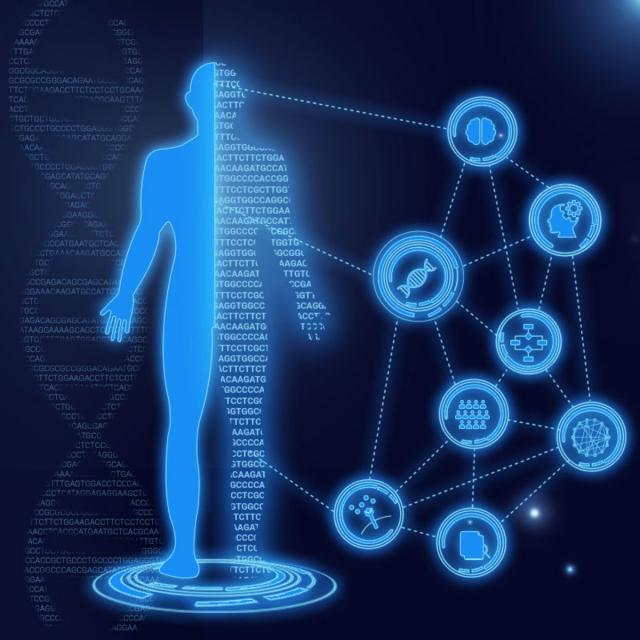
Data Science in Stratified Healthcare and Precision Medicine (Coursera)

An increasing volume of data is becoming available in biomedicine and healthcare, from genomic data, to electronic patient records and data collected by wearable devices. Recent advances in data science are transforming the life sciences, leading to precision medicine and stratified healthcare. In this course, you will learn about some of the different types of data and computational methods involved in stratified healthcare and precision medicine.

Aug 10th 2026
5-12 Weeks
Computers, Waves, Simulations: A Practical Introduction to Numerical Methods using Python (Coursera) Coursera
Ludwig-Maximilians-Universität München

Computers, Waves, Simulations: A Practical Introduction to Numerical Methods using Python (Coursera)

Interested in learning how to solve partial differential equations with numerical methods and how to turn them into python codes? This course provides you with a basic introduction how to apply methods like the finite-difference method, the pseudospectral method, the linear and spectral element method to the 1D (or 2D) scalar wave equation.

Aug 10th 2026
5-12 Weeks
Algorithmic Thinking (Part 1) (Coursera) Coursera
Rice University

Algorithmic Thinking (Part 1) (Coursera)

Experienced Computer Scientists analyze and solve computational problems at a level of abstraction that is beyond that of any particular programming language. This two-part class is designed to train students in the mathematical concepts and process of "Algorithmic Thinking", allowing them to build simpler, more efficient solutions to computational problems.

Aug 10th 2026
4 Weeks