Identity Protection and Governance  (Coursera)

Offered by Microsoft,
Identity Protection and Governance  (Coursera)

Microsoft Azure provides a comprehensive suite of security tools and services to help you safeguard your organization's data and applications. Identity Protection and governance is the right course for you if you want to become an Azure security engineer. In this course, you will learn how to protect identities in Azure AD, the core principles of enterprise governance, and Azure role-based access control (RBAC).

Class Deals by MOOC List - Click here and see Coursera's Active Discounts, Deals, and Promo Codes.

You will get acquainted with Conditional Access, multifactor authentication (MFA), and other capabilities. You will learn how to plan and configure privilege identity management (PIM). You will also learn how to manage, assign, activate, and approve requests for a privileged access group. You will explore how to investigate and remediate risks.
This course will give you an in-depth understanding of the shared responsibility model. You will learn to create policies and configure and deploy access to services using RBAC. You will see how to configure the built-in roles in Azure to control access to Azure resources. Finally, you will learn to monitor, maintain, and protect resources.
This is the second course in a series of seven courses that will prepare you to succeed in the AZ-500 exam.
This course is part of the Microsoft Azure Security Engineer Associate (AZ-500) Professional Certificate.

Sylabus

Identity protection and governance
Module 1
In this module, you will learn how to protect identities in Azure AD using Conditional Access, multifactor authentication (MFA), access reviews, and other capabilities. You will learn how to plan and configure privilege identity management (PIM) for roles and resources. You will also learn how to manage, assign, activate, and approve requests for a privileged access group. You will also learn how to investigate and remediate risks detected by Azure AD Identity Protection.

Policies, initiatives and recommendations
Module 2
In this module, you will learn about the core principles of enterprise governance. You will gain an in-depth understanding of the shared responsibility model and how it impacts security configuration. You will explore the Azure cloud security advantages. You will learn how to create policies to protect your solutions and configure and deploy access to services using role-based access control (RBAC). You will also learn about the Azure hierarchy of systems.

Role-based access control
Module 3
In this module, you will learn about Azure role-based access control (RBAC) and how to enable and assign RBAC roles, including the key differences between Azure Policy and RBAC. You will learn how to configure the built-in roles in Azure to control access to Azure resources, the structure of role definitions for access control, how to define custom role permissions, and create and assign a custom role to a user. You will also learn how to monitor, maintain, and protect resources. You will learn how to deploy Azure blueprints and design an Azure subscription management plan.

Project and graded assessment
Module 4
In this module, you will attempt a course-level ungraded project and graded assessment.

Go to Class
MOOC List is learner-supported. When you buy through links on our site, we may earn an affiliate commission.

Related Courses

Manage Resources in Azure (Coursera) Coursera
Microsoft

Manage Resources in Azure (Coursera)

In this course, you will learn how to work with the Azure command line and web portal to create, manage, and control cloud-based resources. You will look at all three approaches to deploying cloud resources and how to make an informed decision about which one to leverage for your services. You'll also quickly look at the service models supported by Azure which can help you determine the services you should start with when planning out an Azure deployment. You will learn how to install the Azure CLI locally and use it to manage Azure resources. You will also use Azure PowerShell interactively for one-off tasks and write scripts to automate repeated tasks.

Aug 3rd 2026
5-12 Weeks
Exam Prep: HashiCorp Certified Terraform Associate (003) (Coursera) Coursera
Whizlabs

Exam Prep: HashiCorp Certified Terraform Associate (003) (Coursera)

Terraform is one of the most recognized infrastructure automation tools that help in addressing various real-life challenges. This training course helps you develop your skills and knowledge in Terraform. You can learn the skills for developing cloud infrastructure in an effective and reliable manner. In addition, you can also develop the skills for the automation of infrastructure by using Terraform for public cloud platforms.

Aug 10th 2026
5-12 Weeks
Azure Infrastructure Fundamentals (Coursera) Coursera
LearnQuest

Azure Infrastructure Fundamentals (Coursera)

Microsoft Azure is a service created by Microsoft to provide cloud computing for creating and managing applications and services using a cloud environment. Azure provides software as a service (SaaS), platform as a service (PaaS) and infrastructure as a service (IaaS). The platform supports many programming languages and frameworks and can be used alone or in a multi-vendor cloud environment.

Aug 17th 2026
5-12 Weeks
AI Strategy and Governance (Coursera) Coursera
University of Pennsylvania

AI Strategy and Governance (Coursera)

In this course, you will discover AI and the strategies that are used in transforming business in order to gain a competitive advantage. You will explore the multitude of uses for AI in an enterprise setting and the tools that are available to lower the barriers to AI use. You will get a closer look at the purpose, function, and use-cases for explainable AI. This course will also provide you with the tools to build responsible AI governance algorithms as faculty dive into the large datasets that you can expect to see in an enterprise setting and how that affects the business on a greater scale.

Aug 3rd 2026
4 Weeks
Introducción al estudio de los bienes comunes (Coursera) Coursera
Universidad Nacional Autónoma de México

Introducción al estudio de los bienes comunes (Coursera)

El curso te introduce al estudio de los bienes comunes (como bosques, mecanismos de irrigación, tierras de pastoreo, pesquerías, recursos culturales o la información) y su gobernanza. El eje central del curso es la propuesta de la Teoría de la Acción Colectiva y de los Recursos Comunes, considerando sus elementos teóricos centrales y sus implicaciones metodológicas.

Aug 10th 2026
4 Weeks
Data and Urban Governance (Coursera) Coursera
Sciences Po

Data and Urban Governance (Coursera)

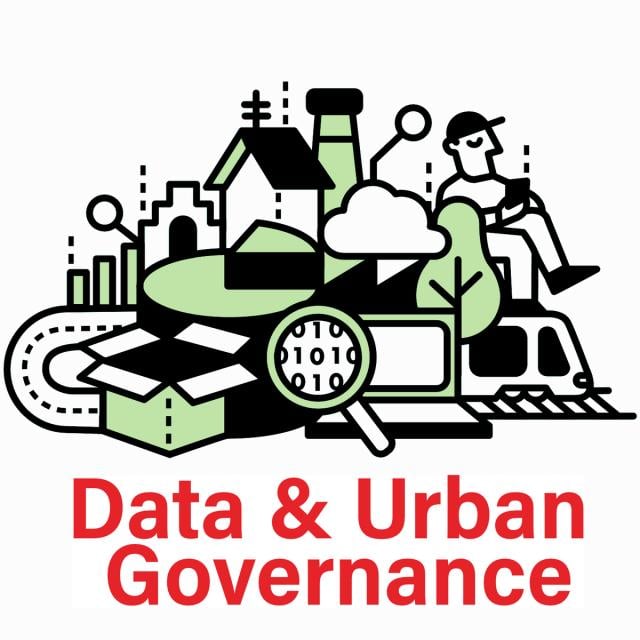
Since the beginning of the 2000s, cities have witnessed a massive influx of data, transforming how cities are governed. Data has an impact on how city life is structured, as it influences coalitions, actors, instruments, policies, and forms of regulation. In this MOOC, we will look at this shift more closely: what has the advent of big data done to urban governance? Have platforms disrupted local authorities? How has big data changed local politics? How do we govern using algorithms? What is the place of citizens in the digital city? Is it still possible to be anonymous in the city?

Aug 17th 2026
4 Weeks
Prepare for DP-100: Data Science on Microsoft Azure Exam (Coursera) Coursera
Microsoft

Prepare for DP-100: Data Science on Microsoft Azure Exam (Coursera)

Microsoft certifications give you a professional advantage by providing globally recognized and industry-endorsed evidence of mastering skills in digital and cloud businesses. In this course, you will prepare to take the DP-100 Azure Data Scientist Associate certification exam. You will refresh your knowledge of how to plan and create a suitable working environment for data science workloads on Azure, run data experiments, and train predictive models. In addition, you will recap on how to manage, optimize, and deploy machine learning models into production.

Aug 3rd 2026
5-12 Weeks
Network Dynamics of Social Behavior (Coursera) Coursera
University of Pennsylvania

Network Dynamics of Social Behavior (Coursera)

How do revolutions emerge without anyone expecting them? How did social norms about same sex marriage change more rapidly than anyone anticipated? Why do some social innovations take off with relative ease, while others struggle for years without spreading? More generally, what are the forces that control the process of social evolution –from the fashions that we wear, to our beliefs about religious tolerance, to our ideas about the process of scientific discovery and the best ways to manage complex research organizations?

Aug 3rd 2026
5-12 Weeks
Deploy a website to Azure with Azure App Service (Coursera) Coursera
Microsoft

Deploy a website to Azure with Azure App Service (Coursera)

In this course, you will see how web apps in Azure allow you to publish and manage your website easily without having to work with the underlying servers, storage, or network assets. Instead, you can focus on your website features and rely on the robust Azure platform to provide secure access to your site. You will see how Azure App Service enables you to build and host web applications in the programming language of your choice without managing infrastructure. You will also learn how to create a website through the hosted web app platform in Azure App Service.

Aug 3rd 2026
5-12 Weeks
Global Diplomacy – Diplomacy in the Modern World (Coursera) Coursera
University of London,SOAS University of London

Global Diplomacy – Diplomacy in the Modern World (Coursera)

The Global Diplomacy course is a unique offering to the MOOC environment. Bringing together cutting edge research in the broad fields of Diplomatic and International Studies, award winning distance learning delivery and the instructors previous experience of delivering a successful MOOC. Please see the volume Global Diplomacy: Theories, Types and Models authored with Dr Alison Holmes, (Westview, 2016), and the Understanding Research Methods MOOC from Coursera.

Aug 10th 2026
5-12 Weeks