How to Build Bots with SAP Intelligent Robotic Process Automation (openSAP)

Offered by SAP,
How to Build Bots with SAP Intelligent Robotic Process Automation (openSAP)

Join this free online course to learn more about SAP Intelligent Robotic process Automation. You’ll learn how to design your own bots, configure and monitor them, and understand how to make them run as digital workers or assistants.

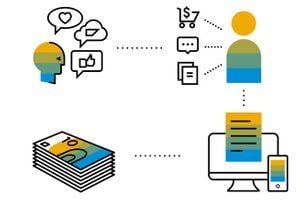
Robotic process automation (RPA) accelerates the digital transformation of business processes by automatically replicating tedious actions that have no added value. SAP Intelligent Robotic Process Automation is a complete automation suite where software robots are designed to mimic humans by replacing manual clicks and automate end-to-end scenarios for definable and repeatable business processes. 

The course will provide a solution overview and step-by-step tutorials on how to create a bot, from initial application declaration to workflow design, deployment, and how to design user interface elements and make bots run in attended and unattended modes.
After completing this course, you’ll be able to create your own bots in the Desktop Studio, know how to configure and monitor them with the Cloud Factory, and understand how to make them run as digital workers or digital assistants.

Course Content

Week 1: Introduction
Week 2: Development Phase I
Week 3: Development Phase II
Week 4: Further Topics


Go to Class
MOOC List is learner-supported. When you buy through links on our site, we may earn an affiliate commission.

Related Courses

Machine Learning With Big Data (Coursera) Coursera
University of California, San Diego

Machine Learning With Big Data (Coursera)

Want to make sense of the volumes of data you have collected? Need to incorporate data-driven decisions into your process? This course provides an overview of machine learning techniques to explore, analyze, and leverage data. You will be introduced to tools and algorithms you can use to create machine learning models that learn from data, and to scale those models up to big data problems.

Jun 22nd 2026
5-12 Weeks
Machine Learning: Classification (Coursera) Coursera
University of Washington

Machine Learning: Classification (Coursera)

Case Studies: Analyzing Sentiment & Loan Default Prediction. In our case study on analyzing sentiment, you will create models that predict a class (positive/negative sentiment) from input features (text of the reviews, user profile information,...). In our second case study for this course, loan default prediction, you will tackle financial data, and predict when a loan is likely to be risky or safe for the bank.

Jun 22nd 2026
5-12 Weeks
Neural Networks and Deep Learning (Coursera) Coursera
DeepLearning.AI

Neural Networks and Deep Learning (Coursera)

If you want to break into cutting-edge AI, this course will help you do so. Deep learning engineers are highly sought after, and mastering deep learning will give you numerous new career opportunities. Deep learning is also a new "superpower" that will let you build AI systems that just weren't possible a few years ago. In this course, you will learn the foundations of deep learning.

Jun 22nd 2026
4 Weeks
Python for Data Science, AI & Development (Coursera) Coursera
IBM

Python for Data Science, AI & Development (Coursera)

Kickstart your learning of Python for data science, as well as programming in general, with this beginner-friendly introduction to Python. Python is one of the world’s most popular programming languages, and there has never been greater demand for professionals with the ability to apply Python fundamentals to drive business solutions across industries.

Jun 23rd 2026
5-12 Weeks
Introduction to Recommender Systems: Non-Personalized and Content-Based (Coursera) Coursera
University of Minnesota

Introduction to Recommender Systems: Non-Personalized and Content-Based (Coursera)

This course, which is designed to serve as the first course in the Recommender Systems specialization, introduces the concept of recommender systems, reviews several examples in detail, and leads you through non-personalized recommendation using summary statistics and product associations, basic stereotype-based or demographic recommendations, and content-based filtering recommendations.

Jun 22nd 2026
4 Weeks
Recommender Systems: Evaluation and Metrics (Coursera) Coursera
University of Minnesota

Recommender Systems: Evaluation and Metrics (Coursera)

In this course you will learn how to evaluate recommender systems. You will gain familiarity with several families of metrics, including ones to measure prediction accuracy, rank accuracy, decision-support, and other factors such as diversity, product coverage, and serendipity. You will learn how different metrics relate to different user goals and business goals.

Jun 22nd 2026
4 Weeks
Practical Predictive Analytics: Models and Methods (Coursera) Coursera
University of Washington

Practical Predictive Analytics: Models and Methods (Coursera)

Statistical experiment design and analytics are at the heart of data science. In this course you will design statistical experiments and analyze the results using modern methods. You will also explore the common pitfalls in interpreting statistical arguments, especially those associated with big data. Collectively, this course will help you internalize a core set of practical and effective machine learning methods and concepts, and apply them to solve some real world problems.

Jun 22nd 2026
4 Weeks