Hardening, Polymers, Properties (Coursera)

Hardening, Polymers, Properties (Coursera)

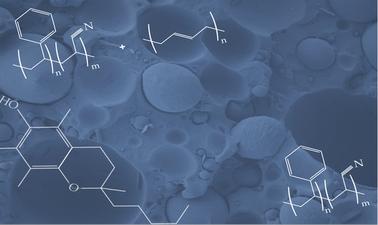
This course will introduce age hardening and how to use a phase diagram to identify an alloy that is eligible for age hardening. The key factors that affect nucleation and crystal growth will be investigated. In addition, an introduction to polymer science will be given. The key differences between thermoplastic and thermosetting polymers will be introduced. Strengthening mechanisms will be introduced. We explore what happens to the properties of a polymer as you increase or decrease the extent of cross-linking. major polymer synthesis methods will be shown.

Class Deals by MOOC List - Click here and see Coursera's Active Discounts, Deals, and Promo Codes.

We will review polymer selection for various applications. In addition, how structural properties vary with temperature will be presented. We explore the significance of the glass transition temperature of a polymer to its thermal and mechanical properties.

Course 2 of 4 in the Materials Science for Advanced Technological Applications Specialization.

What You Will Learn
The use of the phase diagram to strengthen alloy steels and be able to predict microstucture during age hardening.

Syllabus

WEEK 1
Hardening, Polymers, Properties
This course will introduce age hardening and how to use a phase diagram to identify an alloy that is eligible for age hardening. The key factors that affect nucleation and crystal growth will be investigated. In addition, an introduction to polymer science will be given. The key differences between thermoplastic and thermosetting polymers will be introduced. Strengthening mechanisms will be introduced. We explore what happens to the properties of a polymer as you increase or decrease the extent of cross-linking. major polymer synthesis methods will be shown. We will review polymer selection for various applications. In addition, how structural properties vary with temperature will be presented. We explore the significance of the glass transition temperature of a polymer to its thermal and mechanical properties.

WEEK 2
Module 1: Age Hardening Alloys
In this module, we will discuss age hardening as a means of controlling the properties of various materials.

WEEK 3
Module 2: Polymers
In this module, we explore the different kinds of polymers, polymer concepts and methods of polymer synthesis.

WEEK 4
Module 3: Polymer Processing
In this module, we will examine the different methods used to process polymers.

WEEK 5
Module 4: Polymer Behaviors
In this module, we will discuss the relationships between atomic and crystal structure and the thermal and mechanical properties of a material.

Go to Class
MOOC List is learner-supported. When you buy through links on our site, we may earn an affiliate commission.

Related Courses

Cellular Polymers: Structure, Properties, Processing, Applications (edX) EdX
University of Bayreuth,BayreuthX

Cellular Polymers: Structure, Properties, Processing, Applications (edX)

Take our MOOC and dive deep into Cellular Polymers. Understand what makes them superior to other materials, how they are processed and why they are used in countless applications in our everyday life. This MOOC is your first step in the pioneering field of Cellular Polymers that connects chemistry, physics, materials science, engineering, and technology. Get yourself ready and enroll now.

Self Paced
Self-Paced
Mechanics of Materials I: Fundamentals of Stress & Strain and Axial Loading (Coursera) Coursera
Georgia Institute of Technology

Mechanics of Materials I: Fundamentals of Stress & Strain and Axial Loading (Coursera)

This course explores the topic of solid objects subjected to stress and strain. The methods taught in the course are used to predict the response of engineering structures to various types of loading, and to analyze the vulnerability of these structures to various failure modes. Axial loading with be the focus in this course.

Jun 22nd 2026
5-12 Weeks
Plastics in Infrastructure and the Environment (edX) EdX
Purdue University,PurdueX

Plastics in Infrastructure and the Environment (edX)

Through this course, students will gain an appreciation of the complexity of issues surrounding polymers in civil and environmental engineering. During this course, you will examine the fundamental concepts that are the foundation of polymer science and engineering and gain an appreciation of the field’s complexity and multidisciplinary nature.

May 16th 2022
5-12 Weeks
Creativity, Innovation, and Change (Coursera) Coursera
Pennsylvania State University

Creativity, Innovation, and Change (Coursera)

Our lives are being disrupted by pandemics, global warming, wars, political chaos, and technological innovations. We must prepare for an unpredictable and unknown future - and this is the goal of the course on Creativity, Innovation and Transformation (CIT)! CIT is an upgrade of the former Creativity, Innovation and Change (CIC) course, which is now streamlined and updated with a new module on Transformation.

Jun 22nd 2026
4 Weeks
Conceptos y Herramientas para la Física Universitaria (Coursera) Coursera
Tecnológico de Monterrey

Conceptos y Herramientas para la Física Universitaria (Coursera)

Este curso provee al estudiante con conceptos y herramientas matemáticas para modelar problemas en física, que al aplicar podrá enfrentar con éxito los cursos de física universitarios. Así pues, la filosofía de este curso consiste en cubrir temas conceptuales relativos a la Física y desarrollar tu capacidad de aprender y aplicarlos en tu vida profesional.

Jun 22nd 2026
5-12 Weeks
Digital Manufacturing & Design (Coursera) Coursera
University at Buffalo,The State University of New York

Digital Manufacturing & Design (Coursera)

This course will expose you to the transformation taking place, throughout the world, in the way that products are being designed and manufactured. The transformation is happening through digital manufacturing and design (DM&D) – a shift from paper-based processes to digital processes in the manufacturing industry. By the end of this course, you’ll understand what DMD is and how it is impacting careers, practices and processes in companies both large and small.

Jun 22nd 2026
2 Weeks
Machine Design Part I (Coursera) Coursera
Georgia Institute of Technology

Machine Design Part I (Coursera)

“Machine Design Part I” is the first course in an in-depth three course series of “Machine Design.” The “Machine Design” Coursera series covers fundamental mechanical design topics, such as static and fatigue failure theories, the analysis of shafts, fasteners, and gears, and the design of mechanical systems such as gearboxes. Throughout this series of courses we will examine a number of exciting design case studies, including the material selection of a total hip implant, the design and testing of the wing on the 777 aircraft, and the impact of dynamic loads on the design of an bolted pressure vessel. In this first course, you will learn robust analysis techniques to predict and validate design performance and life.

Jun 22nd 2026
5-12 Weeks
Quantitative Methods (Coursera) Coursera
University of Amsterdam

Quantitative Methods (Coursera)

Discover the principles of solid scientific methods in the behavioral and social sciences. Join us and learn to separate sloppy science from solid research! This course will cover the fundamental principles of science, some history and philosophy of science, research designs, measurement, sampling and ethics. The course is comparable to a university level introductory course on quantitative research methods in the social sciences, but has a strong focus on research integrity. We will use examples from sociology, political sciences, educational sciences, communication sciences and psychology.

Jun 22nd 2026
5-12 Weeks
Electrical Properties and Semiconductors (Coursera) Coursera
Arizona State University

Electrical Properties and Semiconductors (Coursera)

In this course, we will explore the electrical properties of materials and classify different materials as conductors, semiconductors or insulators. We will look at some examples of conductors, semiconductors and insulators, and note the key factors that cause the differences in their electrical properties. We will use rudimentary band theory to show how temperature impacts the conductivity of the three classifications of materials. We will learn what causes the differences in electrical behavior of a p-type versus an n-type semiconductor in a p-n diode.

Jun 15th 2026
5-12 Weeks
Technology of modern composite materials with carbon fillers (Coursera) Coursera
Peter the Great St. Petersburg Polytechnic University

Technology of modern composite materials with carbon fillers (Coursera)

The course will help train specialists in the field of processing of hydrocarbon raw materials, creating effective chemical means for protecting agricultural plants and animals, new materials, including advanced alloys (superalloys), advanced polymers, advanced composite materials, advanced ceramic materials, metal powders and metal-powder compositions, and metamaterials. The purpose of the course is to provide students with knowledge about modern technologies and methods for using composite materials with carbon fillers and their application in various industries.

Jul 18th 2022
4 Weeks