The Great Sustainability Transition: Global Challenges, Local Actions (FutureLearn)

Offered by Leiden University,
The Great Sustainability Transition: Global Challenges, Local Actions (FutureLearn)

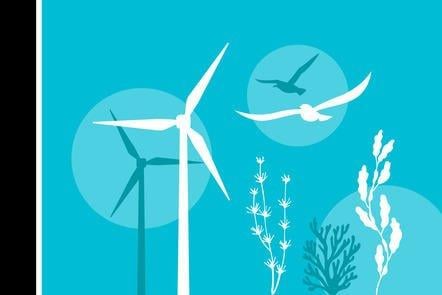
Discover how global environmental crises are connected, their impacts, and how to take action in your local community. Learn from experts in environmental science at Leiden University. We are living in an era of unprecedented environmental change. As a result, we are experiencing biodiversity loss, climate change, and overuse of freshwater resources, to name just a few. All of these affect fundamental ecosystem processes, causing change on a local and global scale. On this four-week course from Leiden University, you’ll learn how these huge environmental crises are interconnected and how they impact our planet.

Class Deals by MOOC List - Click here and see FutureLearn's Active Discounts, Deals, and Promo Codes.

By the end, you’ll be empowered to take action in your local environment by engaging in real-world activities within your community.

Understand the risk of biodiversity loss
You’ll start by examining the planetary boundaries and how we could exceed key boundaries, risking an increasingly uninhabitable planet.
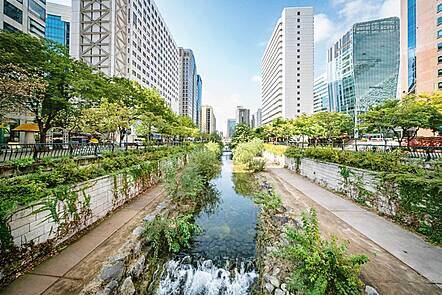
Next, you’ll explore biodiversity to understand its value and threats. With this knowledge, you’ll learn more about the biodiversity in your community and how to promote it.

Explore climate breakdown and environmental change
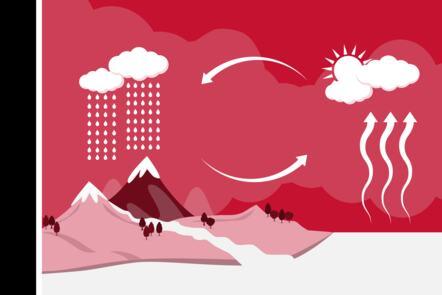
As you delve into the environmental changes happening to our planet, you’ll unpack the consequences of climate breakdown.
You’ll look at the big picture and learn how to debunk climate misinformation before exploring what you can do to take local action.

Learn how to take collective action to tackle big issues such as pollution
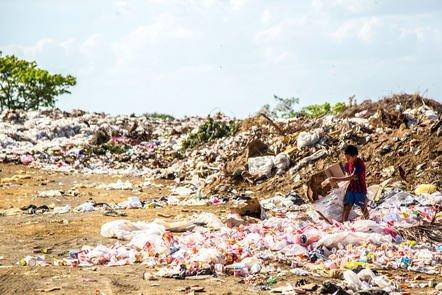
You’ll gain insights into how pollution affects the planet as you develop the skills to assess the different risks associated with this threat. This knowledge will help you understand how to take collective action against issues such as plastic pollution.
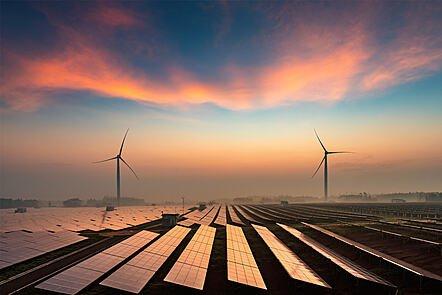
Finally, you’ll explore the global and local transitions needed for a better future. This knowledge will ensure you finish the course with the skills to tackle local issues in your community which will help have a global impact.

Syllabus

Week 1: Biodivesity
Week 2: Climate Breakdown
Week 3: Pollution
Week 4: The Great Transitions

What will you achieve?
By the end of the course, you‘ll be able to...

  • Explain Planetary Boundaries and their link to affluence and population
  • Reflect on the intrinsic value of biodiversity and ecosystem services
  • Describe the basic mechanics of climate change and the extreme effects of climate change on human systems
  • Explore the known and unknown solutions to climate change with the concepts of mitigation, adaptation and suffering
  • Describe the different kinds of pollution and provide details on effect and impact
  • Apply what was learned to local issues, through analysis of local, community, national and global levels
  • Explain possible reasons for why we have not acted faster to climate change
  • Explore solutions to common action problems

Who is the course for?
This course is designed for anyone interested in the global environmental crises and how to translate this to a local setting.
You’ll learn, skill up, and become engaged with important environmental issues.

Go to Class
MOOC List is learner-supported. When you buy through links on our site, we may earn an affiliate commission.

Related Courses

Environmental Challenges: Justice in Natural Resource Management (FutureLearn) FutureLearn
University of Leeds

Environmental Challenges: Justice in Natural Resource Management (FutureLearn)

How do we ensure that the difficult decisions about the management of natural resources are just and fair for all? When looking at different societies and cultures around the world, it is interesting how ubiquitous the principles of justice are. It is part of our human nature to think about equality, and consider fairness as something that we do naturally. However, in practical terms, equality is hard to achieve.

Sep 30th 2024
2 Weeks
Climate Change and Resilience in Food Systems (FutureLearn) FutureLearn
University of Leeds,Africap

Climate Change and Resilience in Food Systems (FutureLearn)

Learn new research-led strategies designed to mitigate the effects of climate change on agriculture and food systems. Learn about the effects of climate change and how to build resilience in agriculture and food systems. Even small climate changes can have large-scale consequences in agriculture and food systems with devastating effects for the people and their economies. On this course, you will learn strategies designed to mitigate the impact of climate change, develop resilient food systems and create sustainable development in local communities.

Sep 23rd 2024
2 Weeks
From Waste to Value: How to Tackle Food Waste (FutureLearn) FutureLearn
University of Reading,EIT Food,EIT

From Waste to Value: How to Tackle Food Waste (FutureLearn)

Discover the causes and impact of food waste, and learn how you can tackle it on a personal, community, and national level. Explore how combatting food waste and food loss can help the environment. The significant contribution the food system makes to climate change is widely recognised, and consumers are increasingly concerned about food waste. On this course, you’ll explore how you – as a consumer – can act and inspire others to reduce food waste effectively and sustainably.

Feb 6th 2023
3 Weeks
Environmental Challenges: Scarcity and Conflict in the Natural Environment (FutureLearn) FutureLearn
University of Leeds

Environmental Challenges: Scarcity and Conflict in the Natural Environment (FutureLearn)

War and conflict can severely disrupt the governance of the environment. What is the impact on both people and the environment? This course explores three aspects of conflict and resource scarcity, and applies these to explore decision making and negotiation skills. Human conflict has both short and long term effects on the natural world.

Nov 25th 2024
2 Weeks
Fashion Values: Cultures (FutureLearn) FutureLearn
London College of Fashion

Fashion Values: Cultures (FutureLearn)

Use storytelling to contribute to equitable, inclusive and diverse cultures in and through fashion. Reimagine fashion as a powerful medium to explore and amplify cultures. On this four-week course from London College of Fashion, you’ll learn how to find and tell stories of the ingenuity and creativity of fashion in its many cultural forms.

Dec 5th 2022
4 Weeks
Discovering Science: Global Challenges (FutureLearn) FutureLearn
University of Leeds

Discovering Science: Global Challenges (FutureLearn)

Can chemistry help to feed a growing population, or overcome increasing bacterial resistance? Find out how the Penicillin class of antibiotics has been a major breakthrough in the treatment of patients. However, with bacteria developing efficient ways of resisting antibiotic treatment, discover how scientists are treating patients with infections resulting from resistant bacteria.

Sep 23rd 2024
2 Weeks
Introduction to Environmental Cost-Benefit Analysis (FutureLearn) FutureLearn
Deakin University

Introduction to Environmental Cost-Benefit Analysis (FutureLearn)

Boost your sustainability career as you gain the practical skills to conduct an environmental cost-benefit analysis. This two-week course will arm you with the skills to be able to choose and implement strategies for carbon reduction in your organisation. What’s more, you’ll gain expertise in environmental cost-benefit analysis to translate climate action into real value for your company.

Aug 28th 2023
2 Weeks
Renewable Energy: Sustainable Electricity Supply with Microgrids (FutureLearn) FutureLearn
University of Leeds

Renewable Energy: Sustainable Electricity Supply with Microgrids (FutureLearn)

Explore approaches to electrification, microgrids, and how to harness this form of renewable energy to achieve sustainability. Learn and assess different electrification approaches from around the world. On this two-week course, you will learn how electricity is generated globally and explore different approaches to electrification. You will then learn technical aspects of electrification options via a national grid, off grid, micro and mini grids and reflect on the barriers to affordable, clean and fair access to electricity.

Sep 23rd 2024
2 Weeks
Environmental Challenges: Hierarchy in Property Rights (FutureLearn) FutureLearn
University of Leeds

Environmental Challenges: Hierarchy in Property Rights (FutureLearn)

How does language help us develop our relationship with nature and determine the rights of access and ownership? Increasing populations and social changes are pressurising our relationship with the environment. Property rights are embedded in power structures and land management. This course explores the different ways that nature is perceived by different types of societies and the impact of property rights on natural resource management.

Oct 28th 2024
2 Weeks
Chemical Engineering: Shaping a Sustainable Future (FutureLearn) FutureLearn
University of Leeds

Chemical Engineering: Shaping a Sustainable Future (FutureLearn)

Learn how chemical engineering can help to solve global challenges and explore its role in delivering sustainable development. Understand how chemical engineers can provide sustainable solutions. Chemical engineers are leading the way in providing answers to global challenges such as climate change, food security, and effective healthcare. On this two-week course, you will be introduced to the exciting world of chemical engineering. You’ll explore how chemical engineers develop and design chemical manufacturing processes to provide sustainable solutions.

Feb 16th 2026
2 Weeks
Educating for Sustainable Development (ESD) in Schools and Universities (FutureLearn) FutureLearn
University College London

Educating for Sustainable Development (ESD) in Schools and Universities (FutureLearn)

Explore the global challenges facing sustainable development worldwide and how to introduce them in schools and HE institutions. Develop the skills to examine sustainable development with all learners. As part of the UN Sustainable Development Goals, schools and universities have a responsibility to educate all learners on sustainability. On this three-week course, you’ll gain an overview of the key issues relating to sustainability and how to deliver this knowledge, whether you teach in schools or higher education.

Oct 30th 2023
3 Weeks