EdX

Grabar y mezclar música (edX)

Grabar y mezclar música (edX)

Conoce y práctica las técnicas y herramientas que necesita un productor musical para escribir y producir su propia música. Este curso de producción musical se concentrará en escribir una canción en la que trabajarás en las próximas cuatro semanas.

Class Deals by MOOC List - Click here and see EdX's Active Discounts, Deals, and Promo Codes.

El próximo paso es prepararte para convertir tu idea en una grabación musical. ¿Cómo harás realidad tu visión en la fase de producción? La mejor manera de avanzar es hacer un cronograma y un plan detallado de producción dividido en tres partes, en este curso te mostraremos cómo hacerlo. Mientras avanzas en el proceso, recuerda que trabajarás con software de producción contemporáneo el cual te ofrece la maravillosa ventaja de poder realizar cambios en el futuro.
Finalmente, en este curso de música, realizarás cualquier modificación final necesaria en tu arreglo en respuesta a la evaluación constructiva de tus pares y de expertos de musica sobre tu última tarea, y luego harás una mezcla final y publicarás el resultado.
En este curso conocerás el proceso creativo y de implementación al cual se enfrenta un productor de música en un estudio de grabación profesional.
This course is part of the Grabación y producción musical XSeries Program.

What you'll learn

  • Empezar a escuchar y a pensar con la sensibilidad de un productor de música
  • Definir el objetivo emocional de una canción y cómo componerla
  • Encontrar el balance entre el sueño y la realidad del contexto de tus proyectos musicales
  • Crear estrategias para establecer una colaboración musical exitosa
  • Maximizar el impacto de la estructura de una canción
  • Evaluar y determinar si una composición musical necesita secciones nuevas o diferentes
  • Aumentar el impacto en los oyentes de las diferentes secciones de una canción
  • Balancear el valor de la letra con el valor de la música
  • Definir un «norte» estético para tus producciones a través del uso de instrumentación y arreglos musicales
Go to Class
MOOC List is learner-supported. When you buy through links on our site, we may earn an affiliate commission.

Related Courses

Exploring Beethoven's Piano Sonatas (Coursera) Coursera
Curtis Institute of Music

Exploring Beethoven's Piano Sonatas (Coursera)

Our relationship to Beethoven is a deep and paradoxical one. For many musicians, he represents a kind of holy grail: His music has an intensity, rigor, and profundity which keep us in its thrall, and it is perhaps unequalled in the interpretive, technical, and even spiritual challenges it poses to performers. At the same time, Beethoven’s music is casually familiar to millions of people who do not attend concerts or consider themselves musically inclined. Two hundred years after his death, he is everywhere in the culture, yet still represents its summit. This course takes an inside-out look at the 32 piano sonatas from the point of view of a performer.

Oct 26th 2026
5-12 Weeks
World Music: Global Rhythms (edX) EdX
MIT,MITx

World Music: Global Rhythms (edX)

Learn to recognize, feel and play rhythms from around the world. In this course, you’ll be learning about musical rhythm from across the world. You don’t have to read music notation to take this course; you don’t have to play an instrument. You don’t need to know any special musical terminology or theory to begin; You will learn all the concepts you need as we go… and the terminology and how it varies across the world.

Self Paced
Self-Paced
First Nights - Stravinsky’s Rite of Spring: Modernism, Ballet, and Riots (edX) EdX
HarvardX,Harvard University

First Nights - Stravinsky’s Rite of Spring: Modernism, Ballet, and Riots (edX)

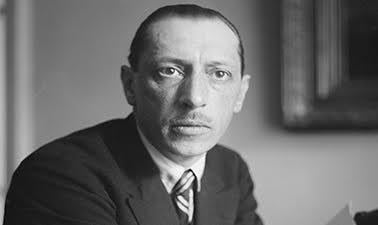
Learn the fascinating history of Igor Stravinsky’s The Rite of Spring, one of the most challenging and rewarding ballets ever written. Igor Stravinsky’s The Rite of Spring premiered in Paris in 1913, sparking a riot and screaming so loud that the dancers could not hear the orchestra, and the choreographer had to shout numbers from backstage to keep the dancers on beat.

Self Paced
Self-Paced
History of Rock, Part Two (Coursera) Coursera
University of Rochester

History of Rock, Part Two (Coursera)

This course, part 2 of a 2-course sequence, examines the history of rock, primarily as it unfolded in the United States, from the early 1970s to the early 1990s. This course covers the music of Led Zeppelin, the Allman Brothers, Carole King, Bob Marley, the Sex Pistols, Donna Summer, Michael Jackson, Madonna, Prince, Metallica, Run-DMC, and Nirvana, and many more artists, with an emphasis both on cultural context and on the music itself. We will also explore how developments in the music business and in technology helped shape the ways in which styles developed.

Oct 26th 2026
5-12 Weeks
The Music of the Beatles (Coursera) Coursera
University of Rochester

The Music of the Beatles (Coursera)

The Music of the Beatles will track the musical development of the band, starting from the earliest days in Liverpool and Hamburg, moving through the excitement of Beatlemania, the rush of psychedelia, and the maturity of Abbey Road. While the focus will be on the music, we will also consider how recording techniques, the music business, the music of other artists, and the culture of the 1960s affected John, Paul, George, and Ringo as they created the Beatles repertory.

Oct 26th 2026
5-12 Weeks
First Nights: Monteverdi’s L’Orfeo and the Birth of Opera (edX) EdX
HarvardX,Harvard University

First Nights: Monteverdi’s L’Orfeo and the Birth of Opera (edX)

Learn about Claudio Monteverdi’s L’Orfeo, one of the first operas ever written. Claudio Monteverdi’s L’Orfeo premiered in Mantua in 1607, and continues to be regarded as one of the most important examples of early opera. With L’Orfeo, Monteverdi helped to establish the techniques and traditions that continue to inform the genre of opera to this day.

Self Paced
Self-Paced
Artistic Research in Music – an Introduction (edX) EdX
KU Leuven University,KULeuvenX

Artistic Research in Music – an Introduction (edX)

Learn about the topics, issues, and approaches of artistic research in music – research in and through musical practice - vital to today’s musicians and music culture. Artistic research (AR) is one of the most vibrant areas of creative thought in music – in the academic and professional worlds, but also among artists of all kinds who want to develop their practice by working and thinking coherently through its implications, questions, context and potential.

Self Paced
Self-Paced
Music Technology Foundations (edX) EdX
University of Adelaide,AdelaideX

Music Technology Foundations (edX)

Learn how to use creative technologies to make your own music and get a step closer to a career in music. Technology has greatly altered how we write, listen to and enjoy music. This music course will show you how to apply new technologies to your own creative practice.

Self Paced
Self-Paced
Fundamentos de la guitarra eléctrica y acústica (edX) EdX
Berklee College of Music,BerkleeX

Fundamentos de la guitarra eléctrica y acústica (edX)

Desarrolla las habilidades musicales necesarias para tocar la guitarra acústica o eléctrica. Este curso de guitarra te lleva de la teórica musical a la práctica. Este curso de música enfocado en cómo tocar guitarra te permitirá conocer e implementar los conocimientos necesarios para aprender a tocar guitarra eléctrica o acústica. Este curso de guitarra tendrá un enfoque amigable, permitiéndote desarrollar rápidamente las habilidades necesarias para dominar la guitarra, elMOOC comenzará con la teoría básica de la música, luego pasará por la técnica de la interpretación y terminará con la exploración del instrumento.

Self Paced
Self-Paced
First Nights - Beethoven's 9th Symphony and the 19th Century Orchestra (edX) EdX
HarvardX,Harvard University

First Nights - Beethoven's 9th Symphony and the 19th Century Orchestra (edX)

Learn about Beethoven’s monumental 9th Symphony and forms of orchestral music. Ludwig van Beethoven’s 9th Symphony premiered in Vienna in 1824, and continues to be one of the most popular symphonies in the repertoire. The monumental symphony’s size and complexity stretches traditional instrumental forms to the breaking point, and its famous choral finale changed our view of orchestral music forever.

Self Paced
Self-Paced