EdX

Genetics: The Fundamentals (edX)

Offered by MIT, MITx,
Genetics: The Fundamentals (edX)

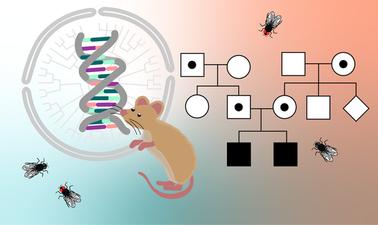
How do we know what we know about heredity? Enhance your scientific thinking and experimental design skills with this in-depth adventure through genetics. How do we study the inheritance of different traits? How does that information help us understand heritable diseases? Professors Michael Hemann and Peter Reddien will challenge you to take your foundational knowledge of genetics to the next level. You will explore the foundations of the field of genetics and how to apply those concepts to understand modern studies of heredity.

Class Deals by MOOC List - Click here and see EdX's Active Discounts, Deals, and Promo Codes.

This is the first genetics course in a multi-part series. Building upon the concepts from biochemistry, genetics, and molecular biology from our 7.00x Introductory Biology MOOC, these genetics courses go to a new level of depth. How do we know what we know about heredity and how can we design experiments to test hypotheses in genetics?
We developed the 7.03x Genetics series with an emphasis on:

  • Developing your scientific thinking skills including articulating hypotheses, designing experiments, performing thought experiments, and interpreting data.
  • Using data based on real scientific experiments and highlighting the scientific process in assessments.
  • Asserting that biology is an active field that changes daily through examples of research and relevance to medicine, not static information in a textbook.
  • Uniting themes and principles that inform how scientists conduct and interpret research.

Implementing the science of learning in the course design.

What you'll learn

  • How to appreciate the applications of genetics to everyday life.
  • How to apply terminology appropriately to concepts in genetics.
  • How to justify the use of specific techniques and methods for answering different genetic questions.
  • How to design genetic crosses to make conclusions about genotypes, modes of inheritance, and linkage.
  • How to use a quantitative approach to determine different genetic probabilities and calculate genetic distances.

Syllabus

  • Introduction to Genetics
  • Mendelian Genetics
  • Inheritance Patterns and Pedigrees
  • Recombination and Linkage
  • Tools for Analyzing Linkage
  • Analyzing Human Mendelian Traits

Go to Class
MOOC List is learner-supported. When you buy through links on our site, we may earn an affiliate commission.

Related Courses

Genética y Evolución: una aproximación cotidiana (edX) EdX
Universidad Autonoma de Madrid,UAMx

Genética y Evolución: una aproximación cotidiana (edX)

Conoce las disciplinas de la genética y la evolución desde una aproximación accesible y entretenida. ¿Es el ADN un microchip que nos guía por la vida? ¿Somos los seres humanos parte de la evolución?¿Por qué no hay dos personas iguales? Este curso ofrece una aproximación cercana y comprensible a las disciplinas de la genética y la evolución, para exponer la importancia de conceptos como ADN, gen, cromosoma, mutación, o selección natural, revelando cómo se interrelacionan de forma accesible cualquier persona interesada.

Self Paced
Self-Paced
Causes of Human Disease: Exploring Cancer and Genetic Disease (FutureLearn) FutureLearn
University of Leeds

Causes of Human Disease: Exploring Cancer and Genetic Disease (FutureLearn)

Explore how the unravelling of genetic code has led to a deeper understanding of genetic diseases and cancer. It’s widely known that some diseases run in families. The discovery of the structure of DNA and the unravelling of the genetic code has led to a deeper understanding of such diseases. We now know more about the genetic basis of cancer and how cancer cells are formed and reproduce. On this course you’ll explore the structure of DNA, its processes and learn how genetic disease results from DNA alterations.

Self Paced
2 Weeks
Classical papers in molecular genetics (Coursera) Coursera
University of Geneva

Classical papers in molecular genetics (Coursera)

You have all heard about the DNA double helix and genes. Many of you know that mutations occur randomly, that the DNA sequence is read by successive groups of three bases (the codons), that many genes encode enzymes, and that gene expression can be regulated. These concepts were proposed on the basis of astute genetic experiments, as well as often on biochemical results. The original articles were these concepts appeared are however not frequently part of the normal curriculum of biologists, biochemists and medical students.

Oct 19th 2026
5-12 Weeks
Big Data, Genes, and Medicine (Coursera) Coursera
The State University of New York

Big Data, Genes, and Medicine (Coursera)

This course distills for you expert knowledge and skills mastered by professionals in Health Big Data Science and Bioinformatics. You will learn exciting facts about the human body biology and chemistry, genetics, and medicine that will be intertwined with the science of Big Data and skills to harness the avalanche of data openly available at your fingertips and which we are just starting to make sense of.

Oct 12th 2026
5-12 Weeks
Why Do We Age? The Molecular Mechanisms of Ageing (FutureLearn) FutureLearn
University of Groningen,University Medical Center Groningen - UMCG

Why Do We Age? The Molecular Mechanisms of Ageing (FutureLearn)

Why do we age? Is there a limit to human lifespan? Can we prolong our lives? Find out with this free online course. Discover the science behind the ageing process. The “why” and “how” of ageing has puzzled mankind ever since it questioned its place in the universe.

Self Paced
5-12 Weeks
Pensamiento Científico (Coursera) Coursera
Universidad Nacional Autónoma de México

Pensamiento Científico (Coursera)

¿El pensamiento científico es sólo para científicos? Su utilidad va mucho más allá, ayudando a las personas a tomar mejores decisiones todos los días. El objetivo de este curso es fomentar en pensamiento científico en los alumnos para ayudarles a tomar mejores decisiones profesionales, personales y sociales.

Oct 26th 2026
5-12 Weeks
Personalised Medicine from a Nordic Perspective (Coursera) Coursera
University of Iceland,University of Copenhagen

Personalised Medicine from a Nordic Perspective (Coursera)

The technical revolution has generated large amounts of data in healthcare and research, and a rapidly increasing knowledge about factors of importance for the individual’s health. This holds great potential to support a change from the one-size-fits-all paradigm to personalised or precision medicine, to guide and thereby improve each health decision of expected benefit for the patient.

Oct 19th 2026
5-12 Weeks