Fundamentals of Red Hat Enterprise Linux (Coursera)

Offered by Red Hat,
Fundamentals of Red Hat Enterprise Linux (Coursera)

This course will provide you with a basic introduction to Linux® skills using Red Hat® Enterprise Linux 8. It will show you how a Linux system is organized, and will demonstrate introductory system administration tasks, which you will be able to practice on your own. You will be introduced to reasons why Linux and the open source development model are so important in today's computing environment. Linux systems are used everywhere—the internet, point-of-sale systems, and the world's stock markets. You’ll find Linux running smart TVs, in-flight entertainment systems, and most of the top supercomputers in the world.

Class Deals by MOOC List - Click here and see Coursera's Active Discounts, Deals, and Promo Codes.

There are many reasons why it is valuable for you to learn Linux. If you are looking for new opportunities in IT, Linux skills are in high demand. For example, if you are developing applications, it's likely your application or its runtime is hosted on Linux. If you're working in the cloud, your cloud instances may be based on Linux, and your private or public cloud environment is also probably based on Linux. If you're working with mobile applications or the Internet of Things, it is also likely that the operating system of your device is based on Linux. And, if you use Windows, you'll need to interoperate with Linux.
After completing this course, you will have a solid introduction to working with Linux from the command line, using Red Hat Enterprise Linux 8 as a model. In applying these skills, you will be able to perform fundamental operational tasks, whether your Linux machine is on your desk or on a remote system across the Internet.
Course 1 of 3 in the Linux and Private Cloud Administration on IBM Power Systems Specialization.
What You Will Learn

  • Access the command line.
  • Manage files from the command line.
  • Manage local Linux users and groups.
  • Monitor and manage Linux processes.

Syllabus

WEEK 1: Getting Started with Red Hat Enterprise Linux -Describe and define open source, Linux, Linux distributions, and Red Hat Enterprise Linux.
WEEK 2: Accessing the Command Line
WEEK 3: Managing Files From the Command Line
WEEK 4: Creating, Viewing, and Editing Text Files
WEEK 5: Managing Local Linux Users and Groups
WEEK 6: Controlling Access to Files with Linux File System Permissions
WEEK 7: Monitoring and Managing Linux Processes
WEEK 8: Installing and Updating Software Packages
WEEK 9:Comprehensive Review

Go to Class
MOOC List is learner-supported. When you buy through links on our site, we may earn an affiliate commission.

Related Courses

Agile Software Development (Coursera) Coursera
University of Minnesota

Agile Software Development (Coursera)

Software industry is going crazy on agile methods. It is rapidly becoming the choice for software development where requirements are unpredictable or is expected to change over time. This course will help you gain knowledge on what is agile? Why agile is better suited for these situations? We will also cover some of the most common agile frameworks like scrum and XP in depth.

Sep 28th 2026
4 Weeks
Enterprise and Infrastructure Security (Coursera) Coursera
New York University

Enterprise and Infrastructure Security (Coursera)

This course introduces a series of advanced and current topics in cyber security, many of which are especially relevant in modern enterprise and infrastructure settings. The basics of enterprise compliance frameworks are provided with introduction to NIST and PCI. Hybrid cloud architectures are shown to provide an opportunity to fix many of the security weaknesses in modern perimeter local area networks.

Sep 28th 2026
4 Weeks
操作系统原理 (Operating Systems) (Coursera) Coursera
Peking University

操作系统原理 (Operating Systems) (Coursera)

操作系统原理》是针对计算机科学技术专业三年级本科生开设的一门专业基础课程。本课程着重学生系统观的培养,通过重点讲述操作系统的内部结构、工作原理及典型技术的实现,使学生建立起对操作系统的整体及各个功能模块的认识,从而系统掌握计算机的专业知识,进一步提升学生的软件开发能力乃至系统软件开发能力。

Sep 28th 2026
13-24 Weeks
MBSE: Model-Based Systems Engineering (Coursera) Coursera
University at Buffalo,The State University of New York

MBSE: Model-Based Systems Engineering (Coursera)

This Model-Based Systems Engineering (MBSE) course and the Digital Thread courses featured earlier in this specialization bring together the concepts from across digital manufacturing and design, forming a vision in which the geometry of a product is just one way of describing it. MBSE is where the model resulting from the evolution of system requirements, design, analysis, verification and validation activities is the focus of design and manufacturing.

Sep 28th 2026
4 Weeks
Interfacing with the Arduino (Coursera) Coursera
University of California, Irvine

Interfacing with the Arduino (Coursera)

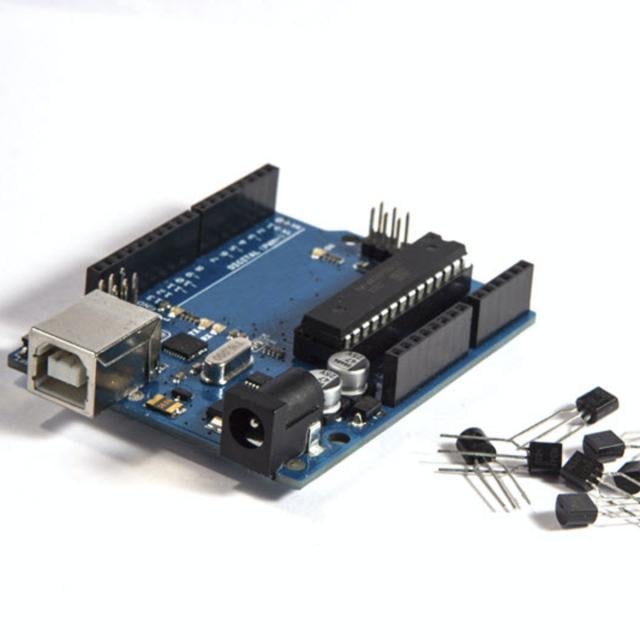
Arduino senses the environment by receiving inputs from add-on devices such as sensors, and can control the world around it by adjusting lights, motors, and other actuators. In this class you will learn how and when to use the different types of sensors and how to connect them to the Arduino. Since the external world uses continuous or analog signals and the hardware is digital you will learn how these signals are converted back-and-forth and how this must be considered as you program your device. You'll also learn about the use of Arduino-specific shields and the shields software libraries to interface with the real world.

Sep 28th 2026
4 Weeks
Agile with Atlassian Jira (Coursera) Coursera
Atlassian

Agile with Atlassian Jira (Coursera)

Agile teams use “just enough” planning and an incremental approach to accomplishing the work of the team. Every project and every team uses a custom agile methodology. This course discusses common foundational principles and practices used by agile methodologies, providing the student a flexible set of tools to use in any role (e.g. product owner, scrum master, project manager, team member) on any agile team.

Sep 28th 2026
4 Weeks
Network Principles in Practice: Linux Networking (Coursera) Coursera
University of Colorado Boulder

Network Principles in Practice: Linux Networking (Coursera)

Welcome! In this course, titled "Network Principles in Practice: Linux Networking," we delve into the dynamic domain of Linux Networking, featuring a robust set of features essential for contemporary networked systems. Departing from traditional approaches, our emphasis is on practical application over foundational knowledge. Throughout the course, you'll explore the integration of concepts into Linux, gaining hands-on experience in architecting and implementing complex networks and systems.

Oct 12th 2026
5-12 Weeks
Making the Case for Robotic Process Automation (Coursera) Coursera
Association of International Certified Professional Accountants - AICPA

Making the Case for Robotic Process Automation (Coursera)

Robotic Process Automation (RPA) is reshaping the accounting and finance profession. 40% of transactional accounting work is expected to be automated by 2020 and predicted to touch 230 million knowledge workers, 9% of the global workforce, according to McKinsey Research. Driven by the need to stay competitive, decrease costs and increase efficiency, RPA is quickly making a significant impact on the profession. Companies no longer think about "if" but "when" to implement RPA.

Oct 5th 2026
2 Weeks
Cybersecurity Job Search and Interviews: Getting Started (Coursera) Coursera
University System of Georgia

Cybersecurity Job Search and Interviews: Getting Started (Coursera)

Are you planning to have a career in cybersecurity? This course can help you plan your preparation for such a career as well as give some advice on finding positions and landing a position. What you will learn: the process and resources for finding the perfect cybersecurity job; the cybersecurity professional’s role in an organization’s cybersecurity effort; the knowledge preparation for the cybersecurity professional from an education versus training perspective.

Oct 12th 2026
5-12 Weeks
Version Control with Git (Coursera) Coursera
Atlassian

Version Control with Git (Coursera)

The Version Control with Git course provides you with a solid, hands-on foundation for understanding the Git version control system. Git is open source software originally created by Linus Torvalds. Git manages team files for large and small projects. This allows the team to continuously improve its product. It is used by most major technology companies, and is assumed knowledge for many modern programming and IT jobs. It is a core component of DevOps, continuous delivery pipelines and cloud-native computing. You could also use Git to manage the many continuously improving revisions of that book that you are writing.

Oct 5th 2026
4 Weeks