EdX

Fundamentals of Quantum Information (edX)

Fundamentals of Quantum Information (edX)

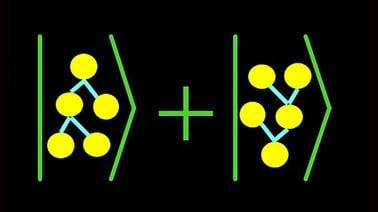
Learn how quantum information is represented mathematically via quantum circuits and how to manipulate quantum entanglement with these circuits. Take away the hardware, and all quantum computers work the same way, through the clever manipulation of quantum information and entanglement. This course provides a deeper understanding of some of the topics covered in our Quantum 101 program, namely, the representation and manipulation of quantum information at the level of abstract quantum circuits.

Class Deals by MOOC List - Click here and see EdX's Active Discounts, Deals, and Promo Codes.

Specifically, single and multi-qubit gates and circuits are introduced, and basic algorithms and protocols such as quantum state teleportation, superdense coding, and entanglement swapping are discussed. The course also presents quantum gate sets, their universality, and compilations between different gate expressions. These concepts are then made concrete with the Quantum Inspire simulator (a cloud-based quantum computing platform, created and maintained by QuTech at TU Delft), and the physics and operations with spin qubits will be detailed. The course concludes with an examination of quantum supremacy and near-term quantum devices, also known as “noisy-intermediate scale” (NISQ) quantum computing.
The course is a journey of discovery, so we encourage you to bring your own experiences, insights and thoughts to discuss on the forum!
This course is authored by experts from the QuTech research center at Delft University of Technology. In the center, scientists and engineers work together to drive research and development in quantum technology. QuTech Academy’s aim is to inspire, share and disseminate knowledge about the latest developments in quantum technology.

What you'll learn

  • Utilize quantum circuits to represent, manipulate, and measure single/multi-qubit quantum states
  • Create entanglement and use it to teleport information
  • Compile quantum circuits to universal gate sets
  • Use electron spins to store quantum information in Quantum Inspire
  • Understand quantum supremacy and NISQ devices

Syllabus

  • Quantum circuits, gates, measurement
  • Teleportation, superdense coding, entanglement swapping
  • Quantum compiling, universal gate sets
  • Encoding functions into unitaries, quantum parallelism
  • Quantum Inspire, physics and operations with spin qubits
  • Quantum supremacy and the NISQ era
Go to Class
MOOC List is learner-supported. When you buy through links on our site, we may earn an affiliate commission.

Related Courses

Physical Basics of Quantum Computing (Coursera) Coursera
Saint Petersburg State University

Physical Basics of Quantum Computing (Coursera)

Quantum information and quantum computations is a new, rapidly developing branch of physics that has arisen from quantum mechanics, mathematical physics and classical information theory. Significant interest in this area is explained by the great prospects that will open upon the implementation of its ideas, capturing almost all areas of human activity related to the transfer, storage and processing of information.

Jul 25th 2022
5-12 Weeks
Introduction to Water and Climate (edX) EdX
Delft University of Technology,DelftX

Introduction to Water and Climate (edX)

Water is a crucial element in climate and for society. Find out about the latest engineering interventions for water management in rivers, coasts and the urban environment. Water is essential for life on Earth and of crucial importance for society. Water also plays a major role in affecting climate. Its natural cycle, from ocean to atmosphere by evaporation, then by precipitation back to land returning via rivers and aquifers to the oceans, has a decisive impact on regional and global climate patterns.

Self Paced
Self-Paced
The Engineering of Structures Around Us (edX) EdX
DartmouthX,Dartmouth College

The Engineering of Structures Around Us (edX)

Explore how engineers design bridges and buildings in our communities and iconic structures around the world. In this introductory course, you’ll learn some engineering principles that can be applied to structural systems everywhere: in nature, in furniture, in mechanical and aerospace systems, and in any solid object that resists a load. Together we’ll explore how structures work, why they were designed the way they were designed, how they support loads, and where forces flow through them.

Self Paced
Self-Paced
Introduction to Quantum Information (Coursera) Coursera
Korea Advanced Institute of Science and Technology - KAIST

Introduction to Quantum Information (Coursera)

The course provides an introduction to quantum information at a beginning graduate level. It focuses on the fundamental understanding of how information is processed with quantum systems and how the quantum properties apply to computing and communication tasks. The course begins by presenting quantum theory as the framework of information processing. Quantum systems are introduced with single and two qubits. Axioms of quantum theory such as states, dynamics, and measurements are explained as preparation, evolution, and readout of qubits. Quantum computing and quantum communication are explained.

Nov 2nd 2026
5-12 Weeks
Introduction to Quantum Computing for Everyone (edX) EdX
University of Chicago,UChicagoX

Introduction to Quantum Computing for Everyone (edX)

This first course in quantum computing is for novices and requires learners to have only basic algebra. It covers the future impacts of quantum computing, provides intuitive introductions of quantum physics phenomenon, and progresses from single operations to a complete algorithm. Quantum computing is coming closer to reality, with 80+ bit machines in active use. This course provides an intuitive introduction to the impacts, underlying phenomenon, and programming principles that underlie quantum computing.

Self Paced
Self-Paced
The Basics of Transport Phenomena (edX) EdX
Delft University of Technology,DelftX

The Basics of Transport Phenomena (edX)

Learn the basic framework to work on a broad spectrum of engineering problems concerning transfer of heat, mass and momentum. Learn through examples of everyday processes at home, in the lab and in industry. Have you ever wondered why ventilation helps to cool down your hot chocolate? Do you know why a surfing suit keeps you warm? Why iron feels cold, while wood feels warm at room temperature? Or how air is transferred into aqueous liquids in a water treatment plant? How can we sterilize milk with the least amount of energy? How does medicine spread in our tissue? Or how do we design a new cooling tower of a power plant? All these are phenomena that involve heat transfer, mass transfer or fluid flow.

Self Paced
Self-Paced
CS50's Introduction to Computer Science (edX) EdX
HarvardX,Harvard University

CS50's Introduction to Computer Science (edX)

An introduction to the intellectual enterprises of computer science and the art of programming. This is CS50, Harvard University's introduction to the intellectual enterprises of computer science and the art of programming for majors and non-majors alike, with or without prior programming experience. An entry-level course taught by David J. Malan, CS50 teaches students how to think algorithmically and solve problems efficiently.

Self Paced
Self-Paced
Electrotechnique I (edX) EdX
École Polytechnique Fédérale de Lausanne,EPFLx

Electrotechnique I (edX)

Découvrez les circuits électriques linéaires. Apprenez à les maîtriser et à les résoudre, dans un premier temps en régime continu puis en régime alternatif. Ce cours définit les notions de base des circuits électriques composés des trois éléments passifs (résistance, inductance et condensateur), linéaires et des sources de tension et de courant.

Self Paced
Self-Paced
IT Fundamentals for Business Professionals: Enterprise Systems (edX) EdX
Universitat Politècnica de València,UPValenciaX

IT Fundamentals for Business Professionals: Enterprise Systems (edX)

Working with Information Technology (IT) without the necessary background? Learn the fundamentals of Information Systems in a corporate environment. This course is one of the 5 courses of an introductory business information systems series, designed to introduce you to the amazing world of Information Technology.

Self Paced
Self-Paced
Applied Quantum Computing III: Algorithm and Software (edX) EdX
Purdue University,PurdueX

Applied Quantum Computing III: Algorithm and Software (edX)

Learn domain-specific quantum algorithms and how to run them on present-day quantum hardware. This course is part III of the series of Quantum computing courses, which covers aspects from fundamentals to present-day hardware platforms to quantum software and programming. The goal of part III is to discuss some of the key domain-specific algorithms that are developed by exploiting the fundamental quantum phenomena (e.g. entanglement)and computing models discussed in part I.

Mar 25th 2024
5-12 Weeks