Introduction to Quantum Information (Coursera)

Introduction to Quantum Information (Coursera)

The course provides an introduction to quantum information at a beginning graduate level. It focuses on the fundamental understanding of how information is processed with quantum systems and how the quantum properties apply to computing and communication tasks. The course begins by presenting quantum theory as the framework of information processing. Quantum systems are introduced with single and two qubits. Axioms of quantum theory such as states, dynamics, and measurements are explained as preparation, evolution, and readout of qubits. Quantum computing and quantum communication are explained.

Class Deals by MOOC List - Click here and see Coursera's Active Discounts, Deals, and Promo Codes.

Entanglement is identified as a key resource of quantum information processing. Manipulation and quantification of entangled states are provided.
Quantum information processing opens an avenue to new information technologies beyond the current limitations but, more importantly, provides an approach to understanding information processing at the most fundamental level. What is desired is to find how Nature performs information processing with the quantum and classical systems. The ultimate power of Nature in computing and communication may be found and understood. The course provides a modest step to learn quantum information about how physical systems can be manipulated by the laws of quantum mechanics, how powerful they are in practical applications, and how the fundamental results make quantum advantages.

Syllabus

WEEK 1: Quantum Theory to Information Technologies
WEEK 2: Single qubit
WEEK 3: Bipartite quantum systems
WEEK 4: Quantum computing
WEEK 5: Quantum communication
WEEK 6: Entanglement
WEEK 7: Summary
Go to Class
MOOC List is learner-supported. When you buy through links on our site, we may earn an affiliate commission.

Related Courses

Advanced statistical physics (edX) EdX
École Polytechnique Fédérale de Lausanne,EPFLx

Advanced statistical physics (edX)

We explore statistical physics in both classical and open quantum systems. Additionally, we will cover probabilistic data analysis that is extremely useful in many applications. This course covers non-equilibrium statistical processes and the treatment of fluctuation dissipation relations by Einstein, Boltzmann and Kubo. Moreover, the fundamentals of Markov processes, stochastic differential and Fokker Planck equations, mesoscopic master equation, etc will be treated in detail. Prior knowledge of statistical physics is highly recommended but not required.

Self Paced
Self-Paced
The Introduction to Quantum Computing (Coursera) Coursera
Saint Petersburg State University

The Introduction to Quantum Computing (Coursera)

"Quantum Computing" is among those terms that are widely discussed but often poorly understood. The reasons of this state of affairs may be numerous, but possibly the most significant among them is that it is a relatively new scientific area, and it's clear interpretations are not yet widely spread. The main obstacle here is the word "quantum", which refers to quantum mechanics - one of the most counter-intuitive ways to describe our world.

Aug 8th 2022
5-12 Weeks
Quantum Mechanics for Scientists and Engineers 2 (edX) EdX
StanfordOnline

Quantum Mechanics for Scientists and Engineers 2 (edX)

This course covers key topics in the use of quantum mechanics in many modern applications in science and technology, introduces core advanced concepts such as spin, identical particles, the quantum mechanics of light, the basics of quantum information, and the interpretation of quantum mechanics, and covers the major ways in which quantum mechanics is written and used in modern practice.

Self Paced
Self-Paced
Quantum Machine Learning (with IBM Quantum Research) (openHPI) OpenHPI
Hasso-Plattner-Institut

Quantum Machine Learning (with IBM Quantum Research) (openHPI)

Whether we stream our favorite series, develop new drugs or have us being chauffeured by a self-driving car -- machine learning is an essential part of our modern life, and of our future. But the growing amount of data and our increasing demands pose difficulties for today's classical computers. Can quantum computing overcome these challenges? What potentials does the emerging field of quantum machine learning have? In this course, we will not only learn about quantum machine learning and its prospects, but we will also solve concrete tasks with both classical and quantum models.

Jan 11th 2023
2 Weeks
Understanding Quantum Computers (FutureLearn) FutureLearn
Keio University

Understanding Quantum Computers (FutureLearn)

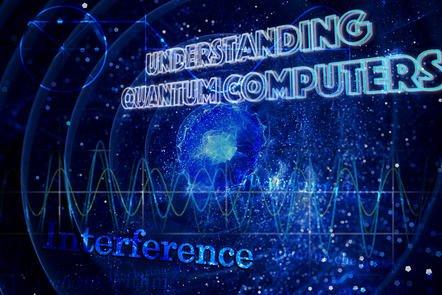
Explore the key concepts of quantum computing and find out how it’s changing computer science with this introductory course. In this course, we will discuss the motivation for building quantum computers, cover the important principles in quantum computing, and take a look at some of the important quantum computing algorithms.

Self Paced
3 Weeks
Applied Quantum Computing III: Algorithm and Software (edX) EdX
Purdue University,PurdueX

Applied Quantum Computing III: Algorithm and Software (edX)

Learn domain-specific quantum algorithms and how to run them on present-day quantum hardware. This course is part III of the series of Quantum computing courses, which covers aspects from fundamentals to present-day hardware platforms to quantum software and programming. The goal of part III is to discuss some of the key domain-specific algorithms that are developed by exploiting the fundamental quantum phenomena (e.g. entanglement)and computing models discussed in part I.

Mar 25th 2024
5-12 Weeks
Quantum Networking (edX) EdX
Purdue University,PurdueX

Quantum Networking (edX)

Learn about the science and engineering of future quantum networks whose security is guaranteed by laws of quantum physics. Applying exotic quantum properties such as entanglement to every-day applications such as communication and computation reveals new dimensions of such applications. Quantum encoding and entanglement distribution provide means to establish fundamentally secure communication links for transfer of classical and quantum data.

Mar 27th 2023
5-12 Weeks
Quantum Optics 1 : Single Photons (Coursera) Coursera
École Polytechnique

Quantum Optics 1 : Single Photons (Coursera)

This course gives you access to basic tools and concepts to understand research articles and books on modern quantum optics. You will learn about quantization of light, formalism to describe quantum states of light without any classical analogue, and observables allowing one to demonstrate typical quantum properties of these states. These tools will be applied to the emblematic case of a one-photon wave packet, which behaves both as a particle and a wave.

Nov 2nd 2026
5-12 Weeks
Physical Basics of Quantum Computing (Coursera) Coursera
Saint Petersburg State University

Physical Basics of Quantum Computing (Coursera)

Quantum information and quantum computations is a new, rapidly developing branch of physics that has arisen from quantum mechanics, mathematical physics and classical information theory. Significant interest in this area is explained by the great prospects that will open upon the implementation of its ideas, capturing almost all areas of human activity related to the transfer, storage and processing of information.

Jul 25th 2022
5-12 Weeks