EdX

Fundamentals of Microeconomics (edX)

Fundamentals of Microeconomics (edX)

Learn how to analyze markets and gain a solid foundation in economic concepts. Are you interested in obtaining a solid background in economics? This economics course offers a thorough view of markets, including their strengths and failures. You will learn how to view markets from an economist’s perspective to help you better understand the most relevant economic problems.

Class Deals by MOOC List - Click here and see EdX's Active Discounts, Deals, and Promo Codes.

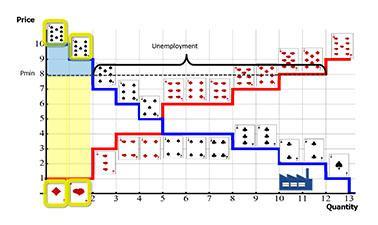
This course follows a rigorous approach that combines visual arguments with realistic examples to help you connect core economic concepts with your own experience.

At the end of this course, you will be able to answer questions like:

  • Why do most people in rich countries have a mortgage and why is it a problem that those in the developing world do not?
  • Why is the environment one of the most challenging problems of modern societies?
  • How could we estimate the economic impact of cannabis legalization?
  • The only required knowledge is certain familiarity with graph reading and basic high school mathematics.

What you'll learn

  • Basic tools of analysis in economics
  • The model of perfect competition and its elements
  • Elasticities and their applications
  • Taxes, subsidies and government intervention
  • Why markets fail and what to do about it:
  • Market power
  • Asymmetric information
  • Externalities
  • Public goods

Syllabus

Week 1: Introduction
Scarcity, opportunity cost, efficiency and equity, how are resources allocated in reality? Theories, models and assumptions. Model I of international trade: how countries trade what they have? Model II of international trade: how countries specialize? Some useful economic concepts.

Week 2: The Demand
The market. The model of perfect competition. Other market structures. The demand (I): Introduction. The demand (II): The unit-demand case. The demand (III): The general case. Marginal utilities. Market demands. Linear demands. Movements and shifts.

Week 3: The Supply
The unit-supply case. The costs. The general case. Movements and shifts. Elasticities (I): Definitions. Elasticities (II): applications.

Week 4: The equilibrium
Definition. The relevance of the equilibrium: logical and experimental support. Applications of the equilibrium (I): comparative statics. Applications of the equilibrium (II): welfare analysis. Measuring welfare. Estimating demand and supply in reality.

Week 5: Government intervention
Regulated prices. Taxes (I): classification. Taxes (II): analysis. Taxes (III): welfare. Taxes (IV): the incidence of a tax. Taxes (V): formal analysis.

Week 6: Market failures (I)
Introduction to market failures. Market power (I): definition. Market power (II): a model. Market power (III): welfare analysis. Market power (IV): comparative statics. Market power (V): barriers to entry. Market power (VI): solutions. Asymmetric information. Adverse selection. Moral hazard.

Week 7: Market failures (II)
Externalities (I). Classification of externalities. Externalities (II) Private solutions to externalities. Externalities (III) Public solutions to externalities. Public goods (I): definition. Public goods (II): analysis.


Go to Class
MOOC List is learner-supported. When you buy through links on our site, we may earn an affiliate commission.

Related Courses

Understanding Wireless: Technology, Economics, and Policy (edX) EdX
University of Notre Dame,NotreDameX

Understanding Wireless: Technology, Economics, and Policy (edX)

Interested in learning how mobile smartphones and tablets convert digital information to and from electromagnetic signals in the radio frequency (RF) spectrum? Curious how radio designers and spectrum regulators avoid harmful interference within a network or among different wireless services? Debating whether television (TV) band spectrum or cellular spectrum is more valuable to society?

No sessions available
5-12 Weeks
Financial Development and Financial Inclusion (edX) EdX
International Monetary Fund - IMF,IMFx

Financial Development and Financial Inclusion (edX)

Learn how to develop an efficient, inclusive and stable financial sector that is essential for a thriving economy. This course was developed by the IMF in collaboration with the European Investment Bank. Higher rates of financial inclusion and financial market development mean more prosperous societies. But how to make it all happen? This course outlines common ways countries develop robust financial sectors – from banks to equity markets.

Self Paced
Self-Paced
Cosmopolitan Tang: Aristocratic Culture in China (edX) EdX
HarvardX,Harvard University

Cosmopolitan Tang: Aristocratic Culture in China (edX)

Explore the reunification of China under the Tang with a focus on aristocratic culture — from poetry to calligraphy to literature. By the Tang period, China was divided into northern and southern dynasties with different rulers and political systems. The north was conquered by relatively unsophisticated barbarians, but in the south, the aristocratic families established a refined appreciation of writing and literature.

Self Paced
Self-Paced
Principles of Microeconomics: An Economist Way of Thinking (edX) EdX
University of Queensland,UQx

Principles of Microeconomics: An Economist Way of Thinking (edX)

Explore the fundamentals of microeconomics including economic efficiency, scarcity and opportunity costs. This course will set you up to think like an economist and to identify how economics relates to the everyday choices we make. Recent global economic and non-economic events have highlighted the importance of informed and well reasoned decision making of resource allocation and efficiency. This course focuses on how decision making units within the economy (e.g. consumers, firms, government departments) make choices and how choices can be made in a way that makes best possible use of limited available resources.

Self Paced
Self-Paced
China’s First Empires and the Rise of Buddhism (edX) EdX
HarvardX,Harvard University

China’s First Empires and the Rise of Buddhism (edX)

Learn about the Qin and Han dynasties, and how Buddhism and ideas of self-realization influenced the medieval period. This course, the second in a collection on Chinese history and culture, addresses how the Qin dynasty conquered China and established a new system of government and how the Han dynasty built a stable, centralized empire that lasted for hundreds of years. We cover the early history of Buddhism in China and how the rising feudal aristocracy responded to the loss of empire by looking inward.

Self Paced
Self-Paced
Programmation et Politiques Financières, Première Partie: Analyse des Comptes Macroéconomiques (edX) EdX
International Monetary Fund - IMF,IMFx

Programmation et Politiques Financières, Première Partie: Analyse des Comptes Macroéconomiques (edX)

Un cours sur les comptes macroéconomiques, leurs interrelations, et l’analyse des événements économiques. Quel est l’état de santé de l’économie ? Comment la politique économique peut-elle rétablir ou contribuer à la bonne santé d’un pays ? Ces questions sont au cœur de la programmation financière. Nos cours de PPF (Programmation et politiques financières) vous permettront d’acquérir les bases nécessaires pour y répondre.

Self Paced
Self-Paced
Forwards and Futures (edX) EdX
New York Institute of Finance

Forwards and Futures (edX)

Develop a comprehensive, practical understanding of forwards and futures including market conventions, contract specifications, valuation, and trading strategies. In this course – Forwards and Futures, the basic financial theories and concepts relevant to the topic will be discussed. The relationship between Forwards and Futures and the underlying security will also be explained. We'll also review concepts such as cost of carry, transportation, storage, and convenience factors that should be incorporated in the valuation of Forwards and Futures.

Self Paced
Self-Paced
Introduction to Economics: Microeconomics (edX) EdX
Seoul National University,SNUx

Introduction to Economics: Microeconomics (edX)

Learn the basics of microeconomics, including supply and demand of commodities and how equilibrium in the market affects price. A country’s economy consists of three major economic agents; consumers, firms and government. Analyzing the choices made by these economic agents is one of the main subjects of microeconomics. In this economics and finance course, you will learn how the decisions made by economic agents are represented in the market as demand and supply of commodities.

Self Paced
Self-Paced