EdX

Financial Regulation: From the Global Financial Crisis to Fintech and the COVID Pandemic (edX)

Offered by MIT, MITx,
Financial Regulation: From the Global Financial Crisis to Fintech and the COVID Pandemic (edX)

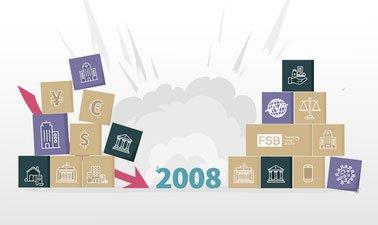
How financial regulation responded to the Global Financial Crisis of 2008 and its implications for regulating Fintech and responding to the Covid-19 pandemic. The course stresses the interplay between the financial industry and its regulators in shaping regulations and their effectiveness.

Class Deals by MOOC List - Click here and see EdX's Active Discounts, Deals, and Promo Codes.

This course will provide the underpinning rationale for financial regulation and evaluate the post-Global Financial Crisis reforms in this light, noting adaptions that were required due to systemic nature of the crisis and the need to ensure private sector compliance. It then applies these rationales and lessons learned to current topics in Fintech and the response to the Covid-19 pandemic.
The objectives of this course are to:
Identify the goals of financial regulation and understand the conditions under which regulation would make the financial system safer and more efficient and when it could be counterproductive.
Identify the precursors and vulnerabilities that give rise to financial crisis, including historical contexts, technological developments, and private sector responses to previous regulation.
Understand the main tools currently in use to mitigate stand-alone risks in individual financial institutions as well as stability risks to the financial system as a whole and evaluate their effectiveness, noting unintended consequences.
Apply the basic rationales and goals for regulation to technological financial innovations (e.g., fintech) and how the post-2008 reforms have influenced the ongoing responses to the financial implications of the COVID pandemic.


“Understanding how financial regulation evolved following the Global Financial Crisis of 2008, and how it shaped the financial industry, is vital for regulators and for the financial practitioners they regulate. This course provides the underpinnings for a critical assessment, challenging us to think through how regulation needs to adapt to today’s challenges.”
-- Dr. Ben Bernanke, former chair of the Federal Reserve

What you'll learn

  • Goals and limitations of financial regulation
  • Vulnerabilities prior to the 2008 Global Financial Crisis and subsequent reforms
  • Types of policy tools used to prevent weak institutions and financial instability
  • Applications to fintech and the recent COVID pandemic

Syllabus

Module 0: How the Regulatory World Changed after the Global Financial Crisis
Module 1: Why Regulate?
Module 2: Housing and Finance
Module 3: Banks and Non-bank Financial Institutions
Module 4: Capital and Liquidity
Module 5: Systemically-Important Financial Institutions and “Too Big to Fail”
Module 6: OTC Derivatives Reforms and Market Infrastructures
Module 7: Regulation of the Future: Adding Fintech to the Mix
Module 8: Altering Regulation to Respond to the COVID19 Pandemic


Go to Class
MOOC List is learner-supported. When you buy through links on our site, we may earn an affiliate commission.

Related Courses

Unlocking Investment and Finance in Emerging Markets and Developing Economies (EMDEs) (edX) EdX
World Bank Group,WBGx

Unlocking Investment and Finance in Emerging Markets and Developing Economies (EMDEs) (edX)

To achieve the Sustainable Development Goals (SDGs) by 2030, an estimated $4.5 trillion per year in additional investment and finance in EMDEs will need to be mobilized. This free online course assesses global efforts and innovations by international investors, multilateral development banks and policymakers to unlock massive investment opportunities in EMDEs, while also tackling some of the world’s most pressing development challenges of our time.

Self Paced
Self-Paced
Introducción a la inversión bursátil (edX) EdX
Universitat Politècnica de València,UPValenciaX

Introducción a la inversión bursátil (edX)

Aprende las bases de la inversion en bolsa. Conoce los productos en que invertir, graficos e indicadores que usan los gestores profesionales. Este curso pretende dar una visión panorámica e introductoria de la inversión en bolsa. Se presentan los diferentes productos en los que podemos invertir o con los que podemos especular. También se introducen los diferentes tipos de gráficos, los indicadores más habituales entre los gestores profesionales, y algunas estrategias rentables tanto para el inversor a largo plazo como para el inversor intradía.

Self Paced
Self-Paced
Virtual Training to Advance Revenue Administration - Strategic Management (edX) EdX
International Monetary Fund - IMF,IMFx

Virtual Training to Advance Revenue Administration - Strategic Management (edX)

If you are a tax administrator looking to develop your skills or simply catch up on the latest in tax administration, enroll this first module of the VITARAx Courses! Get to know the strategic management and its techniques, tools, and procedures, and the guidelines for strategic management implementation, regardless of the size or composition of your tax administration.

Self Paced
Self-Paced
Sustainable Corporate Financing: Foundations (edX) EdX
ZHAWx,ZHAW Zurich University of Applied Sciences

Sustainable Corporate Financing: Foundations (edX)

The course “Sustainable Corporate Financing – Foundations” will provide the foundations of corporate finance with a particular focus on how sustainability aspects relate to corporate financing decisions. Four action areas regarding sustainable corporate financing are elaborated on and discussed. Theoretical know-how will be accompanied by case studies and practical examples.

Self Paced
Self-Paced
Financial Market Analysis (edX) EdX
International Monetary Fund - IMF,IMFx

Financial Market Analysis (edX)

Learn the fundamentals of finance that are essential for both investors and policymakers. In this IMFx course you will learn, from hands-on demonstrations, how to price different types of bonds, how to calculate different measures of bond yields and how to compare them across different types of instruments. You will become familiar with the term structure of interest rates, a key ingredient in establishing benchmark rates used to price securities in the markets and a valuable tool for monetary policy design and diagnosis.

Self Paced
Self-Paced
Introduction to Economics: Microeconomics (edX) EdX
Seoul National University,SNUx

Introduction to Economics: Microeconomics (edX)

Learn the basics of microeconomics, including supply and demand of commodities and how equilibrium in the market affects price. A country’s economy consists of three major economic agents; consumers, firms and government. Analyzing the choices made by these economic agents is one of the main subjects of microeconomics. In this economics and finance course, you will learn how the decisions made by economic agents are represented in the market as demand and supply of commodities.

Self Paced
Self-Paced
Introduction to Bookkeeping (edX) EdX
ACCA

Introduction to Bookkeeping (edX)

Start learning at your own pace to get a qualification and a career in business and finance, with this introduction level course from ACCA-X. Interested in a career in accounting? Want to stand out from the crowd? Look no further, this is the place to start. As accounting is so integral to the successful running of a business, the Introduction to Bookkeeping course is designed to arm you with the fundamentals you need to grasp the basic concepts underpinning accounting.

Self Paced
Self-Paced
Corporate Finance (edX) EdX
Indian Institute of Management, Bangalore,IIMBx

Corporate Finance (edX)

Learn the ideas, concepts and tools managers use to make the right financial decisions. Business organizations are constantly engaged in financial decision-making related to financial planning, investments, capital purchases, etc. The right financial decisions play a critical role in maximizing an organization’s business value.

Self Paced
Self-Paced