Excel Modeling for Professionals: Best Practices & Pitfalls (Coursera)

Excel Modeling for Professionals: Best Practices & Pitfalls (Coursera)

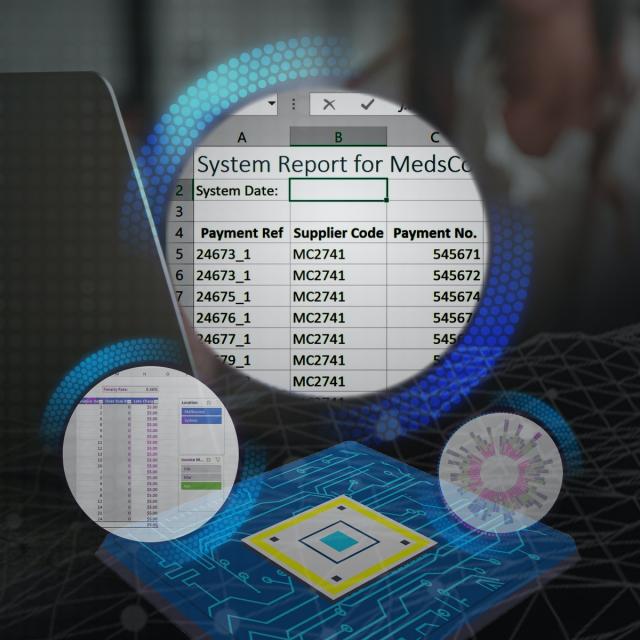
Through this course learners will gain the tools to decide whether or not Excel is the right software to use. They will learn how to set up good input data, format correctly, and the importance of good documentation. Learners will gain the ability to discern between different functions, to understand the pitfalls and strengths of commonly used functions, and to apply correct functions to their excel models. Those that follow the course will also gain understanding of logical spreadsheet structure, graphs and reporting, and protection and hidden information in Excel, and users will learn how to apply these things to their own models.

Class Deals by MOOC List - Click here and see Coursera's Active Discounts, Deals, and Promo Codes.

Finally users will get practical tips and steps for the finalization of a model, the automated checks, the manual run through, and general testing that one should do to ensure that their Excel model is accurate and complete.
What sets this course apart is that we don’t focus on quick fixes or specific tips and tricks. This course is for those that already understand Excel. The aim of the course is to elevate Excel models, to improve clarity, longevity, and transferability of these models, and to reduce mistakes and to encourage consistency in businesses as they work with Excel.

Syllabus

WEEK 1
A Foundation for Better Spreadsheets
In this module you will learn about this course and course aims. You will be given tools to determine whether or not Excel is the correct program for a certain task. You will learn how to organize your input data according to best practices. You will learn how to differentiate between good and bad formatting in Excel, and will receive some practical tips on how to improve your own formatting. Finally you will be able to define documentation in Excel, and learn how to apply good documentation to your own Excel models.

WEEK 2
Good Use of Formulas and Functions
This week is about the lifeblood of Excel, the functions and formulas. This week you will learn how you can apply functions and formulas to your models responsibly, how you can discern between functions to choose the ones that work best for you in a particular scenario, and how you can understand and explain the strengths and weaknesses of different functions.

WEEK 3
Spreadsheet Structure and Logical Flow
In this module you will learn how to build up a spreadsheet with a logical structure and flow, you will get some great tips on keeping your models simple, and you will learn about the dangers and effectiveness of protected and hidden information in Excel. Essentially you will gain the tools to make your spreadsheets safer and more understandable for your colleagues/clients.

WEEK 4
Finishing Touches
In this final module you will learn about the final things to do in a spreadsheet. You will discover what a finished spreadsheet looks like, which checks you can build in to ensure correct results, and you will gain the tools to check last minute things in your model to ensure the final result is correct. The checking and testing process is incredibly important, use this module to learn more about that process and apply it to your own work.

Go to Class
MOOC List is learner-supported. When you buy through links on our site, we may earn an affiliate commission.

Related Courses

New Product Development - develop your own new product (Coursera) Coursera
Technion - Israel Institute of Technology

New Product Development - develop your own new product (Coursera)

New product development is essential for the survival of many companies in the Hi-Tec sector, as well as other sectors. The percentage of sales of successful business organizations tied to the successful Introduction of new products and services is high. However, the failure rate of new products development projects is also high and therefore there is a need for a methodology based on a well-designed process as well as tools and techniques to manage New Product Development (NPD) projects. Since most companies develop new products, it is important to you as a manager to be familiar and understand the basic concepts and terminology of NPD projects. This course will give you holistic view of the new product development arena and will help you gain specific knowledge in how to select, plan, monitor and control a new product development project, using the proper tools and techniques.

Aug 17th 2026
5-12 Weeks
Infonomics I: Business Information Economics and Data Monetization (Coursera) Coursera
University of Illinois at Urbana-Champaign

Infonomics I: Business Information Economics and Data Monetization (Coursera)

Thriving in the Information Age compels organizations to deploy information as an actual business asset, not as an IT asset or merely as a business byproduct. This demands creativity in conceiving and implementing new ways to generate economic benefits from the wide array of information assets available to an organization. Unfortunately, information too frequently is underappreciated and therefore underutilized.

Aug 17th 2026
4 Weeks
Managing the Company of the Future (Coursera) Coursera
University of London,London Business School

Managing the Company of the Future (Coursera)

The aim of the course is to provide you with a comprehensive framework for understanding both the traditional principles of management inside companies today as well as the alternative principles that are becoming increasingly important. It provides both theoretical and practical perspectives on the nature of management in today’s organisations.

Aug 17th 2026
5-12 Weeks
Infonomics II: Business Information Management and Measurement (Coursera) Coursera
University of Illinois at Urbana-Champaign

Infonomics II: Business Information Management and Measurement (Coursera)

Even decades into the Information Age, accounting practices yet fail to recognize the financial value of information. Moreover, traditional asset management practices fail to recognize information as an asset to be managed with earnest discipline. This has led to a business culture of complacence, and the inability for most organizations to fully leverage available information assets. This second course in the two-part Infonomics series explores how and why to adapt well-honed asset management principles and practices to information, and how to apply accepted and new valuation models to gauge information’s potential and realized economic benefits.

Aug 17th 2026
4 Weeks
Design Thinking and Global Startup (Coursera) Coursera
Korea Advanced Institute of Science and Technology - KAIST

Design Thinking and Global Startup (Coursera)

This course offers a systematic engineering design methodology: Stanford Design Thinking for preparing global startup. The course empathizes the whole Stanford design thinking process, "Empathy-Define-Ideation-Prototype-Test," for building a startup with a business model that has a “customer truly need” component.

Aug 17th 2026
5-12 Weeks
Finance for Everyone: Debt (Coursera) Coursera
McMaster University

Finance for Everyone: Debt (Coursera)

In Debt, we take on one of the most challenging financial questions that remains unresolved: How much to borrow? We start by demonstrating why using debt has always been and continues to be a great temptation, particularly when borrowing costs are historically low. We identify conditions for selecting the optimal amount of debt for a corporation looking to maximize its value. You’ll become fluent in related concepts like norms and benchmarks.

Aug 17th 2026
4 Weeks
Strategy and Sustainability (Coursera) Coursera
IESE Business School

Strategy and Sustainability (Coursera)

Business and environmental sustainability are not natural bedfellows. Business is about making money. Sustainability is about protecting the planet. Business is measured in months and quarters. Sustainability often requires significant short term costs to secure a sometimes uncertain long-term benefit. To some activists, all executives are exploitative, selfish one percenters. To some executives, all activists are irresponsible, unyielding extremists.

Aug 17th 2026
5-12 Weeks
Doing Business in Europe (Coursera) Coursera
ESCP Europe

Doing Business in Europe (Coursera)

Europe is a major world trade partner as well as a place where to acquire significant business experience. This is the reason why this MOOC has been designed with the view to explaining and guiding you in doing business in Europe. Do you really know Europe? How should you consider and approach the European continent? What business lessons can be drawn in a European perspective?

Aug 24th 2026
5-12 Weeks
The Factors that Influence the Effectiveness of Boards and the Governance Process (Coursera) Coursera
University at Buffalo,The State University of New York

The Factors that Influence the Effectiveness of Boards and the Governance Process (Coursera)

The third course in this Specialization introduces you to the factors that influence how effective boards of directors will be in carrying out their roles and responsibilities and hence the impact they have in shaping the success of the organization they govern. While this course has been developed with North American culture in mind, we do appreciate that, in other parts of the world, the nature of the factors that influence the effectiveness of nonprofit boards of directors may vary. Nevertheless,it is our hope that much of the course content will still be of value to those in other parts of the world.

Aug 17th 2026
5-12 Weeks
How to Validate your Startup Idea (Coursera) Coursera
UNSW Sydney - University of New South Wales

How to Validate your Startup Idea (Coursera)

Starting a new business begins with an idea that needs to evolve through experimentation, iteration and interactions with people. This course is for existing and potential entrepreneurs who are looking for guidance and support to make their ‘great idea’ a reality. In addition to reviewing the basic principles of entrepreneurship, this course guides you through the process of actively validating your idea in the market.

Aug 17th 2026
5-12 Weeks
Management of International Development: Towards Agenda 2030 (Coursera) Coursera
Università Bocconi

Management of International Development: Towards Agenda 2030 (Coursera)

Welcome! This course provides participants with the opportunity to explore the multifaceted concept of international development in order to be able to interpret and lead its challenges, opportunities and constant evolutions. Starting from an in-depth analysis of the current international development architecture, its key actors and trends, the course then illustrates the main international organizations' governance systems; identifies their funding and financing tools necessary to implement development programs and achieve sustainable development goals; and explains how to effectively leverage on human capital to drive organizational success and be ‘fit for purpose’ in an ever changing international development scenario.

Aug 17th 2026
5-12 Weeks
International Business I (Coursera) Coursera
University of New Mexico

International Business I (Coursera)

We live in a world of intensifying global relationships, one in which international business has become the key determinant of economic development and prosperity. This course, Global Business Environment, Part I, introduces students to a fundamental understanding of the socioeconomic political, cultural, and linguistic environment in which international businesses operate.

Aug 17th 2026
5-12 Weeks