The Eurozone Crisis (MRUniversity)

The Eurozone Crisis (MRUniversity)

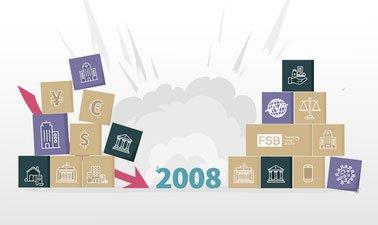
What's the future of the European Union and the Euro? The Eurozone Crisis is one of the most important issues in the world today. In this free three week mini-course, we cover both the institutions that make up the European Union and the underlying economics that are behind the crisis.

We cover what is considered "consensus" knowledge by economists while also adding our own speculations in the mix.
We will be updating this course as the situation changes in Europe. Click the "follow this course" button to stay up-to-date.
This class does not require any particular knowledge of mathematics. If you pass the final exam, you will earn our "Eurozone Crisis" certificate on your profile.

Go to Class
MOOC List is learner-supported. When you buy through links on our site, we may earn an affiliate commission.

Related Courses

Economic History of the Soviet Union (MRUniversity) MRUniversity
Marginal Revolution University

Economic History of the Soviet Union (MRUniversity)

Economic theory must distinguish between publicly owned and privately owned property if it is to account for the effect of institutions on the behavior of individuals. Careful study of the theories of Marxists and the real-world experience in the Soviet economy offer important lessons and insight for economic modeling and the ongoing development of theory. In this course, Marxist/Leninist theory and Soviet reality will be studied with an open mind, and with the goal of taking lessons from the case study.

Self Paced
Self-Paced
Crisis Response Management (edX) EdX
State Bank of India - SBI

Crisis Response Management (edX)

Crises are an inevitable part of professional’s life, but they do not have to be a reason for your / organization’s downfall or poor business results. Crisis can be man-made and at times black-swan events like the recent pandemic. This e-course titled Crisis response management is designed to help foster leadership with the following end goals: preventing crises that can be avoided; successfully navigating through crisis that cannot be avoided; sustaining business performance during crisis and; creating opportunity for innovation following a crisis.

Self Paced
Self-Paced
More Introduction to Financial Accounting (Coursera) Coursera
University of Pennsylvania

More Introduction to Financial Accounting (Coursera)

The course builds on my Introduction to Financial Accounting course, which you should complete first. In this course, you will learn how to read, understand, and analyze most of the information provided by companies in their financial statements. These skills will help you make more informed decisions using financial information.

Jun 8th 2026
5-12 Weeks
Why the European Union? A Brief History of European Integration (FutureLearn) FutureLearn
Universitat Pompeu Fabra

Why the European Union? A Brief History of European Integration (FutureLearn)

Learn about how and why the nations of the European Union (EU) cooperate in this free online course. On-going European crises have led to a state of confusion about the politics and purpose of the European Union (EU). Many EU citizens have discovered that what they believed the EU was for does not match what EU institutions are actually doing.

No sessions available
5-12 Weeks
The European Union: Crisis and Recovery (FutureLearn) FutureLearn
Dublin City University

The European Union: Crisis and Recovery (FutureLearn)

This course will develop your understanding of the recent history of the European Union and its prospects for the future. Learn about the recent challenges faced by the European Union. The fascinating course is designed to inform the public about the principal challenges that have faced the European Union over recent years including Brexit, the Euro Crisis, Migration, the Rule of Law Crisis, and COVID-19, and to communicate how the EU has responded to these challenges.

Available Now
4 Weeks
Le sens de l'action publique (FUN) FUN
Centre National de la Fonction Publique Territoriale - CNFPT

Le sens de l'action publique (FUN)

L’action publique est au cœur d’une crise du sens. Critique de la dépense publique, perte de confiance des citoyens envers les institutions politiques, situation économique difficile, manque de prospective sur l’avenir de la société : les agents publics expriment un malaise et des interrogations sur le sens de leurs missions ; les citoyens s’interrogent aussi sur leur futur et celui des services publics entre réduction des coûts et fermeture des établissements de proximité. Nous vous proposons de réfléchir ensemble à ce qui caractérise cette crise et ses origines et d’identifier ce qui peut permettre de réaffirmer un sens pour l’action publique, pour mieux préparer l’avenir.

No sessions available
5-12 Weeks
Gestion de Crise (FUN) FUN
Université Panthéon-Assas Paris II

Gestion de Crise (FUN)

La crise est partout, elle est à gérer. Cette formation vise à diffuser des savoir-faire de gestion de crise et traite des crises organisationnelles et de catastrophes qui requièrent des modes de résolution hors norme et des moyens conséquents. Pour Platon, "ce ne sont pas les murs mais les Hommes qui font les remparts de la Cité". En temps de crise, les décisions à prendre sont capitales, et la communication revêt une importance toute particulière. Ce cours vise à faire acquérir des savoir-faire spécifiques à la gestion de crise. Après une présentation de la nature de la crise, il fournit des conseils en matière de communication de crise et donne une méthode de résolution de la crise. A la fin de ce cours, les participants doivent pouvoir aborder une crise de manière plus sereine.

No sessions available
5-12 Weeks
Game Theory (Coursera) Coursera
Stanford University,The University of British Columbia

Game Theory (Coursera)

Popularized by movies such as "A Beautiful Mind," game theory is the mathematical modeling of strategic interaction among rational (and irrational) agents. Beyond what we call `games' in common language, such as chess, poker, soccer, etc., it includes the modeling of conflict among nations, political campaigns, competition among firms, and trading behavior in markets such as the NYSE.

Jun 8th 2026
5-12 Weeks