Estrutura e Funcionamento das Redes de Computadores (Coursera)

Offered by Google,
Estrutura e Funcionamento das Redes de Computadores (Coursera)

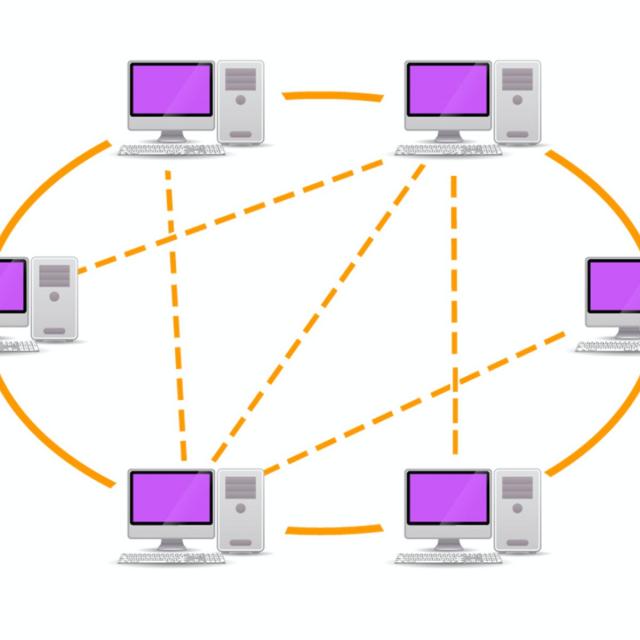
Este curso foi desenvolvido para apresentar uma visão geral completa das redes de computadores. Falaremos sobre vários aspectos, desde os fundamentos das modernas tecnologias e protocolos de rede, passando por uma visão geral da nuvem, até as aplicações práticas e soluções para problemas de rede. Encerraremos discutindo como essas informações podem aparecer em uma entrevista de emprego e apresentando dicas para solução de problemas práticos.

Class Deals by MOOC List - Click here and see Coursera's Active Discounts, Deals, and Promo Codes.

Até o fim deste curso, você conseguirá:
● descrever as redes de computadores de acordo com o modelo de cinco camadas.
● compreender todos os protocolos padrão usados nas comunicações TCP/IP.
● conhecer poderosas ferramentas e técnicas de resolução de problemas de rede.
● aprender sobre serviços de rede como DNS e DHCP, que ajudam a colocar as redes de computadores em funcionamento.
● entender a computação em nuvem, o tudo como serviço e o armazenamento em nuvem.

Course 2 of 5 in the Suporte em TI do Google Professional Certificate

Syllabus

WEEK 1
Introdução a redes
Bem-vindo ao curso de redes da Certificação Profissional em Suporte de TI! Na primeira semana do curso, veremos os conceitos básicos das redes de computador. Falaremos sobre os modelos de rede TCP/IP e OSI e veremos como as camadas da rede trabalham juntas. Além disso, abordaremos noções básicas dos dispositivos de rede, como cabos, hubs e switches, roteadores, servidores e clientes. Analisaremos em mais detalhes a camada física e a camada de enlace de dados do nosso modelo de rede. Ao fim deste módulo, você saberá como todas as diferentes camadas do modelo de rede se relacionam para criar uma rede.

WEEK 2
A camada de rede
Na segunda semana do curso, analisaremos a camada de rede em mais detalhes. Veremos o esquema de endereçamento IP e como as sub-redes funcionam. Vamos entender como o encapsulamento funciona e como protocolos, como o ARP, criam as condições para que diferentes camadas da rede se comuniquem. Além disso, estudaremos conceitos básicos de roteamento, protocolos de roteamento e veremos como a Internet funciona. Ao fim deste módulo, você conseguirá descrever o esquema de endereçamento IP, explicar como as sub-redes funcionam, realizar cálculos binários para descrever sub-redes e explicar como a Internet funciona.

WEEK 3
As camadas de transporte e aplicação
Na terceira semana do curso, falaremos das camadas de transporte e aplicação. Ao fim deste módulo, você será capaz de descrever portas TCP e soquetes, identificar os diferentes componentes de um cabeçalho TCP, mostrar a diferença entre protocolos orientados a conexão e sem conexão e explicar como o TCP é usado para garantir a integridade dos dados.

WEEK 4
Serviços de redes
Na quarta semana deste curso, vamos explorar os serviços de redes. Saberemos por que precisamos do DNS e como ele funciona. Também mostraremos por que o DHCP facilita a administração de redes. Até o fim deste módulo, você conseguirá descrever como funcionam o DNS e o DHCP, como as tecnologias NAT ajudam a manter as redes seguras e como as VPNs e os proxies ajudam os usuários a se conectar e a se proteger.

WEEK 5
Conexão com a Internet
Na quinta semana deste curso, exploraremos a história da Internet, como ela evoluiu e como ela funciona hoje. Vamos entender as diferentes maneiras de se conectar à Internet por meio de cabos, conexões sem fio, por celular e até mesmo conexões com fibra. Até o fim deste módulo, você conseguirá definir os componentes das WANs e delinear os conceitos básicos de uma rede sem fio e de celular.

WEEK 6
Solução de problemas e o futuro das redes
Parabéns, você chegou à última semana do curso! Na última semana deste curso, falaremos do futuro das redes de computadores. Também cobriremos os aspectos práticos da solução de problemas de uma rede usando os sistemas operacionais mais comuns. Até o fim deste módulo, você conseguirá detectar e corrigir muitos problemas comuns de conectividade de rede usando as ferramentas disponíveis nos sistemas operacionais Microsoft Windows, MacOS e Linux.

Go to Class
MOOC List is learner-supported. When you buy through links on our site, we may earn an affiliate commission.

Related Courses

Os vários elementos das redes informáticas (Coursera) Coursera
Google

Os vários elementos das redes informáticas (Coursera)

Este curso foi concebido para proporcionar uma vista geral das redes informáticas. Vamos abordar desde os princípios básicos das tecnologias e protocolos de redes modernos até aplicações práticas e resolução de problemas de rede. Para terminar, vamos abordar o modo como estas informações podem surgir numa entrevista de emprego e dar-lhe algumas sugestões para resolver problemas no local.

Jun 8th 2026
5-12 Weeks
Cloud Top Ten Risks (Coursera) Coursera
University of Minnesota

Cloud Top Ten Risks (Coursera)

After completing the course, the student should be able to do the following: Associate lists of OWASP Top Ten Risks with major cloud cybersecurity risks. Apply appropriate cryptographic techniques to secure authentication mechanisms and cloud data. Identify the most effective strategies for resisting injection attacks, cross-site scripting attacks, and object deserialization attacks. Assess strategies to address risks posed by administrative failures, including misconfiguration, broken access control, vulnerable software components, and security monitoring.

Jun 8th 2026
3 Weeks
The Unix Workbench (Coursera) Coursera
Johns Hopkins University

The Unix Workbench (Coursera)

Unix forms a foundation that is often very helpful for accomplishing other goals you might have for you and your computer, whether that goal is running a business, writing a book, curing disease, or creating the next great app. The means to these goals are sometimes carried out by writing software. Software can’t be mined out of the ground, nor can software seeds be planted in spring to harvest by autumn. Software isn’t produced in factories on an assembly line. Software is a hand-made, often bespoke good. If a software developer is an artisan, then Unix is their workbench.

Jun 8th 2026
4 Weeks
Security Best Practices in Google Cloud (Coursera) Coursera
Google Cloud

Security Best Practices in Google Cloud (Coursera)

This self-paced training course gives participants broad study of security controls and techniques on Google Cloud. Through recorded lectures, demonstrations, and hands-on labs, participants explore and deploy the components of a secure Google Cloud solution, including Cloud Storage access control technologies, Security Keys, Customer-Supplied Encryption Keys, API access controls, scoping, shielded VMs, encryption, and signed URLs. It also covers securing Kubernetes environments.

Jun 8th 2026
5-12 Weeks
Understanding Google Cloud Security and Operations (Coursera) Coursera
Google Cloud

Understanding Google Cloud Security and Operations (Coursera)

This course examines cost management, security, and operations in the cloud. First, it explores how businesses can choose to maintain some or none of their own infrastructure by purchasing IT services from a cloud provider. Next, it explains how the responsibility of data security is shared between the cloud provider and the business, and explores the defense-in-depth security built into Google Cloud.

Jun 8th 2026
1 Week
Getting Started with Google Kubernetes Engine (Coursera) Coursera
Google Cloud

Getting Started with Google Kubernetes Engine (Coursera)

This one-week, accelerated online class equips students to containerize workloads in Docker containers, deploy them to Kubernetes clusters provided by Google Kubernetes Engine, and scale those workloads to handle increased traffic. Students also learn how to continuously deploy new code in a Kubernetes cluster to provide application updates.

Jun 8th 2026
1 Week
IT Infrastructure and Emerging Trends (Coursera) Coursera
University of Minnesota

IT Infrastructure and Emerging Trends (Coursera)

Today organizations are either embracing digital technologies to improve their businesses or being disrupted by entrants with such capabilities. Therefore it is important for managers and executives of all organizations to learn about various technologies and apply them in innovative ways. Some of the most important trends in Information Technology are in mobile, cloud, security, and blockchains.

Jun 8th 2026
5-12 Weeks
Google Cloud Product Fundamentals em Português Brasileiro (Coursera) Coursera
Google Cloud

Google Cloud Product Fundamentals em Português Brasileiro (Coursera)

Este curso é uma continuação do "Business Transformation with Google Cloud" e guiará você pela jornada de transformação de uma organização do ponto de vista tecnológico. Explicaremos como as organizações podem fazer a transformação digital usando a tecnologia do Google Cloud nestas categorias: modernização da infraestrutura de TI; melhorias no processo de desenvolvimento dos aplicativos da empresa; uso do machine learning e da inteligência artificial para criar novo valor; a importância de ferramentas de produtividade como o G Suite na realização do trabalho; e compreender as oportunidades e os desafios da gestão do custo que uma infraestrutura de TI na nuvem traz.

Jun 8th 2026
5-12 Weeks
Cloud Security Basics (Coursera) Coursera
University of Minnesota

Cloud Security Basics (Coursera)

This course introduces you to cybersecurity for the cloud. We'll learn and apply classic security techniques to today’s cloud security problems. We start with a deceptively simple and secure web service and address the problems arising as we improve it. We’ll analyze recent cloud security vulnerabilities using standard, systematic techniques. We’ll build our own web service case studies and construct security solutions for them.

Jun 8th 2026
4 Weeks
Interfacing with the Raspberry Pi (Coursera) Coursera
University of California, Irvine

Interfacing with the Raspberry Pi (Coursera)

The Raspberry Pi uses a variety of input/output devices based on protocols such as HDMI, USB, and Ethernet to communicate with the outside world. In this class you will learn how to use these protocols with other external devices (sensors, motors, GPS, orientation, LCD screens etc.) to get your IoT device to interact with the real world.

Jun 8th 2026
4 Weeks
Salesforce Integration (Coursera) Coursera
University of California, Irvine

Salesforce Integration (Coursera)

Salesforce Integration explores why data management is so important, how Salesforce can help organize and display reported data to gain insight into trends and patterns, and how to automate manual business procedures. Learners will specifically practice creating custom automation process, building work flows, and performing data modeling. The course includes in-depth readings and practical application activities within Salesforce's Trailhead education platform, peer discussion opportunities, demonstration videos, and peer review assignments.

Jun 8th 2026
3 Weeks
Google Workspace Mail Management (Coursera) Coursera
Google Cloud

Google Workspace Mail Management (Coursera)

Google Workspace Mail Management is the fourth course in the Google Workspace Administration series. In this course you will learn how to protect your organization against spam, spoofing, phishing and malware attacks. You will configure email compliance and learn how to implement data loss prevention (DLP) for your organization. You will gain an understanding of the mail routing options available and learn how to whitelist and block senders. You will also become familiar with other mail options such as inbound and outbound gateways, 3rd party email archiving, and journaling to Vault.

Jun 8th 2026
1 Week