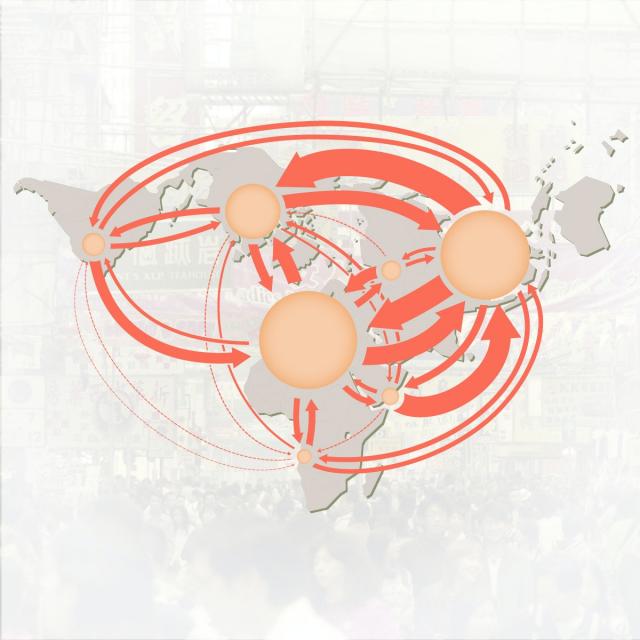
Espace mondial, a French vision of Global studies (Coursera)

Offered by Sciences Po,
Espace mondial, a French vision of Global studies (Coursera)

To explain how globalization rebuilt public policy and social behavior, we study the different political, economic, and social actors - public or private, individual or collective - and the exchanges and interactions between them that are remaking international relations.

Class Deals by MOOC List - Click here and see Coursera's Active Discounts, Deals, and Promo Codes.

This course is also available in french version.

Syllabus

WEEK 1
Introduction
The current global world implies a new approach of the international arena, breaking with classical theories.

WEEK 2
Inequalities
The main economic and social parameters indicate an unequal and instable world.

WEEK 3
Regionalism
The nation-state territory is challenged by new kinds of integration, and particularly by fragile regional constructions.

WEEK 4
World Actors
Nation-states are no more the only international actor. Many groups and 7 billions of individuals are now potential actors of our current international system.

WEEK 5
Globalization
Globalization is a complex process which is challenging the main traditional aspects of the world order.

WEEK 6
Identities
Identity has to be revisited and considered as a social and a political construct.

WEEK 7
Religions
Religion is perceived as a major parameter of the present world order, but generally in an oversimplified way.

WEEK 8
Nation State
Is traditional nation-state still working everywhere around the world?

WEEK 9
Power
Is power still meaningful and efficient?

WEEK 10
War and Peace
New international conflicts have a specific configuration and imply a new treatment.

WEEK 11
International System
Polarization and multilateralism are the new features of the post 1945 international system. The first one is probably over; the second one is challenged.
Conclusion
Going ahead to a new regulation?

Go to Class
MOOC List is learner-supported. When you buy through links on our site, we may earn an affiliate commission.

Related Courses

Migrations internationales : un enjeu mondial (Coursera) Coursera
Sciences Po

Migrations internationales : un enjeu mondial (Coursera)

Le monde bouge, mais les opinions et les gouvernements ne sont pas tous prêts à accepter cette réalité mal connue. La question affecte à la fois les Etats, mais aussi la planète, dans un processus de mondialisation et de régionalisation des migrations, et pose de nouvelles questions aux relations internationales, en y incluant le sud. Ce cours cherche à la fois à parfaire la connaissance sur le sujet, à traiter les thèmes essentiels induits par les migrations internationales et à dresser les tendances de demain.

Jun 1st 2026
5-12 Weeks
Driving business towards the Sustainable Development Goals (Coursera) Coursera
Erasmus University Rotterdam

Driving business towards the Sustainable Development Goals (Coursera)

Extreme weather events, wars, famine and environmental destruction are just a few of the wicked problems faced by humanity. That’s why in 2015 the United Nations adopted the 2030 Agenda for Sustainable Development. This agenda includes 17 Sustainable Development Goals (SDGs) that target the big challenges such as how to eliminate poverty, how to protect the environment and how to bring about peace. Every member state committed to achieving these goals by 2030. What can businesses do to counter climate change and create a sustainable business culture? Why is this relevant for business anyway? Explore how business can contribute to a better future for people AND the planet without giving up profits.

Jun 1st 2026
5-12 Weeks
Economics: Society, Markets, and [In]equality (Coursera) Coursera
Parsons School of Design, The New School

Economics: Society, Markets, and [In]equality (Coursera)

Thinking critically about today's economy can help you understand the world around you. Economics: Society, Markets, and [In]equality will pique your curiosity and inspire you to learn more about the power dynamics that determine how people and resources are valued, how goods move around the world, and how we manage our planet and the future.

Jun 6th 2026
5-12 Weeks
Old Norse Mythology in the Sources (Coursera) Coursera
University of Colorado Boulder

Old Norse Mythology in the Sources (Coursera)

This course is an introduction to the religion of the Vikings as it is recorded in Old Norse and Scandinavian literature from the medieval period. You will learn about the different written sources and what they can teach us about pre-Christian religion in northern Europe in the Viking Age. The course surveys the primary collection of Old Norse poetry about the pre-Christian Scandinavian gods, the Poetic Edda. We will also work with the main collections of stories about the Old Norse gods in prose: Snorri Sturluson's Edda and Saxo's History of the Danes.

Jun 1st 2026
4 Weeks
China’s Economic Transformation Part 1: Economic Reform and Growth in China (Coursera) Coursera
The Hong Kong University of Science and Technology - HKUST

China’s Economic Transformation Part 1: Economic Reform and Growth in China (Coursera)

In 1978, after nearly 30 years of socialist planning under Mao Zedong, China was one of the world’s poorest countries, saddled with an inefficient, inward-looking economy. Today, China is an upper-middle income country and the world’s largest trading nation, contributing more to global economic growth than any other nation. How could such a remarkable transformation take place? This course will examine in detail the reforms that have contributed to China’s economic development and the current challenges facing the Chinese economy.

Jun 1st 2026
5-12 Weeks
Intellectual Humility: Practice (Coursera) Coursera
University of Edinburgh

Intellectual Humility: Practice (Coursera)

We live in a polarised world where all too often people talk past each other. But do you know when to believe what others say? For example, how quick should we be to accept something that someone else tells us is true, and what should we be looking out for when assessing a person's trustworthiness? Meanwhile, what should we do when we encounter disagreements with people who seem to be our equals? How and when should we adjust our beliefs, and how does the appropriate response vary depending on the evidence? These challenges may be especially important in the arena of religious disagreements. How should we weigh the evidence for and against various theistic and atheistic stances?

Jun 1st 2026
4 Weeks
Risk governance: Engage the board (Coursera) Coursera
Macquarie University

Risk governance: Engage the board (Coursera)

All organisations must grapple with fundamental issues at the heart of governance: who are our stakeholders? What are their objectives? How can we ensure these objectives are met as effectively as possible? How can we ensure all legitimate stakeholders are treated fairly? Via structured learning activities (video lectures, quizzes, discussion prompts and written assessments) this course will teach you how to address these questions and how a sound governance structure and comprehensive risk management framework can support you and your organisation in achieving its objectives.

Jun 1st 2026
5-12 Weeks
Cultural intelligence: Become a global citizen (Coursera) Coursera
Macquarie University

Cultural intelligence: Become a global citizen (Coursera)

We now live in a truly global, interconnected world in which every manager requires a high level of cultural intelligence. In a diverse work environment, a successful leader must understand the cultural backgrounds, beliefs and attitudes of the people around them – or run the risk of failing to achieve the organisation’s goals. This course, via structured learning activities (video lectures, quizzes, discussion prompts, industry interviews and written assessments), will teach you that those with high ‘cultural intelligence’ – are good at spotting cultural differences and adapt their behaviour accordingly.

Jun 4th 2026
5-12 Weeks
Supply Chain Management: A Learning Perspective (Coursera) Coursera
Korea Advanced Institute of Science and Technology - KAIST

Supply Chain Management: A Learning Perspective (Coursera)

As a human being, we all consume products and/or services all the time. This morning you got up and ate your breakfast, e.g., eggs, milk, bread, fresh fruits, and the like. After the breakfast, you drove your car to work or school. At your office, you used your computer, perhaps equipped with 27” LCD monitor. During your break, you drank a cup of coffee and played with your iPhone. So on and so forth. You probably take it for granted that you can enjoy all of these products. But if you take a closer look at how each of these products can be made and eventually delivered to you, you will realize that each one of these is no short of miracle.

Jun 1st 2026
5-12 Weeks
Cities are back in town : urban sociology for a globalizing urban world (Coursera) Coursera
Sciences Po

Cities are back in town : urban sociology for a globalizing urban world (Coursera)

Urbanization is reaching a new peak in the contemporary world with the rise of mega cities. Researchers try to make sense of these large urban areas using a variety of concepts. The class will review debates and present social science models of cities to analyse and compare contemporary developments. The class will review debates and present social science models of cities and metropolis to analyse and compare contemporary developments.

Jun 1st 2026
5-12 Weeks
América Latina en los cambios internacionales: amenazas y oportunidades. (Coursera) Coursera
Universidad de Chile

América Latina en los cambios internacionales: amenazas y oportunidades. (Coursera)

El curso busca que comprendas y analices la mayor participación de América Latina en la política internacional. Además, te ayudará a conocer el entorno macro-estratégico en el cual se desarrolla la región, incluyendo la dimensión política, económica, cultural, social, además de las nuevas amenazas y oportunidades. El curso entrega un mapa general de las diferencias entre las distintas regiones de América Latina y sus contribuciones en sus políticas exteriores con los centros de poder mundial.

Jun 1st 2026
4 Weeks
Digital Governance (Coursera) Coursera
Erasmus University Rotterdam

Digital Governance (Coursera)

Big data, artificial intelligence, machine learning, autonomous cars, chatbots, just a few terms that have become a part of our professional legal and political vocabulary. Emerging technologies and technological advancement have confronted us in our daily practice and will continue to do so in the future. Whether we’re buying something online, taking part in an election, or chatting with friends across the globe. Technology is here and it is here to stay.

Jun 1st 2026
5-12 Weeks