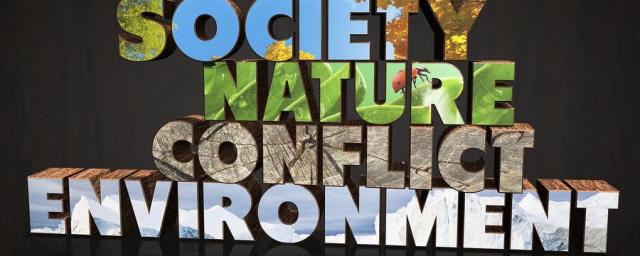
Environmental Management: Social-ecological Systems (FutureLearn)

Offered by University of Leeds,
Environmental Management: Social-ecological Systems (FutureLearn)

How do we as humans impact nature and the environment? Find out in this free online environmental management course.

Class Deals by MOOC List - Click here and see FutureLearn's Active Discounts, Deals, and Promo Codes.

Understanding the complex relationships between humans and nature – so-called social-ecological systems – will help us tackle global environmental challenges, such as sustainable food supply, conservation of biodiversity and environmental management.
On this free online course, you will discover how interdisciplinary approaches, bringing together social and natural sciences, tackle some of the key environmental challenges affecting our world today.

Take an interdisciplinary approach to environmental management
You will think about your environment in new ways and gain insights into the different social systems and policies that are used to both exploit and conserve our environment. Each week will cover a different environmental management topic, through video, podcasts and case studies from around the world:
Week 1: Language of nature
Learn about the different ways that nature is perceived by different types of societies and the impact of property rights on natural resource management. The case study explores the history of different types of ownership in Tanzanian forests.
Week 2: Mathematics of nature
Discover the mathematics of nature by examining examples of complexity, causality and diversity, and change in social-economic systems. You will explore population growth and uneven consumption of natural resources.
Week 3: Environment and conflict
Understand the relationship between human conflict and the natural world; what impact does war have on both humans and the environment, and what is the relationship between the two? Scarcity and conflict is explored through the California water shortage and the case study looks at the environment as a weapon of war.

Learn with a range of social-ecological systems experts
The course is led by Professor Jon Lovett, Chair in Global Challenges at the University of Leeds. His research focuses on the institutional economics of environmental management, and takes an interdisciplinary approach to bring together both the natural and social sciences.
Jon is the educator responsible for the highly successful University of Leeds course on FutureLearn, Fairness and Nature: When Worlds Collide:
“This MOOC made me question my own ideas about what is just in issues concerning nature. The teacher is absolutely committed to this subject. His knowledge, resources and enthusiasm make this course, in my opinion, one of the best around.” - FutureLearner, Marilyn Rietveld, on Fairness and Nature: When Worlds Collide
Experts from a range of different disciplines will also contribute to the discussion and will provide a richness and diversity to the conversation:

  • Professor Janet Watson, Leadership Chair for Language at Leeds;
  • Abdallah al-Mahri, Mehri language expert;
  • Dr Claire Quinn, Associate Professor of Natural Resource Management, University of Leeds;
  • Pam Warhurst, Chair, Pennine Prospects;
  • Ruth Waters, Natural England;
  • Dr Chris Hassall, School of Biology, University of Leeds;
  • Jane Dawson, Quakers;
  • Dr Manal Nader, Nivine Abbas and Sahar Issa, Institute of the Environment, University of Balamand, Lebanon.

There will be quizzes and debates to explore the issues further and provide an opportunity for you to share your own reflections with Jon, our experts and other learners.

Go to Class
MOOC List is learner-supported. When you buy through links on our site, we may earn an affiliate commission.

Related Courses

Environmental Challenges: Justice in Natural Resource Management (FutureLearn) FutureLearn
University of Leeds

Environmental Challenges: Justice in Natural Resource Management (FutureLearn)

How do we ensure that the difficult decisions about the management of natural resources are just and fair for all? When looking at different societies and cultures around the world, it is interesting how ubiquitous the principles of justice are. It is part of our human nature to think about equality, and consider fairness as something that we do naturally. However, in practical terms, equality is hard to achieve.

Sep 30th 2024
2 Weeks
The Earth in My Pocket: an Introduction to Geology (FutureLearn) FutureLearn
The Open University

The Earth in My Pocket: an Introduction to Geology (FutureLearn)

Get an introduction to geology. Discover where materials that make up everyday objects come from and how to use them sustainably. Everything we use that has not been grown either contains or relies on materials that have been sourced by a geoscientist. Whether we are standing out in the wilderness, in the middle of a city or in our home, geology and the Earth’s natural resources are all around us, forming an integral part of our everyday lives.

No sessions available
4 Weeks
Strategy and Sustainability (Coursera) Coursera
IESE Business School

Strategy and Sustainability (Coursera)

Business and environmental sustainability are not natural bedfellows. Business is about making money. Sustainability is about protecting the planet. Business is measured in months and quarters. Sustainability often requires significant short term costs to secure a sometimes uncertain long-term benefit. To some activists, all executives are exploitative, selfish one percenters. To some executives, all activists are irresponsible, unyielding extremists.

Jun 22nd 2026
5-12 Weeks
Modelo de Ecossistema com Insight Maker (Coursera) Coursera
Coursera Project Network

Modelo de Ecossistema com Insight Maker (Coursera)

Neste curso baseado em projeto de 1 hora de duração, você criará um modelo que simula a dinâmica de três populações de espécies diferentes em um ambiente: formigas, tamanduás-bandeira e lobos-guará. Durante a criação de tal modelo você será apresentado ao Insight Maker, um ambiente de simulação online gratuito que permite diferentes tipos de modelagem como modelagem de sistemas dinâmicos e baseada em agente.

Jun 22nd 2026
Self-Paced
Environmental Challenges: Rights and Values in Ecosystem Services (FutureLearn) FutureLearn
University of Leeds

Environmental Challenges: Rights and Values in Ecosystem Services (FutureLearn)

Differences in values can create conflict. How can we learn to manage our natural resources with integrity? Humans are very innovative, but we’ve also created many ecological problems. We’ve changed the face of the planet, fished the oceans, and we’re causing climate change through emissions. Designing institutional arrangements that recognise ecosystem services in the values we place upon natural systems will be an important way to help governing the planet, for both present and future generations.

Feb 12th 2024
2 Weeks
Data Science for Environmental Modelling and Renewables (FutureLearn) FutureLearn
University of Glasgow

Data Science for Environmental Modelling and Renewables (FutureLearn)

Learn how data science can help us understand our environment and try the tools used by statisticians and data scientists. Discover how data science can help us understand environmental change. Environmental and climate change impact our lives, but how what role does data play in informing us about such changes to our world? On this online course, we examine and explore the use of statistics and data science in better understanding the environment we live in.

No sessions available
5-12 Weeks
Bushfires: Response, Relief and Resilience (FutureLearn) FutureLearn
The University of Newcastle, Australia

Bushfires: Response, Relief and Resilience (FutureLearn)

Discover strategies in preparing for, responding to and recovering from bushfire natural disasters from the world's leading minds. This course is significant for individuals and the public interested in gaining knowledge about reducing their vulnerability to bushfires, effective coping strategies in the aftermath of a bushfire event and building resilience in the face of future disasters.

Aug 24th 2020
3 Weeks
Environmental Challenges: Scarcity and Conflict in the Natural Environment (FutureLearn) FutureLearn
University of Leeds

Environmental Challenges: Scarcity and Conflict in the Natural Environment (FutureLearn)

War and conflict can severely disrupt the governance of the environment. What is the impact on both people and the environment? This course explores three aspects of conflict and resource scarcity, and applies these to explore decision making and negotiation skills. Human conflict has both short and long term effects on the natural world.

Nov 25th 2024
2 Weeks
Citizen Science: Living Soils, Growing Food (FutureLearn) FutureLearn
University of Dundee,Grow Observatory

Citizen Science: Living Soils, Growing Food (FutureLearn)

Learn about approaches to food growing that can help regenerate soil and solve environmental issues. Use regenerative growing practices in your own garden. Soil loss and degradation are serious issues all over the world. We need to find effective regenerative practices to solve many local and global environmental challenges. On this course, you’ll discover interesting things about your own soil and become part of the new GROW Citizen Observatory European-wide community.

No sessions available
3 Weeks
Energy, the Environment and Our Future (FutureLearn) FutureLearn
Pennsylvania State University

Energy, the Environment and Our Future (FutureLearn)

Learn where we get our energy from today and why we need to change our energy system now, to avoid future changes to our climate. Our ancestors burned trees and whales far faster than nature produced more, gaining good from the energy but causing big problems. Today we burn fossil fuels, which allows us to live well, but will cause even bigger problems in the future.

No sessions available
5-12 Weeks
Big Data and the Environment (FutureLearn) FutureLearn
University of Reading,Institute for Environmental Analytics - IEA

Big Data and the Environment (FutureLearn)

From sources such as satellites, sensors and social media, how can environmental data analytics benefit business and research? From weather fluctuations to the spread of an invasive species, what problems can scientists address by analysing these vast data collections? What are the potential benefits for business, research and our daily lives?

No sessions available
3 Weeks