Emerging respiratory viruses, including COVID-19 (OpenWHO)

Emerging respiratory viruses, including COVID-19 (OpenWHO)

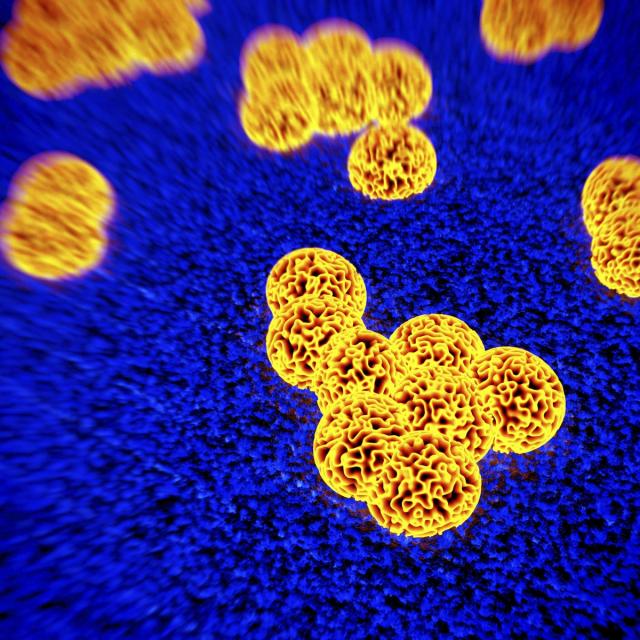
Coronaviruses are a large family of viruses that are known to cause illness ranging from the common cold to more severe diseases such as Middle East Respiratory Syndrome (MERS) and Severe Acute Respiratory Syndrome (SARS). A novel coronavirus (COVID-19) was identified in 2019 in Wuhan, China. This is a new coronavirus that has not been previously identified in humans.

This course provides a general introduction to COVID-19 and emerging respiratory viruses and is intended for public health professionals, incident managers and personnel working for the United Nations, international organizations and NGOs.

As the official disease name was established after material creation, any mention of nCoV refers to COVID-19, the infectious disease caused by the most recently discovered coronavirus.

La version française de ce cours est disponible sur : https://openwho.org/courses/introduction-au-ncov
The Simplified Chinese version of the course is available here: https://openwho.org/courses/introduction-to-ncov-ZH
La versión en español de este curso está disponible aquí : https://openwho.org/courses/introduccion-al-ncov
A versão em português do Brasil deste curso encontra-se disponível aqui: https://openwho.org/courses/introducao-ao-ncov
The Arabic version of this course is available here: https://openwho.org/courses/introduction-to-COVID-19-AR
Версию этого курса на русском языке найти можно по этой ссылке: https://openwho.org/courses/introduction-to-COVID-19-RU
Bu kursun Türkçe versiyonuna buradan ulaşabilirisiniz: https://openwho.org/courses/introduction-to-COVID-19-TR
The Persian version of this course is available here: https://openwho.org/courses/introduction-to-COVID-19-FA
Srpska verzija ovog kursa je dostupna ovde: https://openwho.org/courses/introduction-to-COVID-19-SR

Overview: This course provides a general introduction to emerging respiratory viruses, including novel coronaviruses. By the end of this course, you should be able to describe:

  • The nature of emerging respiratory viruses, how to detect and assess an outbreak, strategies for preventing and controlling outbreaks due to novel respiratory viruses;
  • What strategies should be used to communicate risk and engage communities to detect, prevent and respond to the emergence of a novel respiratory virus.

There are resources attached to each module to help you dive further into this topic.

Learning objective:Describe the fundamental principles of emerging respiratory viruses and how to effectively respond to an outbreak.

Course duration: Approximately 3 hours.
Certificates: No certificate available at this time.
As the official disease name was established after material creation, any mention of nCoV refers to COVID-19, the infectious disease caused by the most recently discovered coronavirus.

Attention:
You will be notified when new videos are uploaded. Currently, the materials are offered as videos and slide decks.
The course will offer a certificate in the future, after all of the modules have been published and a quiz has been added to each module.
The course materials are currently being translated into other languages.

Course contents

Emerging respiratory viruses, including COVID-19: Introduction:
This brief introduction provides an overview of emerging respiratory viruses, including COVID-19.

Module A: Introduction to Emerging respiratory viruses, including COVID-19:
Overall learning objective: To be able to explain why a emerging respiratory viruses, including COVID-19, are a global threat to human health

Module B: Detecting Emerging respiratory viruses, including COVID-19: Surveillance and Laboratory investigation:
Overall learning objective: To describe how to detect and assess an emerging respiratory virus outbreak

Module C: Risk Communication and Community Engagement:
Overall learning objective: To describe what strategies should be used to communicate risk and engage communities to detect, prevent and respond to COVID-19

Module D: Preventing and Responding to an emerging respiratory virus, including COVID-19:
Overall learning objective: To describe strategies for preventing and controlling emerging respiratory pathogens, including coronavirus outbreaks.

Go to Class
MOOC List is learner-supported. When you buy through links on our site, we may earn an affiliate commission.

Related Courses

Water Supply and Sanitation Policy in Developing Countries Part 1: Understanding Complex Problems (Coursera) Coursera
University of Manchester

Water Supply and Sanitation Policy in Developing Countries Part 1: Understanding Complex Problems (Coursera)

Our course explores what can be done to solve the complex problem that half a billion people worldwide do not have improved water supplies and two billion do not have improved sanitation. We look forward to you joining us. We want to help you develop the skills you need to address this major global challenge of the 21st century.

Jun 8th 2026
5-12 Weeks
Design and Interpretation of Clinical Trials (Coursera) Coursera
Johns Hopkins University

Design and Interpretation of Clinical Trials (Coursera)

Clinical trials are experiments designed to evaluate new interventions to prevent or treat disease in humans. The interventions evaluated can be drugs, devices (e.g., hearing aid), surgeries, behavioral interventions (e.g., smoking cessation program), community health programs (e.g. cancer screening programs) or health delivery systems (e.g., special care units for hospital admissions). We consider clinical trials experiments because the investigators rather the patients or their doctors select the treatment the patients receive.

Jun 8th 2026
5-12 Weeks
Clinical Care Severe Acute Respiratory Infection (OpenWHO) OpenWHO
World Health Organization

Clinical Care Severe Acute Respiratory Infection (OpenWHO)

Welcome to the Clinical Care Training for Severe Acute Respiratory Infection (SARI). This course includes content on clinical management of patients with a severe acute respiratory infection. It is intended for clinicians who are working in intensive care units (ICUs) in low and middle-income countries and managing adult and pediatric patients with severe forms of acute respiratory infection (SARI), including severe pneumonia, acute respiratory distress syndrome (ARDS), sepsis and septic shock.

Self Paced
Self-Paced
ePROTECT Respiratory Infections (OpenWHO) OpenWHO
World Health Organization

ePROTECT Respiratory Infections (OpenWHO)

All personnel responding to outbreaks of Acute Respiratory Infections (ARIs) need to have the basic knowledge and skills to mount an effective response. They need to understand what ARIs are, how they are transmitted, how to assess the risk of infection and to understand basic hygiene measures to protect themselves. This learning package consists of 4 modules with videos and downloadable presentations.

Self Paced
Self-Paced
Easing the burden of obesity, diabetes and cardiovascular disease (Coursera) Coursera
The University of Sydney

Easing the burden of obesity, diabetes and cardiovascular disease (Coursera)

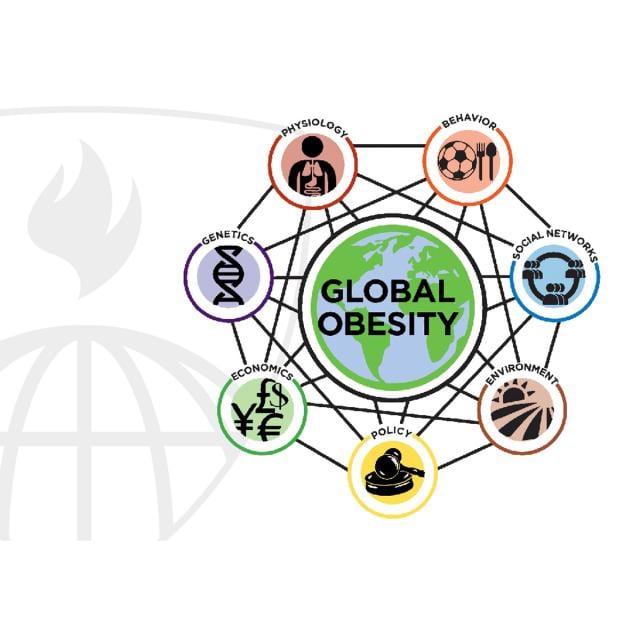
This course is multidisciplinary in nature, and aims to equip the global audience of interested lay people, people with chronic disease, public health researchers, health clinicians, students, administrators, and researchers to reflect on the overall impact of the burden of chronic disease. It shows how all chronic diseases (obesity, diabetes, cardiovascular disease, chronic obstructive pulmonary disease, and cancer) are related by a set of common causes, and that such diseases should be tackled, not individually, but as part of a complex system, with interrelated contributing factors. These factors are genetic, environmental, psychological, economic, social, developmental, and media related.

Jun 8th 2026
5-12 Weeks
Health Across the Gender Spectrum (Coursera) Coursera
Stanford University

Health Across the Gender Spectrum (Coursera)

This course offers an intimate, story-based introduction to the experiences of six transgender children and their families. Through illustrated stories and short teaching videos, learners will gain a better understanding of gender identity and the gender spectrum. Stanford physicians, K-12 educators, and transgender faculty members offer practical tips for parents, teachers, healthcare providers and anyone who wants to help create a more gender-expansive environment - one in which all people can live authentically. As a global community of unique individuals, we can begin to build a world that is ready to nurture and love each and every child.

Jun 8th 2026
3 Weeks
The New Nordic Diet - from Gastronomy to Health (Coursera) Coursera
University of Copenhagen

The New Nordic Diet - from Gastronomy to Health (Coursera)

The New Nordic Diet is a new food culture developed in 2009-13 with key emphasis on gastronomy, health, and environment. Major research in its effect on acceptability, behaviour and learning skills, and disease prevention have been conducted by the OPUS centre at the University of Copenhagen and the people behind the award-winning restaurant Noma in Copenhagen. This course will give the participants the opportunity to experience a healthy and palatable new food and eating concept diet “The New Nordic Diet” and an understanding of how food and diets can affect mental and physical health and ensure the foundation for a healthier life style for future generations with a regional based diet and food culture.

Jun 8th 2026
5-12 Weeks
Introduction to the Biology of Cancer (Coursera) Coursera
Johns Hopkins University

Introduction to the Biology of Cancer (Coursera)

Over 500,000 people in the United States and over 8 million people worldwide are dying every year from cancer. As people live longer, the incidence of cancer is rising worldwide and the disease is expected to strike over 20 million people annually by 2030. This open course is designed for people who would like to develop an understanding of cancer and how it is prevented, diagnosed, and treated.

Jun 8th 2026
5-12 Weeks
Understanding Cancer Metastasis (Coursera) Coursera
Johns Hopkins University

Understanding Cancer Metastasis (Coursera)

Over 500,000 people in the United States and over 8 million people worldwide are dying from cancer every year. As people live longer, the incidence of cancer is rising worldwide, and the disease is expected to strike over 20 million people annually by 2030. Everyone has been, or will be touched by cancer in some way during their lifetime. Thanks to years of dedication and commitment to research we’ve made enormous advances in the prevention and treatment of cancer, But there is still a lot of work to be done. In this course, physicians and scientists at the Johns Hopkins School of Medicine explain how cancer spreads or metastasizes.

Jun 8th 2026
3 Weeks
Public Involvement in Research (Coursera) Coursera
Imperial College London

Public Involvement in Research (Coursera)

This course focuses on participatory approaches in research, known as 'public involvement' in the UK. You'll specifically, consider why citizens and patients would be involved in research and explore participatory approaches across and within the research cycle in more detail, diving into questions such as: What kinds of participation can be undertaken at each of the 7 stages of the cycle? How can you utilise participation in research? What examples of using participatory approaches exist in research?

Jun 10th 2026
4 Weeks
Doping : Sports, Organizations and Sciences (Coursera) Coursera
University of Lausanne

Doping : Sports, Organizations and Sciences (Coursera)

The objective of this course is to encourage a critical understanding of doping. To achieve this goal, this course will rely on a multidisciplinary approach that allow you to see how different disciplines get into a single object, in different perspectives and in often complementary ways. This approach will also allow us to appreciate the complexity of a subject like doping. Doping in sports is a complex practice whose definition and identification is the result of socially and historically constructed norms. This course offers to shed light on the processes that led to the use and prohibition of doping substances.

Jun 8th 2026
4 Weeks
Major Depression in the Population: A Public Health Approach (Coursera) Coursera
Johns Hopkins University

Major Depression in the Population: A Public Health Approach (Coursera)

Public Mental Health is the application of the principles of medicine and social science to prevent the occurrence of mental and behavioral disorders and to promote mental health of the population. This course illustrates the principles of public health applied to depressive disorder, including principles of epidemiology, transcultural psychiatry, health services research, and prevention. It is predicted that by 2020 depressive disorder will be the most important cause of disease burden in the entire world! Every human being suffers from feeling depressed at some point or other, but only about one fifth of the population will experience an episode of depressive disorder over the course of their lives.

Jun 8th 2026
5-12 Weeks