EdX

Electricity and Magnetism: Magnetic Fields and Forces (edX)

Offered by MIT, MITx,
Electricity and Magnetism: Magnetic Fields and Forces (edX)

Learn how charges create and move in magnetic fields and how to analyze simple DC circuits in this introductory-level physics course. Electricity and Magnetism dominate much of the world around us – from the most fundamental processes in nature to cutting edge electronic devices. Electric and magnet fields arise from charged particles. Charged particles also feel forces in electric and magnetic fields. Maxwell’s equations, in addition to describing this behavior, also describes electromagnetic radiation.

Class Deals by MOOC List - Click here and see EdX's Active Discounts, Deals, and Promo Codes.

In this course, we focus on magnetic fields and forces on charged particles in magnetic fields. We examine different ways of calculating the magnetic field, as well as introducing the ideas of current, resistance and simple direct current (DC) circuits.
This is the second module in a series of three that are based on the MIT course: 8.02, Electricity and Magnetism, a required introductory physics class for all MIT undergraduates, which is being offered as an XSeries.
This course is part of Introductory Electricity and Magnetism XSeries Program.
This introductory Electromagnetism physics course will require the use of calculus.

What you'll learn

  • What constitutes simple DC circuits
  • How charged particles move in magnetic fields
  • What creates magnetic fields
  • How to calculate magnetic field strength and direction
  • How magnetic dipoles work and how to measure them

Go to Class
MOOC List is learner-supported. When you buy through links on our site, we may earn an affiliate commission.

Related Courses

Incorporating Renewable Energy in Electricity Grids (edX) EdX
Imperial College London,ImperialX

Incorporating Renewable Energy in Electricity Grids (edX)

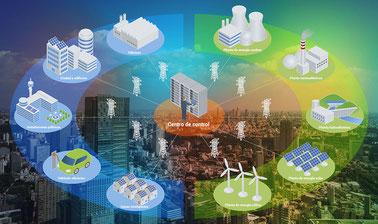
Learn how to manage high shares of variable renewable electricity sources to achieve cost-effective and reliable electricity supplies. This introductory course, delivered by Ieading academics from Imperial College London, with technical input and contributions from the National Energy Renewable Lab (Golden, Colorado), will discuss what challenges variable output renewables pose to the achievability of a reliable, stable electricity system, how these challenges can be addressed and at what costs.

Self Paced
Self-Paced
The Radio Sky I: Science and Observations (edX) EdX
École Polytechnique Fédérale de Lausanne,EPFLx

The Radio Sky I: Science and Observations (edX)

Be captivated by the exotic objects that populate the Radio Sky and gain a solid understanding of their physics and the fundamental techniques we use to observe them. The serendipitous and unexpected discovery of radio emission from celestial objects opened up the possibility of studying a new and exciting view of the universe beyond the visible spectrum. Astronomers have been studying the cosmos in visible light since ancient Greece, but it is only in comparatively modern times that the universe beyond the visible spectrum has become accessible to us. In this course you will learn about the most important objects that emit in the radio regime, both within and beyond our own galaxy.

Self Paced
Self-Paced
Cement Chemistry and Sustainable Cementitious Materials (edX) EdX
École Polytechnique Fédérale de Lausanne,EPFLx

Cement Chemistry and Sustainable Cementitious Materials (edX)

Learn the basics of cement chemistry and laboratory best practices for assessment of its key properties. Every day, we see concrete used all around us – to build our houses, offices, schools, bridges, and infrastructure. But few people actually understand what gives concrete its strength, resistance, and utility. The aim of this course is to offer basic cement chemistry to practitioners, as well as new students in the fields of chemistry and engineering.

Self Paced
Self-Paced
Introduction to Quantum Computing for Everyone (edX) EdX
University of Chicago,UChicagoX

Introduction to Quantum Computing for Everyone (edX)

This first course in quantum computing is for novices and requires learners to have only basic algebra. It covers the future impacts of quantum computing, provides intuitive introductions of quantum physics phenomenon, and progresses from single operations to a complete algorithm. Quantum computing is coming closer to reality, with 80+ bit machines in active use. This course provides an intuitive introduction to the impacts, underlying phenomenon, and programming principles that underlie quantum computing.

Self Paced
Self-Paced
Solid State Devices 1 (edX) EdX
Purdue University,PurdueX

Solid State Devices 1 (edX)

Semiconductor are everywhere in human activities, from your credit card to space exploration. This graduate-level introduction brings aspects of physics, chemistry, and engineering together to understand, analyze, and design transistors and solar cells. This course provides the graduate-level introduction to understand, analyze, characterize and design the operation of semiconductor devices such as transistors, diodes, solar cells, light-emitting devices, and more.

Jan 9th 2023
13-24 Weeks
Introduction to Quantum Transport (edX) EdX
Purdue University,PurdueX

Introduction to Quantum Transport (edX)

This course introduces the non-equilibrium Green’s function (NEGF) method widely used to describe quantum effects in nanoscale devices, along with its applications to spintronic devices. This course introduces the Schrödinger equation, using the tight-binding method to discuss the concept of bandstructure and E(k) relations, followed by an introduction to the NEGF method with simple illustrative examples. Concept of spinors is introduced along with the application of the NEGF method to spintronic devices.

Feb 12th 2024
5-12 Weeks
Fundamentos de Mecánica para Ingeniería (edX) EdX
Universitat Politècnica de València,UPValenciaX

Fundamentos de Mecánica para Ingeniería (edX)

Estudiaremos la cinemática y la dinámica del punto, los conceptos de trabajo y potencia y la energía mecánica. Se aborda el estudio del universo físico analizando objetos en movimiento. Se definen y analizan todas las magnitudes y leyes físicas que permiten describir geométrica y causalmente el movimiento de cuerpos representados por un punto.

Self Paced
Self-Paced
Cellular Polymers: Structure, Properties, Processing, Applications (edX) EdX
University of Bayreuth,BayreuthX

Cellular Polymers: Structure, Properties, Processing, Applications (edX)

Take our MOOC and dive deep into Cellular Polymers. Understand what makes them superior to other materials, how they are processed and why they are used in countless applications in our everyday life. This MOOC is your first step in the pioneering field of Cellular Polymers that connects chemistry, physics, materials science, engineering, and technology. Get yourself ready and enroll now.

Self Paced
Self-Paced