Education à la citoyenneté, à la santé, à l'éthique et à la déontologie (REAMOOC)

Education à la citoyenneté, à la santé, à l'éthique et à la déontologie (REAMOOC)

Les trois rubriques Ce MOOC visent à permettre à l’étudiant de connaitre les droits et les devoirs d’un bon citoyen notamment les caractéristiques et les comportements, de s’approprier des notions de santé élémentaire sur les maladies cardio-vasculaires et l’alimentation et d’être sensibilisé sur les dérives liées à une utilisation irresponsable des TIC, ses conséquences et suscite sa prise de conscience.

Ce MOOC est organisé en trois parties à savoir : l’Éducation à la Citoyenneté, l’Education à la Santé et enfin l’Education à l’Ethique et à la déontologie appliquées aux TIC; chacun étant développé en deux modules. Ainsi la triple thématique abordée dans ce MOOC est déjà révélatrice du contenu varié que les apprenants auront le privilège de découvrir tout au long de six semaines de formation.

Grâce à des vidéos, des animations, des documents illustrés et des fiches techniques, vous allez approfondir vos connaissances en citoyenneté, en santé ainsi qu’en éthique et déontologie des TIC. Des contenus plus accessibles et interactifs sont proposés.
Ce MOOC bénéficie des travaux de recherche menés dans le cadre du projet REAMOOC dans les universités de Douala, Ngaoundéré et Yaoundé I.
Début des inscriptions: le 03/09/2021
Fin des inscriptions: le 22/12/2021

Plan de cours

Module 1: LES CARACTERISTIQUES D'UN BON CITOYEN
Module 2: COMPORTEMENTS CIYOYENS EN SITUATION DE CRISE
Module 3: INTRODUCTION ET CONCEPTS CLES
Module 4: MALADIES CARDIOVASCULAIRES
Module 5: LA PROBLEMATIQUE DE L'UTILISATION DES TIC
Module 6: VERS L'UTILISATION ETHICO-DEONTOLOGIQUE DES TIC
Module 7: CONCLUSION DU MOOC
Format
Cette formattion se déroule en sept semaines au cours desquelles les participants pourront bénéficier de différentes ressources documentaires et d’échanges via un forum et les réseaux sociaux.

Go to Class
MOOC List is learner-supported. When you buy through links on our site, we may earn an affiliate commission.

Related Courses

Understanding Obesity (Coursera) Coursera
University of Edinburgh

Understanding Obesity (Coursera)

In this course, we’ll look at the facts and misconceptions around obesity and discuss key physiological and psychological concepts around the brain’s control of appetite and body weight. We’ll consider the biological and environmental pressures that make it easy to gain weight (and hard to lose it!). Most importantly, we'll give you the opportunity to reflect on your own knowledge and assumptions around the subject.

Jun 1st 2026
4 Weeks
Systems Science and Obesity (Coursera) Coursera
Johns Hopkins University

Systems Science and Obesity (Coursera)

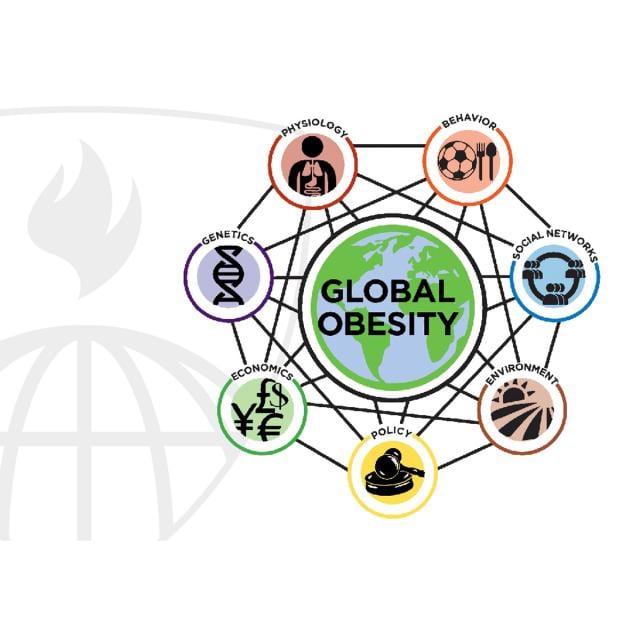
Systems science has been instrumental in breaking new scientific ground in diverse fields such as meteorology, engineering and decision analysis. However, it is just beginning to impact public health. This seminar is designed to introduce students to basic tools of theory building and data analysis in systems science and to apply those tools to better understand the obesity epidemic in human populations.

Jun 1st 2026
4 Weeks
Data Privacy Fundamentals (Coursera) Coursera
Northeastern University

Data Privacy Fundamentals (Coursera)

This course is designed to introduce data privacy to a wide audience and help each participant see how data privacy has evolved as a compelling concern to public and private organizations as well as individuals. In this course, you will hear from legal and technical experts and practitioners who encounter data privacy issues daily.

Jun 3rd 2026
3 Weeks
Clinical Epidemiology (Coursera) Coursera
Universiteit Utrecht

Clinical Epidemiology (Coursera)

Evidence forms the basis of modern medicine. Clinical research provides us with this evidence, guiding health professionals towards solutions to problems that they face in daily practice. Transferring existing problems in medical practice to a research setting is a challenging process that requires careful consideration. The practice of clinical epidemiology aims to address this through the application of established approaches for research in human populations, while at all times focussing on the problem at hand from a clinical perspective.

Jun 2nd 2026
5-12 Weeks
Synapses, Neurons and Brains (Coursera) Coursera
Hebrew University of Jerusalem

Synapses, Neurons and Brains (Coursera)

These are very unique times for brain research. The aperitif for the course will thus highlight the present “brain-excitements” worldwide. You will then become intimately acquainted with the operational principles of neuronal “life-ware” (synapses, neurons and the networks that they form) and consequently, on how neurons behave as computational microchips and how they plastically and constantly change - a process that underlies learning and memory.

Jun 1st 2026
5-12 Weeks
Understanding Prostate Cancer (Coursera) Coursera
Johns Hopkins University

Understanding Prostate Cancer (Coursera)

Welcome to Understanding Prostate Cancer. My name is Ken Pienta, Professor of Urology and Oncology at the Johns Hopkins School of Medicine. I have been studying prostate cancer and treating patients with prostate cancer for over 25 years. I've put together this course in order to introduce you to the essentials of prostate cancer. This Understanding Prostate Cancer Course should be helpful to anyone who wants to develop a deeper understanding of prostate cancer biology and treatment. It should be useful to students who are interested in a deeper understanding of the science of cancer.

Jun 1st 2026
3 Weeks
Global Health at the Human-Animal-Ecosystem Interface (Coursera) Coursera
University of Geneva

Global Health at the Human-Animal-Ecosystem Interface (Coursera)

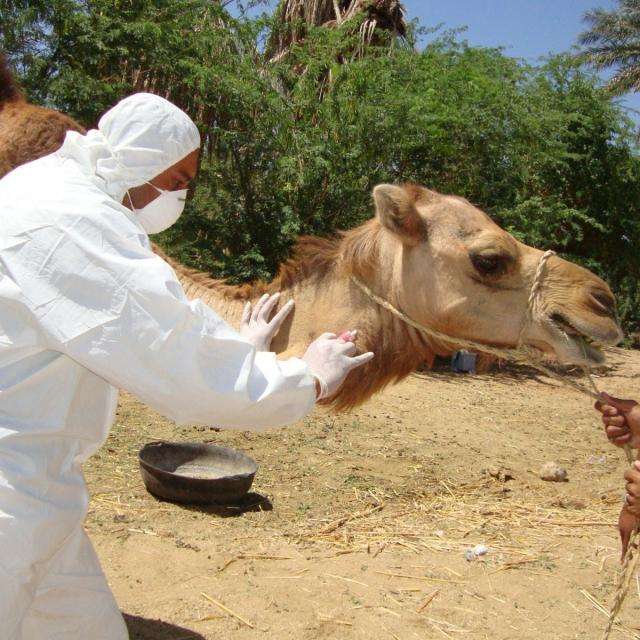
The University of Geneva, Institute Pasteur, University of Montreal and Centre Virchow-Villermé/University Paris Descartes welcome you to this new MOOC on "Global Health at the Human-Animal-Ecosystem Interface"! Over the next 5 weeks, you will explore and learn about some of the major and current Global Health Challenges at the Human-Animal-Ecosystem Interface: zoonotic emerging infections (e.g. Ebola, Nipah, MERS, Avian Influenza), antimicrobial resistance, neglected tropical diseases (e.g. rabies, leishmaniasis, zoonotic TB), snakebite and other human-animal conflicts etc.

Jun 1st 2026
5-12 Weeks
Health Coaching Conversations (Coursera) Coursera
Imperial College London

Health Coaching Conversations (Coursera)

Are you a healthcare practitioner or student in a healthcare field? Do you want to learn how to have more empowering conversations with your patients and support them to take control of their own health and wellbeing? Are you looking for a course to start learning these skills that also fits with your busy life? If so, this is the course for you!

Jun 3rd 2026
4 Weeks