Economic History of the Soviet Union (MRUniversity)

Economic History of the Soviet Union (MRUniversity)

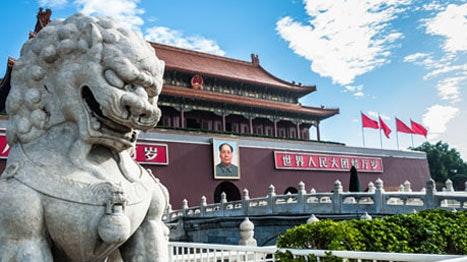
Economic theory must distinguish between publicly owned and privately owned property if it is to account for the effect of institutions on the behavior of individuals. Careful study of the theories of Marxists and the real-world experience in the Soviet economy offer important lessons and insight for economic modeling and the ongoing development of theory. In this course, Marxist/Leninist theory and Soviet reality will be studied with an open mind, and with the goal of taking lessons from the case study.

Course Outline

  • Introduction to Soviet Economic History
  • Why Study Marx?
  • The Soviet Union: An Experiment in Marxism
  • Lessons from the Soviet Union
  • Stages of Central Planning and Marxism in the Soviet Union
  • Lessons for Public versus Private Ownership
  • Marx's Labor Theory of Value
  • Planning to Plan
  • Marxist Utopianism
  • From Revolution to Planning
  • War Communism: Lessons for Leaders
  • The Retreat to Markets: The New Economic Policy
  • The New Economic Policy in Crisis
  • Stalinism and Alternatives
  • The Path to Stalinism and the Party Line
  • Stalin's Rise and The Tragedy of Collectivization
  • Exam
Go to Class
MOOC List is learner-supported. When you buy through links on our site, we may earn an affiliate commission.

Related Courses

Welcome to Game Theory (Coursera) Coursera
The University of Tokyo

Welcome to Game Theory (Coursera)

This course provides a brief introduction to game theory. Our main goal is to understand the basic ideas behind the key concepts in game theory, such as equilibrium, rationality, and cooperation. The course uses very little mathematics, and it is ideal for those who are looking for a conceptual introduction to game theory. Business competition, political campaigns, the struggle for existence by animals and plants, and so on, can all be regarded as a kind of “game,” in which individuals try to do their best against others.

Sep 7th 2026
4 Weeks
Economie du sol et de l'immobilier II (Coursera) Coursera
École Polytechnique Fédérale de Lausanne

Economie du sol et de l'immobilier II (Coursera)

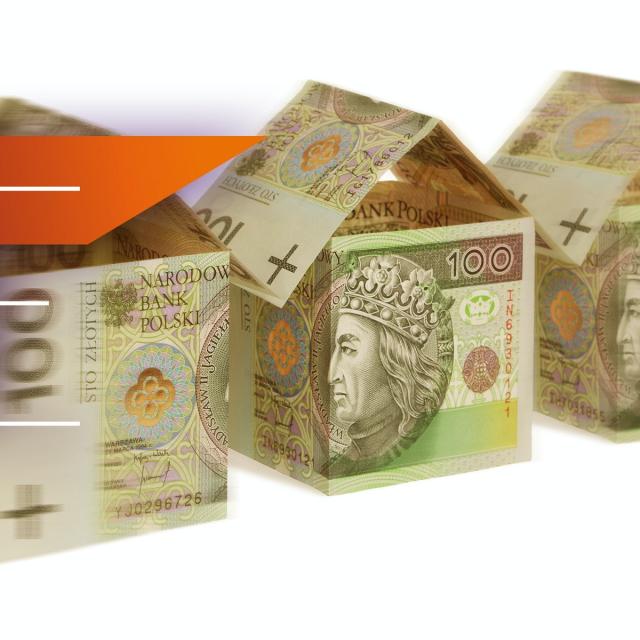
Quels sont les liens entre les prix fonciers, les prix immobiliers et les prix pour l'usage des immeubles? Est-ce que les prix immobiliers permettent de comprendre les prix fonciers? Ou l'inverse? Quels sont les calculs faits par les opérateurs sur ces marchés? On a le sentiment que ces marchés sont liés les uns aux autres. Avec ce cours, vous comprendrez mieux comment. En passant, vous aurez acquis une meilleure compréhension des mécanismes économiques qui peut être utile dans d'autres domaines.

Sep 21st 2026
5-12 Weeks
Principles of Economics: Macroeconomics (MRUniversity) MRUniversity
Marginal Revolution University

Principles of Economics: Macroeconomics (MRUniversity)

In this course, following MRU's Principles of Microeconomics course, you’ll continue to explore the economic way of thinking and the role of incentives in all of our lives. We’ll cover fundamental questions such as: Why do some countries grow rich while others remain poor? How important is a country’s banking system — and what happened during the recent financial crisis? How did Zimbabwe end up with an inflation rate that rose into the quadrillions?

Self-paced
Self-Paced
Infonomics I: Business Information Economics and Data Monetization (Coursera) Coursera
University of Illinois at Urbana-Champaign

Infonomics I: Business Information Economics and Data Monetization (Coursera)

Thriving in the Information Age compels organizations to deploy information as an actual business asset, not as an IT asset or merely as a business byproduct. This demands creativity in conceiving and implementing new ways to generate economic benefits from the wide array of information assets available to an organization. Unfortunately, information too frequently is underappreciated and therefore underutilized.

Sep 14th 2026
4 Weeks
The Art and Science of Economic Policy (Coursera) Coursera
Indian Institute for Human Settlements

The Art and Science of Economic Policy (Coursera)

Economic policy affects every citizen. And economic policymaking is best done as a collaborative process with a wide range of stakeholders. This course brings an understanding of the relevance and impacts of economic policymaking in everyday life, and the ways for citizens to be involved in shaping economic policy, in an accessible and interesting manner. Taught by Dr. Vijay Kelkar and Dr. Ajay Shah, along with Aromar Revi, Director, IIHS, the course synthesises more than one hundred years of their combined experience as professional economists and public intellectuals.

Sep 7th 2026
5-12 Weeks
Game Theory II: Advanced Applications (Coursera) Coursera
Stanford University,The University of British Columbia

Game Theory II: Advanced Applications (Coursera)

Popularized by movies such as "A Beautiful Mind", game theory is the mathematical modeling of strategic interaction among rational (and irrational) agents. Over four weeks of lectures, this advanced course considers how to design interactions between agents in order to achieve good social outcomes. Three main topics are covered: social choice theory (i.e., collective decision making and voting systems), mechanism design, and auctions.

Aug 31st 2026
5-12 Weeks
Firm Level Economics: Markets and Allocations (Coursera) Coursera
University of Illinois at Urbana-Champaign

Firm Level Economics: Markets and Allocations (Coursera)

In this class, we will derive equilibrium outcomes across a variety of market structures. We will begin by understanding equilibrium under a market structure called Perfect Competition, a benchmark construction. Economists have tools to measure the efficiency of market outcomes. We next consider the polar extreme of a competitive market: a monopoly market. We will determine the monopoly equilibrium price and quantity and efficiency properties. Much economic activity takes place in markets with just a handful of very large producers.

Aug 31st 2026
4 Weeks
Structuring Values in Modern China (Coursera) Coursera
The Chinese University of Hong Kong

Structuring Values in Modern China (Coursera)

This sequence of four courses will propose a multi-disciplinary approach to the study of Chinese cultural history conceived of as a succession of modes of rationality (philosophical, bureaucratic, and economic). The focus will be on the moments of paradigm shift from one mode of rationality to another. For each of these moments, cultural facts and artifacts—thought, literature, ritual—will be examined in relationship to changing social, political, and economic systems.

Sep 14th 2026
5-12 Weeks
Business English: Finance and Economics (Coursera) Coursera
Arizona State University

Business English: Finance and Economics (Coursera)

Do you work in finance or interact with finance professionals? Is it necessary to speak, write or understand English in your career? Follow the authentic characters in this course as they work through common business situations in finance and economics. Learn from your successes and failure, and think critically about your own communication options.

Sep 14th 2026
5-12 Weeks
Financial Markets (Coursera) Coursera
Yale University

Financial Markets (Coursera)

An overview of the ideas, methods, and institutions that permit human society to manage risks and foster enterprise. Emphasis on financially-savvy leadership skills. Description of practices today and analysis of prospects for the future. Introduction to risk management and behavioral finance principles to understand the real-world functioning of securities, insurance, and banking industries. The ultimate goal of this course is using such industries effectively and towards a better society.

Aug 31st 2026
5-12 Weeks