Discrete Structures (saylor.org)

Offered by Saylor.org,
Discrete Structures (saylor.org)

This course has been designed to provide you with a clear, accessible introduction to discrete mathematics. Discrete mathematics describes processes that consist of a sequence of individual steps (as compared to calculus, which describes processes that change in a continuous manner). The principal topics presented in this course are logic and proof, induction and recursion, discrete probability, and finite state machines.

This course has been designed to provide you with a clear, accessible introduction to discrete mathematics. Discrete mathematics describes processes that consist of a sequence of individual steps (as compared to calculus, which describes processes that change in a continuous manner). The principal topics presented in this course are logic and proof, induction and recursion, discrete probability, and finite state machines.

As you progress through the units of this course, you will develop the mathematical foundations necessary for more specialized subjects in Computer Science, including data structures, algorithms, and compiler design. Upon completion of this course, you will have the mathematical know-how required for an in-depth study of the science and technology of the computer age.

Upon successful completion of this course, the student will be able to:

Create compound statements, expressed in mathematical symbols or in English, to determine the truth or falseness of compound statements and to use the rules of inference to prove a conclusion statement from hypothesis statements by applying the rules of propositional and predicate calculus logic.
Prove mathematical statements involving numbers by applying various proof methods, which are based on the rules of inference from logic.
Prove the validity of sequences and series and the correctness or repeated processes by applying mathematical induction.
Define and identify the terms, rules, and properties of set theory and use these as tools to support problem solving and reasoning in applications of logic, functions, number theory, sequences, counting, probability, trees and graphs, and automata.
Calculate probabilities and apply counting rules.
Solve recursive problems by applying knowledge of recursive sequences.
Create graphs and trees to represent and help prove or disprove statements, make decisions or select from alternative choices to calculate probabilities, to document derivation steps, or to solve problems.
Construct and analyze finite state automata, formal languages, and regular expressions.
Go to Class
MOOC List is learner-supported. When you buy through links on our site, we may earn an affiliate commission.

Related Courses

World of Spies: Keeping Secrets (FutureLearn) FutureLearn
Purdue University

World of Spies: Keeping Secrets (FutureLearn)

Get a taste of spy training, and learn how you can keep your secrets safe with a course designed for 13-18 year olds. What does it take to be a spy? Strong critical thinking and communication skills, a firm grasp of logic, and a love of puzzles are all useful. This course will help you develop those abilities while exploring the exciting world of espionage. You’ll learn about code-making and breaking, encryption, logical thinking and more as you find out whether you would make a good spy.

No sessions available
4 Weeks
Razonamiento artificial (Coursera) Coursera
Universidad Nacional Autónoma de México

Razonamiento artificial (Coursera)

El razonamiento formal juega un papel importante en la inteligencia artificial. Hay dos maneras principales de formalizar razonamiento: una que enfatiza la deducción (lógica), y otra que enfatiza la incertidumbre (teoría de la probabilidad). En este curso vamos a cubrir una introducción tanto a la lógica (vamos a cubrir tres lógicas) como a la teoría de la probabilidad (vamos a cubrir tres modelos gráficos probabilísticos).

Aug 24th 2026
5-12 Weeks
Information Theory (Coursera) Coursera
The Chinese University of Hong Kong

Information Theory (Coursera)

At the completion of this course, the student should be able to: demonstrate knowledge and understanding of the fundamentals of information theory; appreciate the notion of fundamental limits in communication systems and more generally all systems; develop deeper understanding of communication systems; apply the concepts of information theory to various disciplines in information science.

Sep 7th 2026
13-24 Weeks
Solving the Sudoku Puzzle (Skillshare) Skillshare
Skillshare

Solving the Sudoku Puzzle (Skillshare)

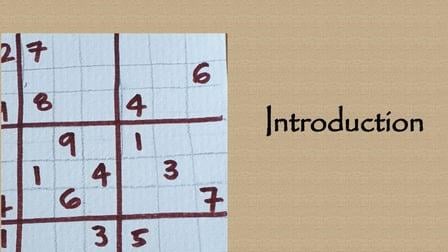
Often look at the Sudoku and wonder how to solve it? Tried several other videos but can’t still can’t seem to crack it? This is one and only video you will need. It is all about logic, not about luck! In this class you’ll learn techniques to solve a medium difficulty Sudoku puzzle. Even if you’re new to logic puzzles, you’ll find these simple and effective techniques easy to use and apply to your work!

Self Paced
Self-Paced
Logic: The Language of Truth (FutureLearn) FutureLearn
University of York

Logic: The Language of Truth (FutureLearn)

Learn how to use logic to evaluate arguments and discover more about philosophical concepts like truth-tables and logical form. Understand and evaluate arguments using philosophical theory. If you believe Mickey is a big mouse and Dumbo is a small elephant, then you must also believe that Mickey is a mouse and Dumbo is an elephant. But, do you believe that Mickey is bigger than Dumbo? On this course, you’ll consider the logic behind this argument and explore the concept that when something is true, other things have to be true too.

Self Paced
4 Weeks
Algorithms, Part II (Coursera) Coursera
Princeton University

Algorithms, Part II (Coursera)

This course covers the essential information that every serious programmer needs to know about algorithms and data structures, with emphasis on applications and scientific performance analysis of Java implementations. Part I covers elementary data structures, sorting, and searching algorithms. Part II focuses on graph- and string-processing algorithms.

Sep 14th 2026
5-12 Weeks
Introduction to Calculus (Coursera) Coursera
The University of Sydney

Introduction to Calculus (Coursera)

The focus and themes of the Introduction to Calculus course address the most important foundations for applications of mathematics in science, engineering and commerce. The course emphasises the key ideas and historical motivation for calculus, while at the same time striking a balance between theory and application, leading to a mastery of key threshold concepts in foundational mathematics.

Sep 7th 2026
5-12 Weeks
Introduction to Logic (Coursera) Coursera
Stanford University

Introduction to Logic (Coursera)

This course is an introduction to Logic from a computational perspective. It shows how to encode information in the form of logical sentences; it shows how to reason with information in this form; and it provides an overview of logic technology and its applications - in mathematics, science, engineering, business, law, and so forth.

Aug 27th 2026
5-12 Weeks