Digital Creativity for developing Digital Maturity future skills (POK)

Offered by Politecnico di Milano,
Digital Creativity for developing Digital Maturity future skills (POK)

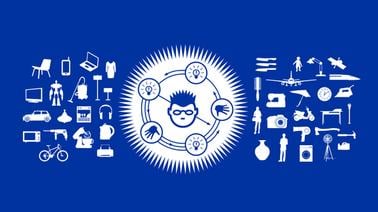
Would you like to train the next generation of Digital Maturity Enablers? Through this MOOC you will acquire the knowledge and the toolbox to guide your students in becoming experts who strategically envision future digital scenarios and solutions in a sustainable, ethical and strategic way.

This MOOC is your guide to the surprising, unpredictable and fascinating journey that leads to greater creativity. It is structured to train and empower creative thinking and design thinking for innovation on individual levels and in groups.

The objective is to equip multidisciplinary students with fundamental knowledge on creativity and a toolbox that will augment their creative and design abilities and mindset to face challenges in their own professional fields. The toolbox is constituted by a design thinking process and a series of tools and techniques that will boost their Creative Thinking to reach innovation.
The MOOC provides a tested and proven design process, developed by IDEActivity Center, with some methods and techniques which aim to promote and generate creativity, break established schemes, stimulate the imagination and, regardless of the method, improve the conditions in which creative ideas are produced. Students will learn different creativity tools and established skills in their utilisation over different problems and areas. They will learn how to enhance their creative abilities and to adopt a playful mindset in their everyday work that is fundamental to break the mental walls that inhibit creativity.
The course foresees a learning by doing approach where they will apply the toolbox step by step to face a challenge.
The course is structured in 5 weeks.
Week 1 – What is Digital Creativity for Digital Maturity?
Week 2 – The DC4DM educational model
Week 3 – The Design Futures process
Week 4 – Practical tools for the application of the model
Week 5 – The DC4DM model in action
In the first week, we concentrate on exploring the context in which the DC4DM project was created.
Week 1 introduces the concept of Digital Maturity and the 4 key practices that companies should implement to successfully undertake the gradual transition towards it. This first week also explains why it is relevant to train Digital Creativity to form the next generation of professionals able to support organizations in their digital transformation process. In particular, the week presents the role of Digital Maturity Enablers, new professional figures who possess a set of essential abilities to guide companies during the digital maturing path as well as explains the role of educators who are responsible for training these future talents.
Week 2 presents the educational model Digital Creativity for Digital Maturity (DC4DM) and the theory it is grounded on. Particular attention is given to the description of the Digital Creative Abilities (DCAs) that constitute the essential skillset for future Digital Matutity Enablers. The way in which such DCAs have been organized is also emphasized and explained to point out the importance of the Drivers, namely three thematic clusters of DCAs. In this week, you will also have the chance to hear a few stories from experts in the field of industry and find out their perspective on Digital Maturity.
Week 3 is dedicated to the core of the DC4DM model, namely the Design Futures process. It explores in detail how the Design Futures process is structured and describes its theoretical groundwork. Specific attention is given to the first step of the process which requires an in-depth trend research. For this reason, the week also presents a specific lecture on how to conduct a fruitful trend research.
Week 4 provides an operational overview of the DC4DM toolkit, the major intellectual output of the DC4DM project, and some essential guidelines and instructions to navigate it smoothly. The lecture is structured as a tutorial video to guide you through the main steps to follow the right flow and to give you tips to apply the tools and perform the activities correctly. Other project’s outputs are presented through additional materials available in the dedicated page.
Week 5 focuses on the Learning Lab and provides some practical insights to organize a successful experience. By describing the case study of the Learning Lab organized in Milan, you will receive some useful suggestions to plan and design the learning experience. You will also have the chance to hear students’ perspectives and comments on the Learning Labs conducted in Madeira and Saint-Étienne.
There are also some additional resources collected in the Additional Materials page. The additional materials allow you to reach an in-depth knowledge of the topics that interest you the most.


Go to Class
MOOC List is learner-supported. When you buy through links on our site, we may earn an affiliate commission.

Related Courses

Planning a Patient Safety or Quality Improvement Project (Patient Safety III) (Coursera) Coursera
Johns Hopkins University

Planning a Patient Safety or Quality Improvement Project (Patient Safety III) (Coursera)

This course provides students with a set of tools and methodologies to plan and initiate a Problem Solving or Quality Improvement project. The first module presents methods for selecting, scoping and structuring a project before it is even initiated. It also introduces the project classifications of implementation and discovery. The second module describes the A3 problem solving methodology and the tool itself. Further in that same module, the student is shown tools to identify problems in flow, defects, and waste and to discover causes, brainstorm, and prioritize interventions. Module 3 shows a methodology within the implementation class. These methods are designed to overcome emotional and organizational barriers to translating evidence-based interventions into practice. The fourth and last module looks at one more way to approach improvement projects in the discovery class. These tools are specifically for new, out-of-the-box design thinking.

Jun 15th 2026
4 Weeks
Building Fintech Startups in Emerging Markets (Coursera) Coursera
University of Cape Town

Building Fintech Startups in Emerging Markets (Coursera)

Starting a small business in an emerging market can be very rewarding. Many of entrepreneurship opportunities in emerging markets arise out of necessity, or the drive to solve a real need or a social problem. Thus emerging markets often offer huge opportunities for disruptive innovation. Entrepreneurship has contributed to economic growth and been able to respond to social problems, helping some communities prosper.

Jun 22nd 2026
4 Weeks
Creative and Design Thinking: process and tools for innovation (POK) Polimi OPEN KNOWLEDGE
Politecnico di Milano

Creative and Design Thinking: process and tools for innovation (POK)

Would you like to be more creative and innovative? Through the course you will learn how to develop a creative mindset and apply a creative process useful to get innovative solutions in any field of application. This MOOC is your guide to the surprising, unpredictable and fascinating journey that leads to greater creativity. It is structured to train and empower creative thinking and design thinking for innovation on individual levels and in groups.

Available
5-12 Weeks
Design Thinking for the Greater Good: Innovation in the Social Sector (Coursera) Coursera
University of Virginia

Design Thinking for the Greater Good: Innovation in the Social Sector (Coursera)

Do you work for a nonprofit or in the social sector? Are you struggling to solve the problems and meet the needs of the people you serve? Come learn more about how design thinking, a human-centered approach to problem solving, can help you truly understand an issue, generate ideas worth testing and iterate to find solutions that make a real difference. Through global stories from areas as diverse as government, health care, and education, we’ll show you the tools, techniques and mindset needed to use design thinking to uncover new and creative solutions in the social sector.

Jun 8th 2026
4 Weeks
Design Thinking and Global Startup (Coursera) Coursera
Korea Advanced Institute of Science and Technology - KAIST

Design Thinking and Global Startup (Coursera)

This course offers a systematic engineering design methodology: Stanford Design Thinking for preparing global startup. The course empathizes the whole Stanford design thinking process, "Empathy-Define-Ideation-Prototype-Test," for building a startup with a business model that has a “customer truly need” component.

Jun 22nd 2026
5-12 Weeks
Understanding the Value of Human-Centered Design (Coursera) Coursera
University of Illinois at Urbana-Champaign

Understanding the Value of Human-Centered Design (Coursera)

Human-centered design is an approach that focuses on human needs, goals, and experiences to frame problems, develop solutions, and coordinate resources. Through a series of videos, activities, and reflection, learners will develop an appreciation for the value and impact of human-centered design as well as begin to understand what investment is required to practice it well. The course prepares learners to collaborate with human-centered design practitioners and deepen their own practice.

Jun 22nd 2026
5-12 Weeks
Managing the New Product Development Process (Coursera) Coursera
University of Colorado Boulder

Managing the New Product Development Process (Coursera)

This course covers the product development process in detail. With the opportunity defined, learners begin with ideation techniques such as Design Thinking to create new product concepts. Learners define the tools to create product specifications that meet customer requirements, then conceptualize different ways of meeting those requirements. Learners conclude by exploring prototyping and the techniques used to down-select to a concept that is then carried through launch.

Jun 15th 2026
5-12 Weeks
Customer Insights: New Product Development Orientation (Coursera) Coursera
University of Illinois at Urbana-Champaign

Customer Insights: New Product Development Orientation (Coursera)

This course is the first in the Customer Insights and New Product Development (CIPD) specialization. It will introduce learners to the tools and process of gathering customer insights for identifying and developing new product opportunities. Through an integrated set of five modules and hands-on project experiences, learners will acquire the knowledge and skills to turn their ideas gained from understanding customer needs into innovative new products.

Jun 8th 2026
4 Weeks
Design Thinking: Ideas to Action (Coursera) Coursera
University of Virginia

Design Thinking: Ideas to Action (Coursera)

Welcome, designers! In this course, developed at the Darden School of Business at the University of Virginia, you will carry on the design thinking process begun in our Insights to Inspiration course, beginning with the eighth step in our 14-Step process, bringing the ideas you developed in our Insights to Inspiration course to action. We start this course by asking, “What if?” We’ll use brainstorming in a new and creative way to generate solutions to your challenge, and then learn to take those raw ideas and synthesize them into important concepts. By asking, “What wows?” and “What works?” you will learn to move from ideation to experimentation.

Jun 22nd 2026
5-12 Weeks
Digital Creativity (Coursera) Coursera
Arizona State University

Digital Creativity (Coursera)

Creativity matters, but it’s not always an easy thing to accomplish. From coming up with ideas to protecting your intellectual property, there’s a lot that goes into being a creator. In digital environments, you have a lot of freedom to create content of various kinds — but you also have more to be careful about. The question is, “How do you go about creating and protecting your content in the digital world?”

Jun 22nd 2026
5-12 Weeks