EdX

Digital Capital Markets (edX)

Digital Capital Markets (edX)

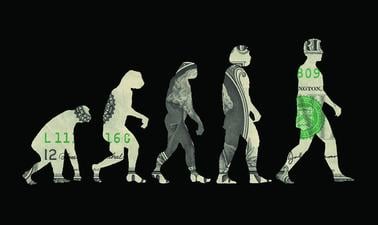
Learn key concepts for evaluating electronic market quality, how trading algorithms work, and the hype around high-frequency trading and dark markets. In this course, you will learn ways in which technology has changed how financial markets and institutions function. Every part of the financial value chain is being “disrupted” by nimble technology-based innovators. Where personal relationships used to determine success and failure, the ability to process and act on massive amounts of data is taking over.

Class Deals by MOOC List - Click here and see EdX's Active Discounts, Deals, and Promo Codes.

Securities trading and securities issuance, typically the turf of large institutions, is being taken over by technology. High frequency and algorithmic trading take advantage of fast access to information and technology to trade in milliseconds. Financial market operators have morphed into pure technology firms and data providers.
Technology and financial innovations can be used for good or not so good purposes. For instance, it can be used to exploit the information of less sophisticated investors, or to provide them with liquidity. The course will study both the good and bad, regulatory aspects, and ethical considerations.
All these aspects are changing the skills required to be successful in digital capital markets. We will also cover how finance has changed and is changing, the skills required to be successful and what the future may bring. Where possible we will link new phenomena to classical finance theory and highlight where predictions and reality have diverged.
An introduction to technology in capital markets, the course is taught by a world-class instructor, actively involved in academic and policy research and training the next generation of traders. This course will prepare students from many backgrounds for careers in financial markets and financial market technology.

What you'll learn
After completing this course, learners will be able to

  • analyze the ways in which technology is re-shaping how assets are traded.
  • recommend how machine learning and data science can be applied to solving financial trading problems.
  • design a strategy to evaluate the quality of electronic markets.
  • assess the importance of intermediaries, investors, regulators, and market operators in the functioning of digital capital markets.

Go to Class
MOOC List is learner-supported. When you buy through links on our site, we may earn an affiliate commission.

Related Courses

Financial Market Analysis (edX) EdX
International Monetary Fund - IMF,IMFx

Financial Market Analysis (edX)

Learn the fundamentals of finance that are essential for both investors and policymakers. In this IMFx course you will learn, from hands-on demonstrations, how to price different types of bonds, how to calculate different measures of bond yields and how to compare them across different types of instruments. You will become familiar with the term structure of interest rates, a key ingredient in establishing benchmark rates used to price securities in the markets and a valuable tool for monetary policy design and diagnosis.

Self Paced
Self-Paced
Justice Today: Money, Markets, and Morals (edX) EdX
HarvardX,Harvard University

Justice Today: Money, Markets, and Morals (edX)

Explore the ethical controversies of financial markets. Should you be able to buy a vote, citizenship, or college admission? Would you bet on someone else’s life—or, more accurately their death date? What about paying to see the exploitation of a person? Competition, status, and greed often cause one’s moral compass to move in the wrong direction, but if there is a market to support these macabre sales, then the question to consider is this: Are there certain moral and civic goods, that markets do not honor, and money cannot buy?

Self Paced
Self-Paced
Finance for Everyone: Markets (Coursera) Coursera
McMaster University

Finance for Everyone: Markets (Coursera)

Markets begins with one of the most common and important elements of the financial system – interest rates. You will learn why interest rates have always been a key barometer in determining the value of everything. You will explore the changing influence of interest rates; the impact of interest rates on consumption, investment and economic growth; and the bizarre realities of negative interest rates. Markets explains how interest rates change the value of all financial instruments, highlighting the role of the bond and stock markets that have toppled empires

Sep 21st 2026
4 Weeks
Mercados financieros (Coursera) Coursera
Yale University

Mercados financieros (Coursera)

Una síntesis de las ideas, métodos e instituciones que permiten que la sociedad humana pueda gestionar los riesgos y promover la actividad empresarial. Un énfasis en las habilidades de liderazgo con conocimientos financieros profundos. Descripción de las prácticas actuales y el análisis de prospectos a futuro. Introducción a los principios de gestión de riesgos y de las finanzas conductuales para comprender el funcionamiento en el mundo real de las industrias de valores, seguros y el sector bancario.

Sep 14th 2026
5-12 Weeks
Développement financier et inclusion financière (edX) EdX
International Monetary Fund - IMF,IMFx

Développement financier et inclusion financière (edX)

Apprendre à développer un secteur financier inclusif et stable est essentiel pour que l’économie prospère. Ce cours a été développé par le FMI en collaboration avec la Banque européenne d'investissement. Des taux plus élevés d'inclusion financière et de développement des marchés financiers indiquent des sociétés plus prospères.

Self Paced
Self-Paced
Narrative Economics (Coursera) Coursera
Yale University

Narrative Economics (Coursera)

This course, Narrative Economics, is relatively short and proposes a simple concept: we need to incorporate the contagion of narratives into our economic theory. You can think of narratives as stories that shape public beliefs, which in turn influence our decision making. Understanding how people arrived at certain decisions in the past can aid our understanding of the economy today and improve our forecasts of the future.

Sep 7th 2026
4 Weeks
Financial Markets (Coursera) Coursera
Yale University

Financial Markets (Coursera)

An overview of the ideas, methods, and institutions that permit human society to manage risks and foster enterprise. Emphasis on financially-savvy leadership skills. Description of practices today and analysis of prospects for the future. Introduction to risk management and behavioral finance principles to understand the real-world functioning of securities, insurance, and banking industries. The ultimate goal of this course is using such industries effectively and towards a better society.

Aug 31st 2026
5-12 Weeks
Introduction to Finance: The Role of Financial Markets (Coursera) Coursera
University of Illinois at Urbana-Champaign

Introduction to Finance: The Role of Financial Markets (Coursera)

In Introduction to Finance: The Role of Financial Markets, you will be introduced to the basic concepts and skills needed for financial managers to make informed decisions. With an overview of the structure and dynamics of financial markets and commonly used financial instruments, you will get crucial skills to make capital investment decisions.

Sep 14th 2026
4 Weeks
Introduction to Risk Management (Coursera) Coursera
New York Institute of Finance

Introduction to Risk Management (Coursera)

What is risk? Why do firms manage risk? In this course, you will be introduced to the different types of business and financial risks, their sources, and best practice methods for measuring risk. This course will help you gauge different risk types and set risk limits, describe the key factors that drive each type of risk, and identify the steps needed to choose probability distributions to estimate risk.

Sep 7th 2026
5-12 Weeks
Machine Learning Use Cases in Finance (edX) EdX
Université de Montréal,UMontrealX

Machine Learning Use Cases in Finance (edX)

In the last six years, the financial sector has seen an increase in the use of machine learning models in financial, banking and insurance contexts. Data science and advanced analytics teams in the financial and insurance community are implementing these models regularly and have found a place for them in their toolbox.

Self Paced
Self-Paced