Developing a Systems Mindset (Coursera)

Developing a Systems Mindset (Coursera)

A Systems Mindset teaches learners how to interact effectively as service providers, consultants, researchers, developers, or other professionals providing a service or product to a person, group, or community. This course provides the basic foundations for policy makers, real estate developers, consultants, government agencies, engineers, and non-profit organizations the first steps in engaging complex problems where engagement with communities and stakeholders is necessary.

Class Deals by MOOC List - Click here and see Coursera's Active Discounts, Deals, and Promo Codes.

Being a successful professional requires creative, innovative, and entrepreneurial thinking, and to continually have a problem-solving mindset. Yes, absolutely! But you also need to be a listener. You need to truly value the community and stakeholders - the ones who have the most to gain and lose from your actions. It is important for you to listen, learn what is important, and then act. This course will highlight the urgency for you to have a systems mindset to engage complex problems for a systems perspective, meaning that you have approach problems from different angles, scales and perspectives. This class is the first step in creating that mindset and for you to effectively engage – from receiving the “ask” for “assistance”, to orienting yourself to the issue, understanding the community, and developing a project plan. Students will learn how to use a systems mindset to understand scaled systems, nested hierarchies, and the interactions between social and environmental systems. Students will also learn practical skills and techniques that build rapport, trust, and buy-in.
What You Will Learn

  • Build the core knowledge needed to build a systems mindset.
  • Develop the ability to operationalize systems thinking.
  • Learn how to understand communities and develop place based interest.

Course 1 of 3 in the Leading Sustainable Community Transformation Specialization.

Syllabus

WEEK 1: Introduction to Systems
WEEK 2: Operationalize Systems Thinking
WEEK 3: Understanding a Community

Go to Class
MOOC List is learner-supported. When you buy through links on our site, we may earn an affiliate commission.

Related Courses

Engineering Project Management: Risk, Quality, Teams, and Procurement (Coursera) Coursera
Rice University

Engineering Project Management: Risk, Quality, Teams, and Procurement (Coursera)

Many Project Managers focus only on the scope, schedule and budget. However, a successful project requires that you manage risk, control the quality of the deliverables, engage and manage people and procure goods and services. This course will focus on these key support functions that make the difference between a highly successful project and an average one. During the course, you will prepare a Qualitative Risk Analysis and Evaluate the Cost of Quality for a provided Case Study.

Oct 26th 2026
5-12 Weeks
Rebo-binario (Coursera) Coursera
Universidad Autónoma Metropolitana

Rebo-binario (Coursera)

Te damos la bienvenida al curso en línea Rebo-binario, un curso diseñado para incentivar el desarrollo de habilidades mentales relacionados al pensamiento computacional y creativo para la resolución de problemas y la reflexión crítica. Para lograr este cometido echamos mano de estrategias del pensamiento computacional y la creatividad como saberes para el uso y apropiación de herramientas digitales y tecnologías informáticas.

Oct 26th 2026
3 Weeks
Planning a Patient Safety or Quality Improvement Project (Patient Safety III) (Coursera) Coursera
Johns Hopkins University

Planning a Patient Safety or Quality Improvement Project (Patient Safety III) (Coursera)

This course provides students with a set of tools and methodologies to plan and initiate a Problem Solving or Quality Improvement project. The first module presents methods for selecting, scoping and structuring a project before it is even initiated. It also introduces the project classifications of implementation and discovery. The second module describes the A3 problem solving methodology and the tool itself. Further in that same module, the student is shown tools to identify problems in flow, defects, and waste and to discover causes, brainstorm, and prioritize interventions. Module 3 shows a methodology within the implementation class. These methods are designed to overcome emotional and organizational barriers to translating evidence-based interventions into practice. The fourth and last module looks at one more way to approach improvement projects in the discovery class. These tools are specifically for new, out-of-the-box design thinking.

Oct 19th 2026
4 Weeks
Pets, Politics and Pandemics (Coursera) Coursera
Columbia University

Pets, Politics and Pandemics (Coursera)

This course is designed to be a fun and accessible introduction to the topic of systems theory. Systems theory describes a number of fundamental concepts that undergird a broad array of phenomena across many different social, political and natural arenas. It is from this broad applicability that the course derives its title: Pets (social), politics (political and economic) and Pandemics (natural).

Nov 2nd 2026
5-12 Weeks
Cities, Climate and Change: Pathways and Opportunities (Coursera) Coursera
Lund University

Cities, Climate and Change: Pathways and Opportunities (Coursera)

How can we develop transformative skills and capacities to achieve climate neutral and sustainable cities? This course explores how we can design, create and achieve climate neutral and sustainable cities. We embrace the “mission to the moon” approach for tackling greenhouse emissions from cities putting an emphasis on pathways and opportunities. We utilise insights and inspiration from Sweden, Europe and around the world.

Oct 26th 2026
5-12 Weeks
IBM COBOL Software Development Practices (Coursera) Coursera
IBM,LearnQuest

IBM COBOL Software Development Practices (Coursera)

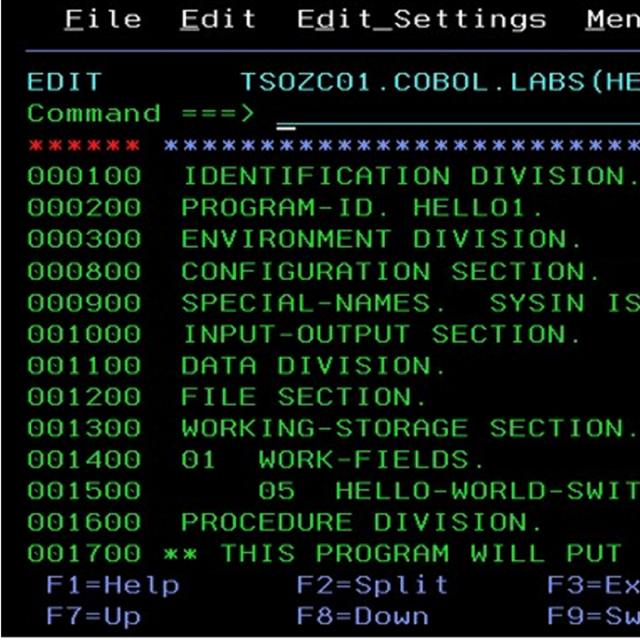
This course is aimed at anybody interested in COBOL or or software development. In this course, you will be introduced to core practices, systems, and methodologies associated with IBM COBOL software development. You will learn about COBOL as a self-documenting language. You will review working with existing coding. This course also covers quality assurance (QA), technical support and project management.

Oct 19th 2026
3 Weeks
Transmedia Storytelling: Narrative worlds, emerging technologies, and global audiences (Coursera) Coursera
UNSW Sydney - University of New South Wales

Transmedia Storytelling: Narrative worlds, emerging technologies, and global audiences (Coursera)

Transmedia storytelling is the practice of designing, sharing, and participating in a cohesive story experience across multiple traditional and digital delivery platforms - for entertainment, advertising and marketing, or social change. Have you ever read a book, seen a movie, watched a television show, or played a game that centred around different aspects of a larger story or universe? You may be familiar with popular examples of such universes like Star Wars, Marvel, and The Walking Dead (to name a few). How do the professionals develop such expansive narratives? How do they ensure that each element stays true to the original story? How do they innovatively use different technologies to share the stories, grow audiences and create an active and involved community of fans?

Nov 2nd 2026
5-12 Weeks
Innovar (Coursera) Coursera
Arizona State University

Innovar (Coursera)

La innovación ha cobrado una importancia significativa en las corporaciones de hoy, y con frecuencia es vista como un motor importante de crecimiento y éxito en una organización. En este curso introductorio, usted aprenderá sobre el significado, la importancia, el proceso e impacto de la innovación.

Nov 2nd 2026
5-12 Weeks
Innovation Career Lessons from a Master (Coursera) Coursera
Technion - Israel Institute of Technology

Innovation Career Lessons from a Master (Coursera)

This course, which is Part Three in the series of Startup Entrepreneurship specialization, offers Life Lessons from a Master Innovator, with proven achievements. During this course you will listen to conversations and interviews with Mr. David (Dadi) Perlmutter, who until recently was Executive VP of Intel corporate. Dadi will talk about 10 life lessons, based on his 34 years as a rebel innovator and entrepreneur.

Oct 26th 2026
4 Weeks
Reviews & Metrics for Software Improvements (Coursera) Coursera
University of Alberta

Reviews & Metrics for Software Improvements (Coursera)

This course covers techniques for monitoring your projects in order to align client needs, project plans, and software production. It focuses on metrics and reviews to track and improve project progress and software quality. What you will learn: apply techniques to measure and visualize project progress, integrate Agile review practices to increase project visibility; reflect on lessons learned in software projects through retrospective exercises; improve project and process quality through ongoing measurement

Oct 26th 2026
4 Weeks
Working for a sustainable future: concepts and approaches (Coursera) Coursera
Lund University

Working for a sustainable future: concepts and approaches (Coursera)

In this course, participants are introduced to key notions and concepts evolving in sustainability science that are relevant to all, independent to one's work or field of interest. After having completed the course, participants will have a better understanding of the vocabulary used today and should demonstrate the ability to reflect critically to integrate different perspectives of environmental, social, and economic sustainability to their specific area of interest or research.

Nov 2nd 2026
5-12 Weeks
Patient Safety and Quality Improvement: Developing a Systems View (Patient Safety I) (Coursera) Coursera
Johns Hopkins University

Patient Safety and Quality Improvement: Developing a Systems View (Patient Safety I) (Coursera)

In this course, you will be able develop a systems view for patient safety and quality improvement in healthcare. By then end of this course, you will be able to: 1) Describe a minimum of four key events in the history of patient safety and quality improvement, 2) define the key characteristics of high reliability organizations, and 3) explain the benefits of having strategies for both proactive and reactive systems thinking.

Oct 19th 2026
4 Weeks