Developing Applications with SQL, Databases, and Django (Coursera)

Offered by IBM,
Developing Applications with SQL, Databases, and Django (Coursera)

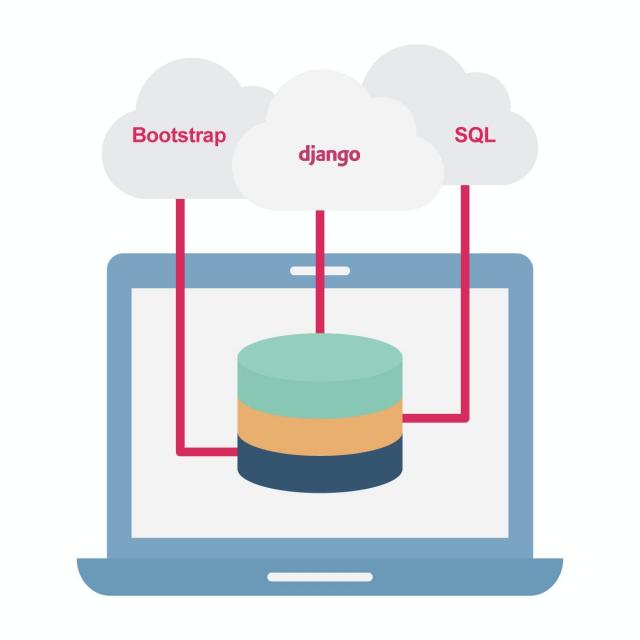
The essentials of application development are accessing, processing, and presenting data. Data is stored in various databases, either on-premise or on the cloud, and developers will need to learn how to talk to them via programming languages. In this course, you will be introduced to some fundamental database concepts. You will learn the basics of SQL, a simple and powerful programming language for querying and managing data. And you will learn about cloud database fundamentals and get hands-on cloud database experiences.

Class Deals by MOOC List - Click here and see Coursera's Active Discounts, Deals, and Promo Codes.

In addition to SQL, you will discover how Object-Relational Mapping (ORM) allows you to use Object-Oriented Programming (OOP) languages to work with databases. You will gain full-stack Django skills by creating a Django web app to persist, process, and present data. And you will learn about cloud app platform fundamentals and get hands-on experience deploying your Django web app on the cloud.
Course Learning Objectives:

  • Describe what is a database and how to model data
  • Compose SQL queries to insert, select, update, delete data in a database
  • Understand Object Relational Model (ORM)
  • Employ Django to develop database-powered applications
  • Deploy your Django app on the cloud

Course 8 of 10 in the IBM Full Stack Cloud Developer Professional Certificate.

Syllabus

WEEK 1
Getting Started with SQL & Relational Databases
What is data? As you start this course, you will be introduced to some concepts that are fundamental to understanding data, databases, and database management systems. You will learn some basic SQL statements. Explore the structure, use cases, and limitations of relational databases. Learn key relational database concepts, including entities, attributes, entity-relationship data modeling, common data types, and primary key.

WEEK 2
ORM: Bridging the Gap Between the Real World and Relational Model
You’re aware that SQL is a powerful tool for working with databases. But in the modern application development environment, object-oriented programming is the most popular paradigm, and it is quite different from SQL. Is there a way to use Object-oriented programming to work with databases?
Discover how Object-Relational Mapping (ORM) bridges the gap between object-oriented programming (OOP) and SQL and allows application developers to use OOP languages to work with databases without writing SQL code. Gain skills in using Django ORM, a popular ORM library for Python, to define models and fields so they can be mapped to database tables. Learn the steps for using Django ORM to convert your entity-relationship diagrams into Django models. Gain knowledge about using Django Model APIs to manipulate objects in databases without writing SQL queries. Explore the many useful methods Django Model provides to handle related objects.

WEEK 3
Full-stack Django Development
It’s time to build your skills by creating a Django web app. In this module, you’ll explore the Django Model- View- Template design pattern and learn how Django models, views, and templates work together to present data on a website.
You’ll look at a typical Django development process, starting with building a Django project and creating and adding an app. Gain knowledge about the Django web app structure. Learn the steps to create Django models and views, add an HTML template, map the request URLs to your views, and design and build the UI. Next, use Django’s powerful admin site functionality to manage your site content. You’ll build an admin site and create an admin user. You’ll specify the model fields on the admin site and add UI features such as Search and Filter. Create a Django view to receive an HTTP request and send an HTTP response. Discover how to combine Django views and templates to present your data as dynamic web pages.

WEEK 4
Consolidate and Deploy Your Django App
Add to your Django skills by building a class-based view. Then, learn how to speed up development using Django’s generic-based views.
Next, you’ll learn about authentication and authorization in Django. Create a User model to handle authentication and work with other models to handle authorization. Create web login, log out, and registration forms. Assign permissions to models and user groups. You’ll then move on to Bootstrap, a free and open-source web front-end framework. Learn how to quickly add Bootstrap to your Django template to build stylized and interactive web pages. Next, explore how to add static files to your apps. Learn how Django manages static files in development and deployment environments. Learn about the webserver interfaces supported by Django. And discover how Infrastructure as a Service and Platform as a Service offerings can streamline app deployment. Explore the benefits of two popular examples of PaaS, IBM Cloud Foundry and IBM Code Engine. Finally, gain hands-on experience deploying an app on IBM Cloud Foundry.

WEEK 5
Final Project: Enhance Online Course App with New Features
Go to Class
MOOC List is learner-supported. When you buy through links on our site, we may earn an affiliate commission.

Related Courses

Data Visualization with Advanced Excel (Coursera) Coursera
PwC

Data Visualization with Advanced Excel (Coursera)

In this course, you will get hands-on instruction of advanced Excel 2013 functions. You’ll learn to use PowerPivot to build databases and data models. We’ll show you how to perform different types of scenario and simulation analysis and you’ll have an opportunity to practice these skills by leveraging some of Excel's built in tools including, solver, data tables, scenario manager and goal seek.

Jun 22nd 2026
4 Weeks
Data Manipulation at Scale: Systems and Algorithms (Coursera) Coursera
University of Washington

Data Manipulation at Scale: Systems and Algorithms (Coursera)

Data analysis has replaced data acquisition as the bottleneck to evidence-based decision making --- we are drowning in it. Extracting knowledge from large, heterogeneous, and noisy datasets requires not only powerful computing resources, but the programming abstractions to use them effectively. The abstractions that emerged in the last decade blend ideas from parallel databases, distributed systems, and programming languages to create a new class of scalable data analytics platforms that form the foundation for data science at realistic scales.

Jun 22nd 2026
4 Weeks
Object-Oriented Hierarchies in Java (Coursera) Coursera
LearnQuest

Object-Oriented Hierarchies in Java (Coursera)

Object-Oriented Hierarchies in Java is the third of a series of courses in the Core Java Specialization. The Core Java Specialization is part of a series of programming specializations, derived from LearnQuest's private Java Bootcamps, designed to provide the skill set necessary to be hired as an IT developer using Java in many corporate environments.

Jun 22nd 2026
5-12 Weeks
Building Database Applications in PHP (Coursera) Coursera
University of Michigan

Building Database Applications in PHP (Coursera)

In this course, we'll look at the object oriented patterns available in PHP. You'll learn how to connect to a MySQL using the Portable Data Objects (PDO) library and issue SQL commands in the the PHP language. We'll also look at how PHP uses cookies and manages session data. You'll learn how PHP avoids double posting data, how flash messages are implemented, and how to use a session to log in users in web applications.

Jun 22nd 2026
5-12 Weeks
Python for Data Science, AI & Development (Coursera) Coursera
IBM

Python for Data Science, AI & Development (Coursera)

Kickstart your learning of Python for data science, as well as programming in general, with this beginner-friendly introduction to Python. Python is one of the world’s most popular programming languages, and there has never been greater demand for professionals with the ability to apply Python fundamentals to drive business solutions across industries.

Jun 23rd 2026
5-12 Weeks
Foundations for Big Data Analysis with SQL (Coursera) Coursera
Cloudera

Foundations for Big Data Analysis with SQL (Coursera)

In this course, you'll get a big-picture view of using SQL for big data, starting with an overview of data, database systems, and the common querying language (SQL). Then you'll learn the characteristics of big data and SQL tools for working on big data platforms. You'll also install an exercise environment (virtual machine) to be used through the specialization courses, and you'll have an opportunity to do some initial exploration of databases and tables in that environment.

Jun 22nd 2026
5-12 Weeks
Managing Big Data with MySQL (Coursera) Coursera
Duke University

Managing Big Data with MySQL (Coursera)

This course is an introduction to how to use relational databases in business analysis. You will learn how relational databases work, and how to use entity-relationship diagrams to display the structure of the data held within them. This knowledge will help you understand how data needs to be collected in business contexts, and help you identify features you want to consider if you are involved in implementing new data collection efforts.

Jun 22nd 2026
5-12 Weeks
Managing Big Data in Clusters and Cloud Storage (Coursera) Coursera
Cloudera

Managing Big Data in Clusters and Cloud Storage (Coursera)

In this course, you'll learn how to manage big datasets, how to load them into clusters and cloud storage, and how to apply structure to the data so that you can run queries on it using distributed SQL engines like Apache Hive and Apache Impala. You’ll learn how to choose the right data types, storage systems, and file formats based on which tools you’ll use and what performance you need.

Jun 22nd 2026
5-12 Weeks
Application Development using Microservices and Serverless (Coursera) Coursera
IBM

Application Development using Microservices and Serverless (Coursera)

Are you a developer ready to explore serverless application development? This intermediate-level course is for you! Begin with an understanding of how serverless benefits developers, learn when to use serverless programming, serverless deployment models, and discover its top use cases and design patterns. You’ll also discover how serverless supports continuous integration and continuous delivery (CI/CD) and microservices integration.

Jun 22nd 2026
5-12 Weeks
Relational database systems (Coursera) Coursera
Universidad Nacional Autónoma de México

Relational database systems (Coursera)

Welcome to the specialization course Relational Database Systems. This course will be completed on six weeks, it will be supported with videos and various documents that will allow you to learn in a very simple way how several types of information systems and databases are available to solve different problems and needs of the companies.

Jun 22nd 2026
5-12 Weeks