Designing data-intensive applications (Coursera)

Designing data-intensive applications (Coursera)

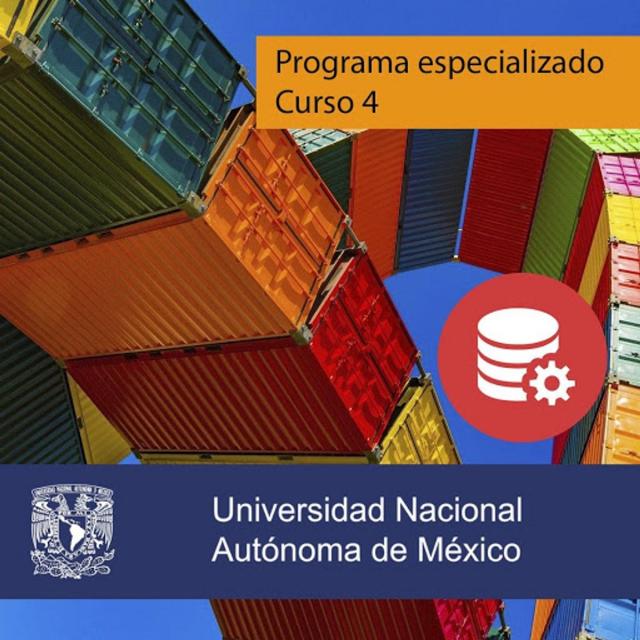
Welcome to the specialization course of Designing data-intensive applications. This course will be completed on four weeks, it will be supported with videos and exercises.

Class Deals by MOOC List - Click here and see Coursera's Active Discounts, Deals, and Promo Codes.

By the end of this specialization, learners will be able to propose, design, justify and develop high reliable information systems according to type of data and volume of information, response time, type of processing and queries in order to support scalability, maintainability, security and reliability considering the last information technologies.
Software to download:
MySQL Workbench
Rapidminer
Hadoop framework Hortonworks
MongoDB
In case you have a Mac / IOS operating system you need to perform an action called VirtualBox.
Course 4 of 4 in the Database systems Specialization.

Syllabus

WEEK 1
Designing a transaccional system
After completing this module, a learner will learn how to distinguish a transactional from an analytical information system according to consistency, concurrency and integrity, and how to propose an architecture that suits user requirements.

WEEK 2
Designing an analytical system
After completing this module, a learner will learn how to distinguish a transactional from an analytical information system according to the queries required on a huge amount of historical structured data that requires fast processing.

WEEK 3
Designing an alternative to relational databases
After completing this module, a learner will learn how to distinguish which database technology to use to suit the user requirements, detect frauds and support ACID properties.

WEEK 4
Designing an analytical system within a data lake
After completing this module, a learner will identify the architecture and technologies required to analyse a huge volume of structured and semistructured data.


Go to Class
MOOC List is learner-supported. When you buy through links on our site, we may earn an affiliate commission.

Related Courses

Data Manipulation at Scale: Systems and Algorithms (Coursera) Coursera
University of Washington

Data Manipulation at Scale: Systems and Algorithms (Coursera)

Data analysis has replaced data acquisition as the bottleneck to evidence-based decision making --- we are drowning in it. Extracting knowledge from large, heterogeneous, and noisy datasets requires not only powerful computing resources, but the programming abstractions to use them effectively. The abstractions that emerged in the last decade blend ideas from parallel databases, distributed systems, and programming languages to create a new class of scalable data analytics platforms that form the foundation for data science at realistic scales.

Jun 22nd 2026
4 Weeks
Practical Predictive Analytics: Models and Methods (Coursera) Coursera
University of Washington

Practical Predictive Analytics: Models and Methods (Coursera)

Statistical experiment design and analytics are at the heart of data science. In this course you will design statistical experiments and analyze the results using modern methods. You will also explore the common pitfalls in interpreting statistical arguments, especially those associated with big data. Collectively, this course will help you internalize a core set of practical and effective machine learning methods and concepts, and apply them to solve some real world problems.

Jun 22nd 2026
4 Weeks
Interprofessional Healthcare Informatics (Coursera) Coursera
University of Minnesota

Interprofessional Healthcare Informatics (Coursera)

Interprofessional Healthcare Informatics is a graduate-level, hands-on interactive exploration of real informatics tools and techniques offered by the University of Minnesota and the University of Minnesota's National Center for Interprofessional Practice and Education. We will be incorporating technology-enabled educational innovations to bring the subject matter to life. Over the 10 modules, we will create a vital online learning community and a working healthcare informatics network.

Jun 22nd 2026
5-12 Weeks
Introduction to Spreadsheets and Models (Coursera) Coursera
University of Pennsylvania

Introduction to Spreadsheets and Models (Coursera)

The simple spreadsheet is one of the most powerful data analysis tools that exists, and it’s available to almost anyone. Major corporations and small businesses alike use spreadsheet models to determine where key measures of their success are now, and where they are likely to be in the future. But in order to get the most out of a spreadsheet, you have know how to use it. This course is designed to give you an introduction to basic spreadsheet tools and formulas so that you can begin harness the power of spreadsheets to map the data you have now and to predict the data you may have in the future.

Jun 22nd 2026
4 Weeks
Introduction to Data Science in Python (Coursera) Coursera
University of Michigan

Introduction to Data Science in Python (Coursera)

This course will introduce the learner to the basics of the python programming environment, including fundamental python programming techniques such as lambdas, reading and manipulating csv files, and the numpy library. The course will introduce data manipulation and cleaning techniques using the popular python pandas data science library and introduce the abstraction of the Series and DataFrame as the central data structures for data analysis, along with tutorials on how to use functions such as groupby, merge, and pivot tables effectively. By the end of this course, students will be able to take tabular data, clean it, manipulate it, and run basic inferential statistical analyses.

Jun 22nd 2026
4 Weeks
Bayesian Statistics: From Concept to Data Analysis (Coursera) Coursera
University of California, Santa Cruz

Bayesian Statistics: From Concept to Data Analysis (Coursera)

This course introduces the Bayesian approach to statistics, starting with the concept of probability and moving to the analysis of data. We will learn about the philosophy of the Bayesian approach as well as how to implement it for common types of data. We will compare the Bayesian approach to the more commonly-taught Frequentist approach, and see some of the benefits of the Bayesian approach.

Jun 22nd 2026
4 Weeks
Cloud Computing Applications, Part 2: Big Data and Applications in the Cloud (Coursera) Coursera
University of Illinois at Urbana-Champaign

Cloud Computing Applications, Part 2: Big Data and Applications in the Cloud (Coursera)

Welcome to the Cloud Computing Applications course, the second part of a two-course series designed to give you a comprehensive view on the world of Cloud Computing and Big Data! In this second course we continue Cloud Computing Applications by exploring how the Cloud opens up data analytics of huge volumes of data that are static or streamed at high velocity and represent an enormous variety of information. Cloud applications and data analytics represent a disruptive change in the ways that society is informed by, and uses information.

Jun 22nd 2026
4 Weeks
The Data Scientist's Toolbox (Coursera) Coursera
Johns Hopkins University

The Data Scientist's Toolbox (Coursera)

In this course you will get an introduction to the main tools and ideas in the data scientist's toolbox. The course gives an overview of the data, questions, and tools that data analysts and data scientists work with. There are two components to this course. The first is a conceptual introduction to the ideas behind turning data into actionable knowledge. The second is a practical introduction to the tools that will be used in the program like version control, markdown, git, GitHub, R, and RStudio.

Jun 22nd 2026
4 Weeks
Foundations of strategic business analytics (Coursera) Coursera
ESSEC Business School

Foundations of strategic business analytics (Coursera)

Who is this course for? This course is designed for students, business analysts, and data scientists who want to apply statistical knowledge and techniques to business contexts. For example, it may be suited to experienced statisticians, analysts, engineers who want to move more into a business role. You will find this course exciting and rewarding if you already have a background in statistics, can use R or another programming language and are familiar with databases and data analysis techniques such as regression, classification, and clustering.

Jun 22nd 2026
4 Weeks
Statistical Inference (Coursera) Coursera
Johns Hopkins University

Statistical Inference (Coursera)

Statistical inference is the process of drawing conclusions about populations or scientific truths from data. There are many modes of performing inference including statistical modeling, data oriented strategies and explicit use of designs and randomization in analyses. Furthermore, there are broad theories (frequentists, Bayesian, likelihood, design based, …) and numerous complexities (missing data, observed and unobserved confounding, biases) for performing inference.

Jun 22nd 2026
4 Weeks
Machine Learning Foundations: A Case Study Approach (Coursera) Coursera
University of Washington

Machine Learning Foundations: A Case Study Approach (Coursera)

Do you have data and wonder what it can tell you? Do you need a deeper understanding of the core ways in which machine learning can improve your business? Do you want to be able to converse with specialists about anything from regression and classification to deep learning and recommender systems? In this course, you will get hands-on experience with machine learning from a series of practical case-studies.

Jun 22nd 2026
5-12 Weeks