Demand Forecasting Using Time Series (Coursera)

Offered by LearnQuest,
Demand Forecasting Using Time Series (Coursera)

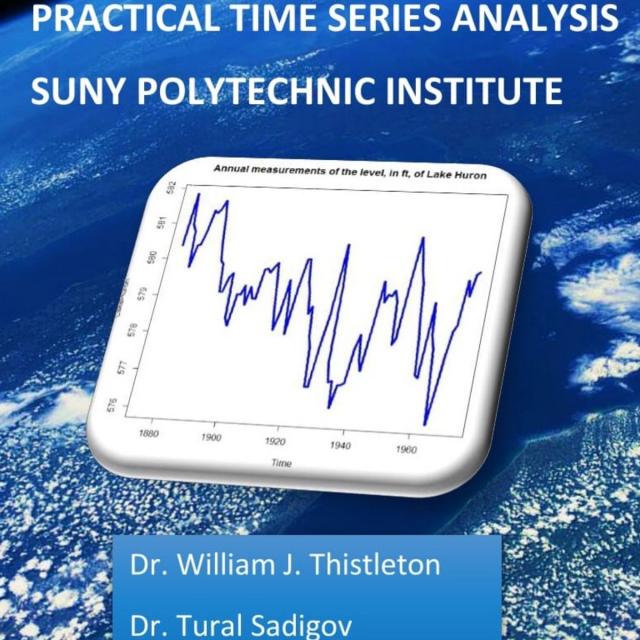
This course is the second in a specialization for Machine Learning for Supply Chain Fundamentals. In this course, we explore all aspects of time series, especially for demand prediction. We'll start by gaining a foothold in the basic concepts surrounding time series, including stationarity, trend (drift), cyclicality, and seasonality. Then, we'll spend some time analyzing correlation methods in relation to time series (autocorrelation).

Class Deals by MOOC List - Click here and see Coursera's Active Discounts, Deals, and Promo Codes.

In the 2nd half of the course, we'll focus on methods for demand prediction using time series, such as autoregressive models. Finally, we'll conclude with a project, predicting demand using ARIMA models in Python.

What You Will Learn

  • Building ARIMA models in Python to make demand predictions
  • Developing the framework for more advanced neural netowrks (such as LSTMs) by understanding autocorrelation and autoregressive models.

Course 2 of 4 in the Machine Learning for Supply Chains Specialization

Syllabus

WEEK 1
A First Glance at Time Series
In this module, we'll get our feet wet with time series in Python. We'll start by getting familiar with where time series fits in to the machine learning landscape. Then, we'll learn about the main types of time series and their distinguishing factors, including period, frequency, and stationarity. After pausing to learn how to plot timeseries in Python, we'll explore the differences between seasonality and cyclicality.
Independence and Autocorrelation
In this module, we'll dive into the ideas behind autocorrelation and independence. We'll start by digging into the math of correlation and how it can be used to characterize the relationship between two variables. Next, we'll define its relationship to independence and explain where these ideas can be used. Finally, we'll combine correlation with time series attributes, such as trend, seasonality, and stationarity to derive autocorrelation. We'll go through both some of the theory behind autocorrelation, and how to code it in Python.

WEEK 2
Regression and ARIMA Models
In this module, we'll start by reviewing some of the basic concepts behind linear regression. Then, we'll extend this knowledge to feed into lagged regression, an effective way to use regression techniques on time series. Once we have a solid foothold in basic and lagged regression, we'll explore modern methods such as ARIMA (autoregressive integrated moving average). All of this is building the framework for more advanced machine learning models such as LSTMs (long short-term memory network).
Final Project
In the final course project, we'll make demand predictions using ARIMA models.


Go to Class
MOOC List is learner-supported. When you buy through links on our site, we may earn an affiliate commission.

Related Courses

Hypothesis Testing with Python and Excel (Coursera) Coursera
Tufts University

Hypothesis Testing with Python and Excel (Coursera)

In today's job market, leaders need to understand the fundamentals of data to be competitive. An essential procedure to understand business and analytics is hypothesis testing. This short course, designed by Tufts University expert faculty, will teach the fundamentals of hypothesis testing of a population mean and a population proportion, using Excel and Python for calculations. You'll also discover the central limit theorem, which is essential for hypothesis testing. To conclude the course, you will apply your newfound skills by creating a plan for an experiment in your own workplace that uses hypothesis testing.

Jun 23rd 2026
1 Week
Learn to code with AI (Coursera) Coursera
Scrimba

Learn to code with AI (Coursera)

Imagine waking up tomorrow as a web developer. What would you want to build? With AI tools like ChatGPT, you're already a developer, regardless of your experience, if you know how to work with them. So in this course, you'll build functional, interactive front-end projects while learning how to write effective prompts and debug and refine your code with the help of AI.

Jun 24th 2026
2 Weeks
Machine Learning: Clustering & Retrieval (Coursera) Coursera
University of Washington

Machine Learning: Clustering & Retrieval (Coursera)

Case Studies: Finding Similar Documents. A reader is interested in a specific news article and you want to find similar articles to recommend. What is the right notion of similarity? Moreover, what if there are millions of other documents? Each time you want to a retrieve a new document, do you need to search through all other documents? How do you group similar documents together? How do you discover new, emerging topics that the documents cover?

Jun 22nd 2026
5-12 Weeks
Sequence Models (Coursera) Coursera
DeepLearning.AI

Sequence Models (Coursera)

This course will teach you how to build models for natural language, audio, and other sequence data. Thanks to deep learning, sequence algorithms are working far better than just two years ago, and this is enabling numerous exciting applications in speech recognition, music synthesis, chatbots, machine translation, natural language understanding, and many others.

Jun 22nd 2026
3 Weeks
Data Manipulation at Scale: Systems and Algorithms (Coursera) Coursera
University of Washington

Data Manipulation at Scale: Systems and Algorithms (Coursera)

Data analysis has replaced data acquisition as the bottleneck to evidence-based decision making --- we are drowning in it. Extracting knowledge from large, heterogeneous, and noisy datasets requires not only powerful computing resources, but the programming abstractions to use them effectively. The abstractions that emerged in the last decade blend ideas from parallel databases, distributed systems, and programming languages to create a new class of scalable data analytics platforms that form the foundation for data science at realistic scales.

Jun 22nd 2026
4 Weeks
Machine Learning: Classification (Coursera) Coursera
University of Washington

Machine Learning: Classification (Coursera)

Case Studies: Analyzing Sentiment & Loan Default Prediction. In our case study on analyzing sentiment, you will create models that predict a class (positive/negative sentiment) from input features (text of the reviews, user profile information,...). In our second case study for this course, loan default prediction, you will tackle financial data, and predict when a loan is likely to be risky or safe for the bank.

Jun 22nd 2026
5-12 Weeks
Applying Data Analytics in Finance (Coursera) Coursera
University of Illinois at Urbana-Champaign

Applying Data Analytics in Finance (Coursera)

This course introduces an overview of financial analytics. You will learn why, when, and how to apply financial analytics in real-world situations. You will explore techniques to analyze time series data and how to evaluate the risk-reward trade off expounded in modern portfolio theory. While most of the focus will be on the prices, returns, and risk of corporate stocks, the analytical techniques can be leverages in other domains. Finally, a short introduction to algorithmic trading concludes the course.

Jun 28th 2026
4 Weeks
Delivery Problem (Coursera) Coursera
University of California, San Diego,Higher School of Economics - HSE University

Delivery Problem (Coursera)

We’ll implement (in Python) together efficient programs for a problem needed by delivery companies all over the world millions times per day — the travelling salesman problem. The goal in this problem is to visit all the given places as quickly as possible. How to find an optimal solution to this problem quickly? We still don’t have provably efficient algorithms for this difficult computational problem and this is the essence of the P versus NP problem, the most important open question in Computer Science.

Jun 22nd 2026
3 Weeks
The Raspberry Pi Platform and Python Programming for the Raspberry Pi (Coursera) Coursera
University of California, Irvine

The Raspberry Pi Platform and Python Programming for the Raspberry Pi (Coursera)

The Raspberry Pi is a small, affordable single-board computer that you will use to design and develop fun and practical IoT devices while learning programming and computer hardware. In addition, you will learn how to set up up the Raspberry Pi environment, get a Linux operating system running, and write and execute some basic Python code on the Raspberry Pi. You will also learn how to use Python-based IDE (integrated development environments) for the Raspberry Pi and how to trace and debug Python code on the device.

Jun 22nd 2026
4 Weeks