Applying Data Analytics in Finance (Coursera)

Applying Data Analytics in Finance (Coursera)

This course introduces an overview of financial analytics. You will learn why, when, and how to apply financial analytics in real-world situations. You will explore techniques to analyze time series data and how to evaluate the risk-reward trade off expounded in modern portfolio theory. While most of the focus will be on the prices, returns, and risk of corporate stocks, the analytical techniques can be leverages in other domains. Finally, a short introduction to algorithmic trading concludes the course.

Class Deals by MOOC List - Click here and see Coursera's Active Discounts, Deals, and Promo Codes.

After completing this course, you should be able to understand time series data, create forecasts, and determine the efficacy of the estimates. Also, you will be able to create a portfolio of assets using actual stock price data while optimizing risk and reward. Understanding financial data is an important skill as an analyst, manager, or consultant.
What You Will Learn

  • Understand the forecasting process
  • Describe time series data
  • Develop an ARIMA Model
  • Understand a basic trading algorithm

Syllabus

WEEK 1
Course Introduction
In this course, we will introduce a number of financial analytic techniques. You will learn why, when, and how to apply financial analytics in real-world situations. We will explore techniques to analyze time series data and how to evaluate the risk-reward trade off expounded in modern portfolio theory. While most of the focus will be on the prices, returns, and risks of corporate stocks, the analytical techniques can be leveraged in other domains. Finally, a short introduction to algorithmic trading concludes the course.
Introduction to Financial Analytics and Time Series Data
In this module, we will introduce an overview of financial analytics. Students will learn why, when, and how to apply financial analytics in real-world situations. We will explore techniques to analyze time series data and how to evaluate the risk-reward trade off expounded in modern portfolio theory. While most of our focus will be on the prices, returns, and risks of corporate stocks, the analytical techniques can be leveraged in other domains. Finally, a short introduction to algorithmic trading concludes the course.

WEEK 2
Performance Measures and Holt-Winters Model
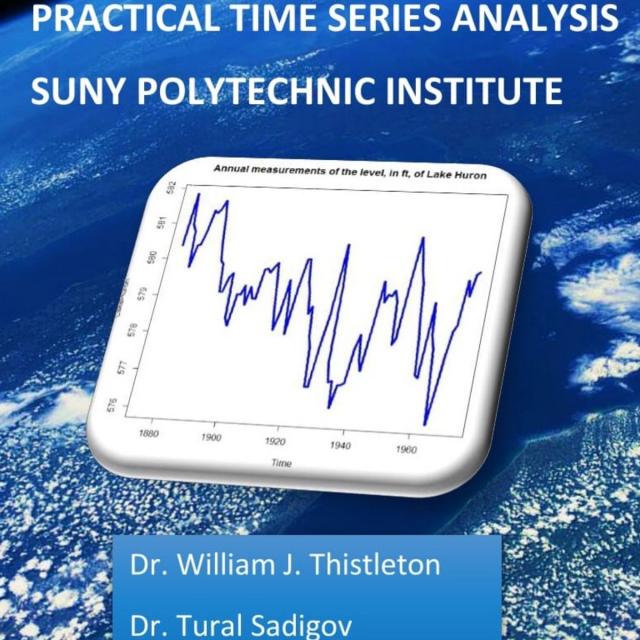
We will introduce analytical methods to analyze time series data to build forecasting models and support decision-making. Students will learn how to analyze financial data that is usually presented as time series data. Topics include forecasting performance measures, moving average, exponential smoothing methods, and the Holt-Winters method.

WEEK 3
Stationarity and ARIMA Model
In this module, we will begin with stationarity, the first and necessary step in analyzing time series data. Students will learn how to identify if a time series is stationary or not and know how to make nonstationary data become stationary. Next, we will study a basic forecasting model: ARIMA. Students will learn how to build an ARIMA forecasting model using R.

WEEK 4
Modern Portfolio Theory and Intro to Algorithmic Trading
We will introduce some basic measurements of modern portfolio theory. Students will understand about risk and returns, how to balance them, and how to evaluate an investment portfolio.

Go to Class
MOOC List is learner-supported. When you buy through links on our site, we may earn an affiliate commission.

Related Courses

Introduction to Finance: The Role of Financial Markets (Coursera) Coursera
University of Illinois at Urbana-Champaign

Introduction to Finance: The Role of Financial Markets (Coursera)

In Introduction to Finance: The Role of Financial Markets, you will be introduced to the basic concepts and skills needed for financial managers to make informed decisions. With an overview of the structure and dynamics of financial markets and commonly used financial instruments, you will get crucial skills to make capital investment decisions.

Aug 17th 2026
4 Weeks
Data Analytics in Sports Law and Team Management (Coursera) Coursera
The State University of New York

Data Analytics in Sports Law and Team Management (Coursera)

This course provides an introduction to the fundamental ideas in applying data analytics to issues surrounding key regulatory and management functions within the sports industry. Sports as an industry is increasingly relying on data analytics for more effective deployment of resources and assessment of performance in areas ranging from player productivity to fan engagement, talent identification and development, coaching, sponsorship, and marketing. This course and its successors will help you understand this new role of data analysis in the sports business.

Aug 17th 2026
5-12 Weeks
Macroeconomic Financial Accounts (Coursera) Coursera
Sapienza University of Rome

Macroeconomic Financial Accounts (Coursera)

This course is primarily aimed at undergraduates attending their final year or Master’s students in monetary and financial economics, international macroeconomics and data mining. Professionals in Government institutions, Central Banks, business and the financial industry, along with other professionals interested in finance and macroeconomics, may also benefit from this course.

Aug 24th 2026
5-12 Weeks
Finanzas personales (Coursera) Coursera
Universidad Nacional Autónoma de México

Finanzas personales (Coursera)

Este curso dotará a sus participantes con las herramientas que le permitirán llevar a cabo una planeación financiera personal y entender la necesidad de salvaguardar su patrimonio y recursos financieros, así como los requerimientos mínimos que se deben considerar para tomar buenas decisiones financieras.

Aug 10th 2026
3 Weeks
Financial Regulation in Emerging Markets and the Rise of Fintech Companies (Coursera) Coursera
University of Cape Town

Financial Regulation in Emerging Markets and the Rise of Fintech Companies (Coursera)

This course gives an overview of the changing regulatory environment since the 1997 Asian and 2008 global financial crisis. Following these two major crises, governments around the globe enacted a set of far-reaching new financial regulations that are aimed towards safeguarding financial stability. However, banks find it increasingly difficult to be profitable in this new regulatory environment.

Aug 17th 2026
4 Weeks
Behavioral Finance (Coursera) Coursera
Duke University

Behavioral Finance (Coursera)

We make thousands of decisions every day. Do I cross the road now, or wait for the oncoming truck to pass? Should I eat fries or a salad for lunch? How much should I tip the cab driver? We usually make these decisions with almost no thought, using what psychologists call “heuristics” – rules of thumb that enable us to navigate our lives. Without these mental shortcuts, we would be paralyzed by the multitude of daily choices.

Aug 17th 2026
3 Weeks
Fundamentals of Machine Learning in Finance (Coursera) Coursera
New York University Tandon School of Engineering

Fundamentals of Machine Learning in Finance (Coursera)

The course aims at helping students to be able to solve practical ML-amenable problems that they may encounter in real life that include: (1) understanding where the problem one faces lands on a general landscape of available ML methods, (2) understanding which particular ML approach(es) would be most appropriate for resolving the problem, and (3) ability to successfully implement a solution, and assess its performance.

Aug 17th 2026
4 Weeks
Machine Learning for Accounting with Python (Coursera) Coursera
University of Illinois at Urbana-Champaign

Machine Learning for Accounting with Python (Coursera)

This course, Machine Learning for Accounting with Python, introduces machine learning algorithms (models) and their applications in accounting problems. It covers classification, regression, clustering, text analysis, time series analysis. It also discusses model evaluation and model optimization. This course provides an entry point for students to be able to apply proper machine learning models on business related datasets with Python to solve various problems.

Aug 24th 2026
5-12 Weeks
Alternative Approaches to Valuation and Investment (Coursera) Coursera
University of Melbourne

Alternative Approaches to Valuation and Investment (Coursera)

In this course, participants will develop an understanding of the intuitive foundations of asset and investment valuation, and how alternative valuation techniques may be used in practice. This is part of a Specialization in corporate finance created in partnership between the University of Melbourne and Bank of New York Mellon (BNY Mellon).

Aug 24th 2026
4 Weeks
Value and Business Decision Making (Coursera) Coursera
Yunus Social Business Fund Bengaluru

Value and Business Decision Making (Coursera)

This course is part of a Specialization titled “Strategy and Finance for a Lifecycle of a Social Business”. It is an introduction to time value of money and will help the learner understand the basics of finance with the ultimate goal of valuing a company from a societal lens. The beauty of the modern decision-making framework is that it can be used to understand value creation at any level – the individual, the corporate or nonprofit entity level and from the point of view of society. The applications however become increasingly complex as your lens expands from the individual to the corporate/nonprofit to the global society.

Aug 19th 2026
5-12 Weeks