Deep Learning Prerequisites: The Numpy Stack in Python V2 (Udemy)

Offered by Lazy Programmer Inc.,
Deep Learning Prerequisites: The Numpy Stack in Python V2 (Udemy)

Welcome! This is Deep Learning, Machine Learning, and Data Science Prerequisites: The Numpy Stack in Python (V2). The reason I made this course is because there is a huge gap for many students between machine learning "theory" and writing actual code. As I've always said: "If you can't implement it, then you don't understand it". Without basic knowledge of data manipulation, vectors, and matrices, students are not able to put their great ideas into working form, on a computer.

Class Deals by MOOC List - Click here and see Udemy's Active Discounts, Deals, and Promo Codes.

This course closes that gap by teaching you all the basic operations you need for implementing machine learning and deep learning algorithms.
The goal is that, after you take this course, you will learn about machine learning algorithms, and implement those algorithms in code using the tools and techniques you learned in this course.

What you'll learn

  • Basic operations in Numpy, Scipy, Pandas, and Matplotlib
  • Vector, Matrix, and Tensor manipulation
  • Visualizing data
  • Reading, writing, and manipulating DataFrames

Suggested Prerequisites:

  • linear algebra
  • probability
  • Python programming
Go to Class
MOOC List is learner-supported. When you buy through links on our site, we may earn an affiliate commission.

Related Courses

Visual Analytics with Tableau (Coursera) Coursera
University of California, Davis

Visual Analytics with Tableau (Coursera)

In this third course of the specialization, we’ll drill deeper into the tools Tableau offers in the areas of charting, dates, table calculations and mapping. We’ll explore the best choices for charts, based on the type of data you are using. We’ll look at specific types of charts including scatter plots, Gantt charts, histograms, bullet charts and several others, and we’ll address charting guidelines.

Jun 1st 2026
4 Weeks
Python Data Visualization (Coursera) Coursera
Rice University

Python Data Visualization (Coursera)

This if the final course in the specialization which builds upon the knowledge learned in Python Programming Essentials, Python Data Representations, and Python Data Analysis. We will learn how to install external packages for use within Python, acquire data from sources on the Web, and then we will clean, process, analyze, and visualize that data. This course will combine the skills learned throughout the specialization to enable you to write interesting, practical, and useful programs.

Jun 1st 2026
4 Weeks
Code Your First Game: Arcade Classic in JavaScript on Canvas (Udemy) Udemy
Instructor Made Course

Code Your First Game: Arcade Classic in JavaScript on Canvas (Udemy)

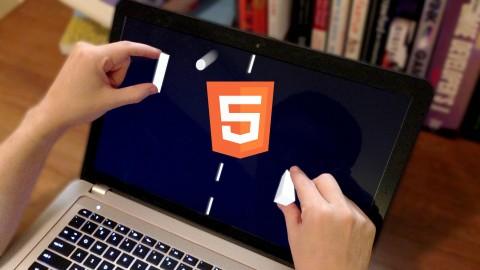
Program a complete game today. No special software or install required. All you need is a text editor and a web browser. At the end of this short course you'll have programmed your first game. You'll learn gameplay development fundamentals by really doing it – writing and running real code on your own machine.

Self Paced
Self-Paced
Fundamentals of GIS (Coursera) Coursera
University of California, Davis

Fundamentals of GIS (Coursera)

Explore the world of spatial analysis and cartography with geographic information systems (GIS). What you will learn: define core geospatial concepts; practice with subset data using selections and feature attributes; create map books using advanced mapping techniques; create layer and map packages.

Jun 1st 2026
4 Weeks
Data Processing Using Python (Coursera) Coursera
Nanjing University

Data Processing Using Python (Coursera)

This course is mainly for non-computer majors. It starts with the basic syntax of Python, to how to acquire data in Python locally and from network, to how to present data, then to how to conduct basic and advanced statistic analysis and visualization of data, and finally to how to design a simple GUI to present and process data, advancing level by level.

Jun 1st 2026
5-12 Weeks
Machine Learning Foundations: A Case Study Approach (Coursera) Coursera
University of Washington

Machine Learning Foundations: A Case Study Approach (Coursera)

Do you have data and wonder what it can tell you? Do you need a deeper understanding of the core ways in which machine learning can improve your business? Do you want to be able to converse with specialists about anything from regression and classification to deep learning and recommender systems? In this course, you will get hands-on experience with machine learning from a series of practical case-studies.

Jun 1st 2026
5-12 Weeks
Deep Learning for Business (Coursera) Coursera
Yonsei University

Deep Learning for Business (Coursera)

Your smartphone, smartwatch, and automobile (if it is a newer model) have AI (Artificial Intelligence) inside serving you every day. In the near future, more advanced “self-learning” capable DL (Deep Learning) and ML (Machine Learning) technology will be used in almost every aspect of your business and industry. So now is the right time to learn what DL and ML is and how to use it in advantage of your company. This course has three parts, where the first part focuses on DL and ML technology based future business strategy including details on new state-of-the-art products/services and open source DL software, which are the future enablers.

Jun 1st 2026
5-12 Weeks
Machine Learning: Regression (Coursera) Coursera
University of Washington

Machine Learning: Regression (Coursera)

Case Study - Predicting Housing Prices. In our first case study, predicting house prices, you will create models that predict a continuous value (price) from input features (square footage, number of bedrooms and bathrooms,...). This is just one of the many places where regression can be applied. Other applications range from predicting health outcomes in medicine, stock prices in finance, and power usage in high-performance computing, to analyzing which regulators are important for gene expression.

Jun 1st 2026
5-12 Weeks
Data Science in Real Life (Coursera) Coursera
Johns Hopkins University

Data Science in Real Life (Coursera)

Have you ever had the perfect data science experience? The data pull went perfectly. There were no merging errors or missing data. Hypotheses were clearly defined prior to analyses. Randomization was performed for the treatment of interest. The analytic plan was outlined prior to analysis and followed exactly. The conclusions were clear and actionable decisions were obvious. Has that every happened to you? Of course not. Data analysis in real life is messy. How does one manage a team facing real data analyses? In this one-week course, we contrast the ideal with what happens in real life. By contrasting the ideal, you will learn key concepts that will help you manage real life analyses.

Jun 1st 2026
1 Week
Programming Languages, Part C (Coursera) Coursera
University of Washington

Programming Languages, Part C (Coursera)

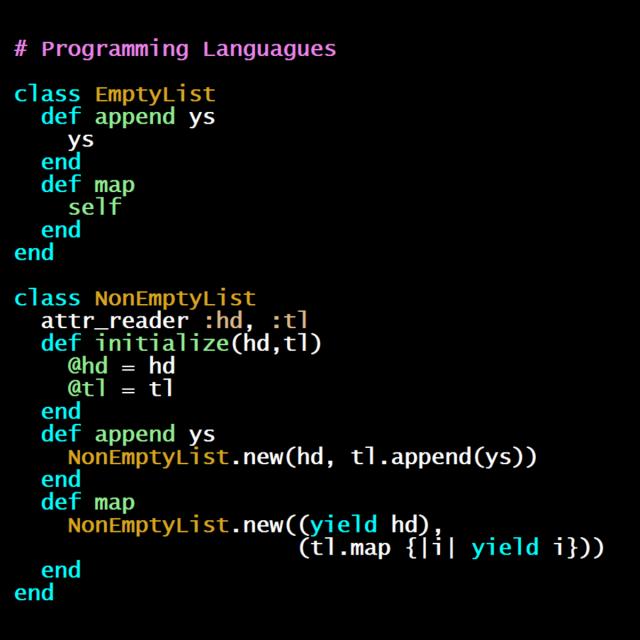
This course is an introduction to the basic concepts of programming languages, with a strong emphasis on functional programming. The course uses the languages ML, Racket, and Ruby as vehicles for teaching the concepts, but the real intent is to teach enough about how any language “fits together” to make you more effective programming in any language -- and in learning new ones.

Jun 1st 2026
3 Weeks
Foundations: Data, Data, Everywhere (Coursera) Coursera
Google

Foundations: Data, Data, Everywhere (Coursera)

This is the first course in the Google Data Analytics Certificate. These courses will equip you with the skills you need to apply to introductory-level data analyst jobs. Organizations of all kinds need data analysts to help them improve their processes, identify opportunities and trends, launch new products, and make thoughtful decisions. In this course, you’ll be introduced to the world of data analytics through hands-on curriculum developed by Google. The material shared covers plenty of key data analytics topics, and it’s designed to give you an overview of what’s to come in the Google Data Analytics Certificate. Current Google data analysts will instruct and provide you with hands-on ways to accomplish common data analyst tasks with the best tools and resources.

Jun 2nd 2026
5-12 Weeks