EdX

Data Storage and Processing (edX)

Offered by ITMO University, ITMOx,
Data Storage and Processing (edX)

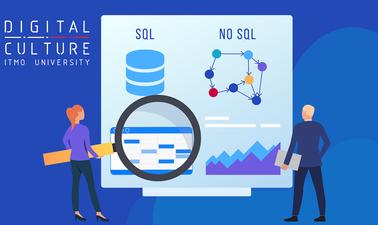
Master the culture of data representation, interpretation and outcomes evaluation. Learn the fundamentals of relational and NoSQL database management systems. Want to learn data processing and interpreting the result you’ve got? This course is for you! Get acquainted with preparing and analyzing large amount of data, as well as data storage fundamentals.

Class Deals by MOOC List - Click here and see EdX's Active Discounts, Deals, and Promo Codes.

This course is an introduction to initial data processing. We will start with data types and sources, methods of data preparation: cleaning, filling in the missing values, data smoothing and normalization. The course will familiarize you with the descriptive statistics and data visualization methods. You will also learn how to analyze time series and find trends.
Get acquainted with the fundamentals of data storage and access: databases types, relational and NoSQL databases, big data initials.
No previous programming knowledge needed.
This course is part of the Data Processing and Analysis Professional Certificate.

What you'll learn

  • Initial data processing (data cleaning and filling in the missing values)
  • Data smoothing and normalization
  • Data visualization
  • Time series analysis
  • Descriptive statistics
  • Data storage and access by means of relational DBMS
  • NoSQL databases and Big data

Syllabus

Week 1:Data preprocessing. Basic concepts of data processing. Stages of data analysis (collection, sorting, transformation, building models and interpretation). Data measurements and scales. Data types and sources. Data preparing.

Week 2:Data processing tools and visualization. Digital spreadsheets. Data visualization goals. Methods and purposes of correct data visualization.

Week 3: Data processing. Descriptive statistics. Data normalization and transformation. Time-series analysis and forecasting. Types of time-series smoothing. Trends, seasonal time series modelling.

Week 4:Relational databases management systems. Introduction to relational DBMS starting from relational data model. SQL statements and queries creation. Database indexes and transactions requirements.

Week 5:NoSQL. Main characteristics of not only SQL databases. Non-structured and semi-structured data and scalability of NoSQL databases. Types of NoSQL databases: column-oriented, key-value store, document store and graph databases.

Go to Class
MOOC List is learner-supported. When you buy through links on our site, we may earn an affiliate commission.

Related Courses

R Data Science Capstone Project (edX) EdX
IBM

R Data Science Capstone Project (edX)

Apply various data analysis and visualization skills and techniques you have learned by taking on the role of a data scientist working with real-world data sets. In this capstone course, you will apply various data science skills and techniques that you have learned as part of the previous courses in the IBM Data Science with R or IBM Data Analytics with Excel and R Professional Certificate Programs.

Self Paced
Self-Paced
Excel avanzado: importación y análisis de datos (edX) EdX
Universitat Politècnica de València,UPValenciaX

Excel avanzado: importación y análisis de datos (edX)

Conoce técnicas y estrategias avanzadas para importar, consolidar y visualizar con Excel datos provenientes de cualquier fuente. En este curso de análisis e interpretación de datos te presentaremos técnicas avanzadas de importación de datos y estrategias diversas para consolidarlos y prepararlos una vez importados de forma que puedas extraer las conclusiones que necesitas (basadas en nuestra experiencia en el uso de Microsoft Excel y demostradas con casos reales).

Self Paced
Self-Paced
UX Data Analysis (edX) EdX
HECMontrealX,HEC Montréal

UX Data Analysis (edX)

Become a UX data scientist! From qualitative data analysis to big data Web analytics, you will be able to leverage insights from data to make empirically-based recommendations. Do big data and UX speak to you? This MOOC will give you the methods and tools to analyze the whole spectrum of data we handle in UX, from qualitative user research and quantitative user testing data analysis to big data Web analytics.

Self Paced
Self-Paced
Programming for Data Science (edX) EdX
University of Adelaide,AdelaideX

Programming for Data Science (edX)

Learn how to apply fundamental programming concepts, computational thinking and data analysis techniques to solve real-world data science problems. There is a rising demand for people with the skills to work with Big Data sets and this course can start you on your journey through our Big Data MicroMasters program towards a recognised credential in this highly competitive area. Using practical activities you will learn how digital technologies work and will develop your coding skills through engaging and collaborative assignments.

Self Paced
Self-Paced
Introducción a los Sistemas de Información Gerencial (MIS): Una guía de supervivencia (edX) EdX
Universidad Carlos III de Madrid - UC3M,UC3Mx

Introducción a los Sistemas de Información Gerencial (MIS): Una guía de supervivencia (edX)

Obtén las habilidades y el conocimiento necesarios para tener éxito en un mundo corporativo dominado por los sistemas de información gerencial (SIG o MIS). Los omnipresentes Sistemas de Información Gerencial (SIG) o Management Information Systems (MIS) juegan un papel crítico en el actual panorama profesional. Desde los sistemas de gestión de las relaciones con los clientes, que gestionan las interacciones diarias con los clientes actuales y potenciales, hasta los sistemas gerenciales y financieros que emiten y pagan facturas, el día a día de la vida laboral está cada vez más controlado por estos sistemas de gestión, que dictan qué hacer y cómo hacerlo.

Self Paced
Self-Paced
Introduction to Management Information Systems (MIS): A Survival Guide (edX) EdX
Universidad Carlos III de Madrid - UC3M,UC3Mx

Introduction to Management Information Systems (MIS): A Survival Guide (edX)

Gain the skills and knowledge needed to succeed in an MIS-dominated corporate world. This MIS course will cover supporting tech infrastructures (Cloud, Databases, Big Data), the MIS development/ procurement process, and the main integrated systems, ERPs, such as SAP®, Oracle® or Microsoft Dynamics Navision®, as well as their relationship with Business Process Redesign.

Self Paced
Self-Paced
Visualizing Data with Python (edX) EdX
IBM

Visualizing Data with Python (edX)

Data visualization is the graphical representation of data in order to interactively and efficiently convey insights to clients, customers, and stakeholders in general. "A picture is worth a thousand words." We are all familiar with this expression. It especially applies when trying to explain the insights obtained from the analysis of increasingly large datasets. Data visualization plays an essential role in the representation of both small and large-scale data. One of the key skills of a data scientist is the ability to tell a compelling story, visualizing data and findings in an approachable and stimulating way.

Self Paced
Self-Paced
Visualizing Data with R (edX) EdX
IBM

Visualizing Data with R (edX)

Learn about the ggplot2 data visualization package for R, creating map plots with geolocation data using Leaflet, and interactive dashboards to display your work on the web using the R Shiny package! In this course, you will learn about the Grammar of Graphics, a system for describing and building graphs, and how the ggplot2 data visualization package for R applies this concept to basic bar charts, histograms, pie charts, scatter plots, line plots, and box plots.

Self Paced
Self-Paced
Advanced Statistical Inference and Modelling Using R (edX) EdX
University of Canterbury,UCx

Advanced Statistical Inference and Modelling Using R (edX)

Extend your knowledge of linear regression to the situations where the response variable is binary, a count, or categorical as well as to hierarchical experimental set-up. Advanced Statistical Inference and Modelling Using R is part two of the Statistical Analysis in R professional certificate. This course is directed at people who are already familiar with basic linear regression and fundamentals of statistical inference. It extends the knowledge of linear regression to the situations where the response variable is binary, a count, or categorical as well as to hierarchical experimental set-up.

Self Paced
Self-Paced