The Data Science of Health Informatics (Coursera)

The Data Science of Health Informatics (Coursera)

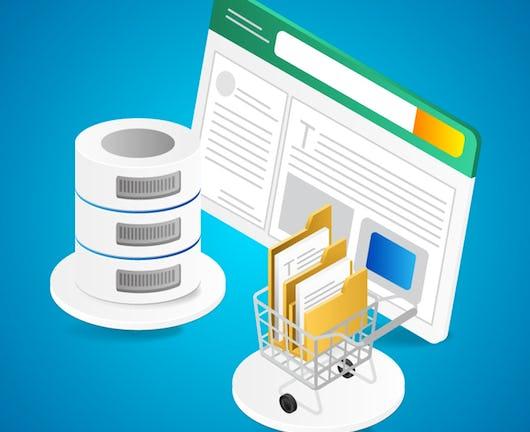
Health data are notable for how many types there are, how complex they are, and how serious it is to get them straight. These data are used for treatment of the patient from whom they derive, but also for other uses. Examples of such secondary use of health data include population health (e.g., who requires more attention), research (e.g., which drug is more effective in practice), quality (e.g., is the institution meeting benchmarks), and translational research (e.g., are new technologies being applied appropriately).

Class Deals by MOOC List - Click here and see Coursera's Active Discounts, Deals, and Promo Codes.

By the end of this course, students will recognize the different types of health and healthcare data, will articulate a coherent and complete question, will interpret queries designed for secondary use of EHR data, and will interpret the results of those queries.
Course 4 of 5 in the Health Informatics Specialization.

What You Will Learn

  • Articulate different forms of clinical and population level data.
  • Describe the data required to answer a healthcare information problem.
  • Distinguish between data questions and data queries when dealing with a healthcare information problem.

Syllabus

WEEK 1
Introduction to Databases and Data Types
In this module, we will begin by introducing and defining databases, and placing the role of databases within the context of clinical informatics. We will continue by introducing the common health data types such as demographics, diagnosis, medications, procedures, and utilization data. We will finish this module by reviewing the emerging health data such as lab orders/results, vital signs, social data, and patient-generated data.

WEEK 2
Data Sources and Data Challenges
In this module, we review the data specifications extracted from insurance claims and electronic health records. We will then discuss the common challenges in using health data, specifically issues with data quality, data interoperability, and data system architectures. Finally, we will describe the “Big Data” challenges of health data and explain some of the data problems that may hinder analytical efforts.

WEEK 3
Formulating Data Questions
With this understanding of the data available, it’s time to see how to turn questions you and your colleagues will have into queries the database can understand. Besides getting rules of thumb for doing this translation, you will also be introduced to three online tools available to test some of these skills. You will also watch an interview with Sam Meiselman, course instructor and the data manager in charge of the Johns Hopkins Enterprise Data Warehouse, who has to use these skills on a daily basis.

WEEK 4
Real World Applications of Data Science in Health Informatics
To send home the recurring message on the challenges and art of translating questions into queries, you will see interviews with two professionals: One who comes from the data management side of the equation, and one who comes from the domain. They will give you perspectives that are both similar (the need to understand the problem for which the data are being retrieved) and different (the multiplicity of data available vs the richness of the domain problem).


Go to Class
MOOC List is learner-supported. When you buy through links on our site, we may earn an affiliate commission.

Related Courses

Text Retrieval and Search Engines (Coursera) Coursera
University of Illinois at Urbana-Champaign

Text Retrieval and Search Engines (Coursera)

Recent years have seen a dramatic growth of natural language text data, including web pages, news articles, scientific literature, emails, enterprise documents, and social media such as blog articles, forum posts, product reviews, and tweets. Text data are unique in that they are usually generated directly by humans rather than a computer system or sensors, and are thus especially valuable for discovering knowledge about people’s opinions and preferences, in addition to many other kinds of knowledge that we encode in text.

Jun 22nd 2026
5-12 Weeks
Data Manipulation at Scale: Systems and Algorithms (Coursera) Coursera
University of Washington

Data Manipulation at Scale: Systems and Algorithms (Coursera)

Data analysis has replaced data acquisition as the bottleneck to evidence-based decision making --- we are drowning in it. Extracting knowledge from large, heterogeneous, and noisy datasets requires not only powerful computing resources, but the programming abstractions to use them effectively. The abstractions that emerged in the last decade blend ideas from parallel databases, distributed systems, and programming languages to create a new class of scalable data analytics platforms that form the foundation for data science at realistic scales.

Jun 22nd 2026
4 Weeks
Experimentation for Improvement (Coursera) Coursera
McMaster University

Experimentation for Improvement (Coursera)

We are always using experiments to improve our lives, our community, and our work. Are you doing it efficiently? Or are you (incorrectly) changing one thing at a time and hoping for the best? In this course, you will learn how to plan efficient experiments - testing with many variables. Our goal is to find the best results using only a few experiments. A key part of the course is how to optimize a system.

Jun 22nd 2026
5-12 Weeks
Regression Models (Coursera) Coursera
Johns Hopkins University

Regression Models (Coursera)

Linear models, as their name implies, relates an outcome to a set of predictors of interest using linear assumptions. Regression models, a subset of linear models, are the most important statistical analysis tool in a data scientist’s toolkit. This course covers regression analysis, least squares and inference using regression models.

Jun 22nd 2026
4 Weeks
Graph Analytics for Big Data (Coursera) Coursera
University of California, San Diego

Graph Analytics for Big Data (Coursera)

Want to understand your data network structure and how it changes under different conditions? Curious to know how to identify closely interacting clusters within a graph? Have you heard of the fast-growing area of graph analytics and want to learn more? This course gives you a broad overview of the field of graph analytics so you can learn new ways to model, store, retrieve and analyze graph-structured data.

Jun 22nd 2026
5-12 Weeks
Communicating Data Science Results (Coursera) Coursera
University of Washington

Communicating Data Science Results (Coursera)

Making predictions is not enough! Effective data scientists know how to explain and interpret their results, and communicate findings accurately to stakeholders to inform business decisions. Visualization is the field of research in computer science that studies effective communication of quantitative results by linking perception, cognition, and algorithms to exploit the enormous bandwidth of the human visual cortex. In this course you will learn to recognize, design, and use effective visualizations.

Jun 22nd 2026
3 Weeks
Principles of fMRI 1 (Coursera) Coursera
Johns Hopkins University

Principles of fMRI 1 (Coursera)

Functional Magnetic Resonance Imaging (fMRI) is the most widely used technique for investigating the living, functioning human brain as people perform tasks and experience mental states. It is a convergence point for multidisciplinary work from many disciplines. Psychologists, statisticians, physicists, computer scientists, neuroscientists, medical researchers, behavioral scientists, engineers, public health researchers, biologists, and others are coming together to advance our understanding of the human mind and brain. This course covers the design, acquisition, and analysis of Functional Magnetic Resonance Imaging (fMRI) data, including psychological inference, MR Physics, K Space, experimental design, pre-processing of fMRI data, as well as Generalized Linear Models (GLM’s).

Jun 22nd 2026
4 Weeks
The Data Scientist's Toolbox (Coursera) Coursera
Johns Hopkins University

The Data Scientist's Toolbox (Coursera)

In this course you will get an introduction to the main tools and ideas in the data scientist's toolbox. The course gives an overview of the data, questions, and tools that data analysts and data scientists work with. There are two components to this course. The first is a conceptual introduction to the ideas behind turning data into actionable knowledge. The second is a practical introduction to the tools that will be used in the program like version control, markdown, git, GitHub, R, and RStudio.

Jun 22nd 2026
4 Weeks
Machine Learning Foundations: A Case Study Approach (Coursera) Coursera
University of Washington

Machine Learning Foundations: A Case Study Approach (Coursera)

Do you have data and wonder what it can tell you? Do you need a deeper understanding of the core ways in which machine learning can improve your business? Do you want to be able to converse with specialists about anything from regression and classification to deep learning and recommender systems? In this course, you will get hands-on experience with machine learning from a series of practical case-studies.

Jun 22nd 2026
5-12 Weeks
Introduction to Genomic Technologies (Coursera) Coursera
Johns Hopkins University

Introduction to Genomic Technologies (Coursera)

This course introduces you to the basic biology of modern genomics and the experimental tools that we use to measure it. We'll introduce the Central Dogma of Molecular Biology and cover how next-generation sequencing can be used to measure DNA, RNA, and epigenetic patterns. You'll also get an introduction to the key concepts in computing and data science that you'll need to understand how data from next-generation sequencing experiments are generated and analyzed.

Jun 22nd 2026
4 Weeks