Data Analysis Using SQL (Coursera)

Offered by Fractal Analytics,
Data Analysis Using SQL (Coursera)

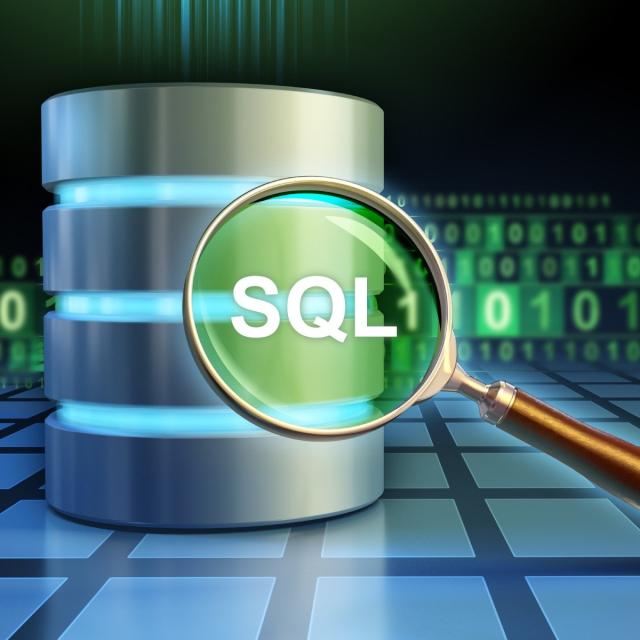
In this comprehensive course, you will embark on a transformative journey to master the art of analyzing data through SQL. SQL is a powerful tool used for managing and manipulating data in relational databases. Throughout this course, you will acquire the essential skills to efficiently extract relevant data from databases, empowering you to navigate through vast amounts of information with ease.

Class Deals by MOOC List - Click here and see Coursera's Active Discounts, Deals, and Promo Codes.

With a focus on practical application, you will delve into the world of data analysis, discovering how to derive meaningful insights from large datasets housed within complex relational databases. By the end of this course, you will
Gain skills to create and modify databases, equipping you with the ability to solve real-world business problems.
Learn to filter and clean datasets, ensuring the accuracy and reliability of your analysis.
Whether you aspire to be a data analyst, a business intelligence professional, or a decision-maker relying on data-driven insights, this course will provide you with the necessary tools and knowledge to succeed.
This course is part of the Fractal Data Science Professional Certificate.

What you'll learn

  • Extract relevant data from the database in a time efficient manner
  • Build powerful SQL queries to derive insights
  • Analyse and manage large datasets, and derive inferences from complex relational database
  • Enable students to create and modify databases for relevant business problems

Syllabus

Introduction to Data Analysis using SQL
This module aims to introduce the key aspects and applications of SQL. The first module will cover the limitations of excel (via the story of a data scientist) as well as define the different types of databases. Post installation the learners will go through a pseudo code exercise wherein the learner will also learn elementary SQL queries to retrieve data, using keywords such as SELECT, FROM, COUNT, DISTINCT etc.

Data Analysis with SQL on a Single Table
This module is designed to empower users with comprehensive skills in analysing data within a single table using SQL queries. By delving into various SQL querying techniques, students will gain proficiency in efficiently retrieving, manipulating, and aggregating data. The students will get acquainted with keywords such as WHERE, LIMIT, AVG, MAX, MIN etc. The module goes beyond theoretical concepts by providing practical exercises and a case study, allowing users to apply what they've learnt in a real-world scenario.

Advanced functions on Single Tables in SQL
This module will enhance a learner's proficiency in utilising advanced SQL functions for comprehensive data analysis. Throughout this module, students will delve into a diverse range of robust SQL functions, including string functions such as SUBSTRING, CONCAT, date/time functions like DATEADD and DATEDIFF, case operators, and branching logic. The module will also incorporate practical exercises and an engaging case study, enabling students to further strengthen their problem-solving skills and gain hands-on experience in applying these functions in real-life scenarios.

Analyzing Multiple Tables in SQL
In this module the learner will gain valuable skills to navigate complex data structures, harness the power of JOIN operations, grasp the intricacies of subqueries, and comprehend the significance of different types of keys. Additionally, they will be introduced to the fundamental concept of normalisation, which plays a vital role in database design. By the conclusion of this module, students will possess the expertise to make informed decisions by extracting insights from joined datasets.

CRUD Operations in SQL
In this module, learners will dive deeper into various table operations, expanding their knowledge beyond just querying. They will learn essential skills, including creating tables, modifying table structures, adding and deleting columns, and implementing table constraints. These essential concepts and techniques will empower learners to handle data manipulation tasks, maintain robust databases, and optimise data organisation.

Go to Class
MOOC List is learner-supported. When you buy through links on our site, we may earn an affiliate commission.

Related Courses

Fundamentals of GIS (Coursera) Coursera
University of California, Davis

Fundamentals of GIS (Coursera)

Explore the world of spatial analysis and cartography with geographic information systems (GIS). What you will learn: define core geospatial concepts; practice with subset data using selections and feature attributes; create map books using advanced mapping techniques; create layer and map packages.

Jun 8th 2026
4 Weeks
Inferential Statistics (Coursera) Coursera
University of Amsterdam

Inferential Statistics (Coursera)

Inferential statistics are concerned with making inferences based on relations found in the sample, to relations in the population. Inferential statistics help us decide, for example, whether the differences between groups that we see in our data are strong enough to provide support for our hypothesis that group differences exist in general, in the entire population. We will start by considering the basic principles of significance testing: the sampling and test statistic distribution, p-value, significance level, power and type I and type II errors. Then we will consider a large number of statistical tests and techniques that help us make inferences for different types of data and different types of research designs.

Jun 8th 2026
5-12 Weeks
Market Research and Consumer Behavior (Coursera) Coursera
IE Business School

Market Research and Consumer Behavior (Coursera)

Your marketing quest begins here! The first course in this specialization lays the neccessary groundwork for an overall successful marketing strategy. It is separated into two sections: Market Research and Consumer Behavior. Gain the tools and techniques to translate a decision problem into a research question in the Market Research module. Learn how to design a research plan, analyze the data gathered and accurately interpret and communicate survey reports, translating the results into practical recommendations.

Jun 8th 2026
4 Weeks
The Data Scientist's Toolbox (Coursera) Coursera
Johns Hopkins University

The Data Scientist's Toolbox (Coursera)

In this course you will get an introduction to the main tools and ideas in the data scientist's toolbox. The course gives an overview of the data, questions, and tools that data analysts and data scientists work with. There are two components to this course. The first is a conceptual introduction to the ideas behind turning data into actionable knowledge. The second is a practical introduction to the tools that will be used in the program like version control, markdown, git, GitHub, R, and RStudio.

Jun 8th 2026
4 Weeks
Data Manipulation at Scale: Systems and Algorithms (Coursera) Coursera
University of Washington

Data Manipulation at Scale: Systems and Algorithms (Coursera)

Data analysis has replaced data acquisition as the bottleneck to evidence-based decision making --- we are drowning in it. Extracting knowledge from large, heterogeneous, and noisy datasets requires not only powerful computing resources, but the programming abstractions to use them effectively. The abstractions that emerged in the last decade blend ideas from parallel databases, distributed systems, and programming languages to create a new class of scalable data analytics platforms that form the foundation for data science at realistic scales.

Jun 8th 2026
4 Weeks
Effective Problem-Solving and Decision-Making (Coursera) Coursera
University of California, Irvine

Effective Problem-Solving and Decision-Making (Coursera)

Critical thinking – the application of scientific methods and logical reasoning to problems and decisions – is the foundation of effective problem solving and decision making. Critical thinking enables us to avoid common obstacles, test our beliefs and assumptions, and correct distortions in our thought processes. Gain confidence in assessing problems accurately, evaluating alternative solutions, and anticipating likely risks. Learn how to use analysis, synthesis, and positive inquiry to address individual and organizational problems and develop the critical thinking skills needed in today’s turbulent times. Using case studies and situations encountered by class members, explore successful models and proven methods that are readily transferable on-the-job.

Jun 8th 2026
4 Weeks
Marketing Analytics (Coursera) Coursera
University of Virginia

Marketing Analytics (Coursera)

Organizations large and small are inundated with data about consumer choices. But that wealth of information does not always translate into better decisions. Knowing how to interpret data is the challenge -- and marketers in particular are increasingly expected to use analytics to inform and justify their decisions. Marketing analytics enables marketers to measure, manage and analyze marketing performance to maximize its effectiveness and optimize return on investment (ROI). Beyond the obvious sales and lead generation applications, marketing analytics can offer profound insights into customer preferences and trends, which can be further utilized for future marketing and business decisions.

Jun 8th 2026
5-12 Weeks
Communicating Business Analytics Results (Coursera) Coursera
University of Colorado Boulder

Communicating Business Analytics Results (Coursera)

The analytical process does not end with models than can predict with accuracy or prescribe the best solution to business problems. Developing these models and gaining insights from data do not necessarily lead to successful implementations. This depends on the ability to communicate results to those who make decisions.

Jun 8th 2026
4 Weeks
Leadership Through Marketing (Coursera) Coursera
Northwestern University

Leadership Through Marketing (Coursera)

The success of every organization depends on attracting and retaining customers. Although the marketing concepts for doing so are well established, digital technology has empowered customers, while producing massive amounts of data, revolutionizing the processes through which organizations attract and retain customers. In this course, students will learn how to identify new opportunities to create value for empowered consumers, develop strategies that yield an advantage over rivals, and develop the data science skills to lead more effectively, allocate resources, and to confront this very challenging environment with confidence.

Jun 14th 2026
4 Weeks
Relational Database Support for Data Warehouses (Coursera) Coursera
University of Colorado System

Relational Database Support for Data Warehouses (Coursera)

Relational Database Support for Data Warehouses is the third course in the Data Warehousing for Business Intelligence specialization. In this course, you'll use analytical elements of SQL for answering business intelligence questions. You'll learn features of relational database management systems for managing summary data commonly used in business intelligence reporting. Because of the importance and difficulty of managing implementations of data warehouses, we'll also delve into storage architectures, scalable parallel processing, data governance, and big data impacts. In the assignments in this course, you can use either Oracle or PostgreSQL.

Jun 8th 2026
5-12 Weeks
Machine Learning Foundations: A Case Study Approach (Coursera) Coursera
University of Washington

Machine Learning Foundations: A Case Study Approach (Coursera)

Do you have data and wonder what it can tell you? Do you need a deeper understanding of the core ways in which machine learning can improve your business? Do you want to be able to converse with specialists about anything from regression and classification to deep learning and recommender systems? In this course, you will get hands-on experience with machine learning from a series of practical case-studies.

Jun 8th 2026
5-12 Weeks
Introduction to Data Analysis Using Excel (Coursera) Coursera
Rice University

Introduction to Data Analysis Using Excel (Coursera)

The use of Excel is widespread in the industry. It is a very powerful data analysis tool and almost all big and small businesses use Excel in their day to day functioning. This course is designed to give you a working knowledge of Excel with the aim of getting to use it for more advance topics in Business Statistics. The course is designed keeping in mind two kinds of learners - those who have very little functional knowledge of Excel and those who use Excel regularly but at a peripheral level and wish to enhance their skills.

Jun 8th 2026
4 Weeks