Cybersecurity Job Search, Resume, and Interview Prep (Coursera)

Offered by IBM,
Cybersecurity Job Search, Resume, and Interview Prep (Coursera)

With the digital and AI disruption, cybersecurity professionals are in even higher demand around the world, and the trend shows no sign of slowing. There are also several great candidates. How can you get the edge in such a competitive field? This course will prepare you to enter the job market as a great candidate for an entry-level cybersecurity position. You will be equipped with practical techniques to create job-related documents, such as a resume, a portfolio, a cover letter, and an elevator pitch.

Class Deals by MOOC List - Click here and see Coursera's Active Discounts, Deals, and Promo Codes.

You will learn how to find and assess prospective job positions, apply to them, and lay the groundwork for interviewing. You will learn about the different types of questions typically asked during cybersecurity interviews and witness mock interviews.
Throughout this four-module self-paced course, you will hear from various cybersecurity experts who discuss their own career paths and talk about what they have learned about networking, interviewing, solving coding problems, and fielding other questions you may encounter as a candidate. You will also have the opportunity to practice what you learn and test your understanding.

What you'll learn

  • Explain cybersecurity roles, titles, responsibilities, and required skills and competencies, and explore the NICE framework
  • Create a resume, portfolio, elevator pitch, and cover letter and apply best practices to prepare for a cybersecurity job interview
  • Respond effectively to various cybersecurity interview questions, including industry, skills, experience, and behavioral
  • Discuss post-interview actions required to position yourself for success and apply tips to help during salary negotiation

Syllabus

Getting Ready for a Cybersecurity Career
This module explores a cybersecurity professional’s role and career activities, emphasizing understanding career pathways using the NICE Framework. It will guide you in creating a professional portfolio, understanding its purpose. You will also have the opportunity to listen to expert viewpoints on essential skills and insights into the cybersecurity field. Additionally, the module covers creating profiles on online sites and drafting an elevator pitch through hands-on labs.

Identifying Jobs, Creating Resumes, and Drafting Cover Letters
In this module, you will learn about the methods used to conduct research on the company and industry that you want to work in. You will also learn about how to read a job posting and work with third-party recruiters to apply for jobs. Next, you will create a basic resume and understand why it is important to have an Application Tracking System (ATS) software-compatible resume. Finally, you will draft a basic cover letter that can be tailored based on the requirements of a job posting.

The Interview Process
This module is all about the interview process. You’ll gain advice for submitting a professional application and interview preparation. Delve into Human Resource (HR) screening considerations, the technical screening, and the first stage of the interview process. The module will provide various tips for overcoming common interviewing challenges and for effectively responding to questions. Finally, you will have the opportunity to apply your knowledge of the STAR technique to practice responding to some behavioral questions.

Understanding Interview Questions and Post-Interview Next Steps
In this module, you’ll focus on preparing and answering interview questions and recommended post-interview actions. Learn effective techniques for responding to core and behavioral interview questions, including tips and techniques for cybersecurity specialist roles. You’ll learn how to handle challenging, tricky, and illegal interview questions and what to do if you encounter inappropriate interview actions. In addition, you will learn what to do if you receive a job offer and what to do if you do not receive a job offer and get valuable tips for successful salary negotiations.

Go to Class
MOOC List is learner-supported. When you buy through links on our site, we may earn an affiliate commission.

Related Courses

The Art of the Job Interview (Coursera) Coursera
Big Interview

The Art of the Job Interview (Coursera)

Learn how to prepare for a job interview the right way! This unique collaboration between Big Interview and Coursera will teach proven techniques to help you turn your interviews into job offers. You'll learn what interview questions to expect and how to answer them. You'll also get access to interactive tools to guide you in outlining answers to key questions and practicing until you feel confident. The course also provides guidance on how to optimize your resume using the Big Interview resume builder and how to use networking to uncover more job leads.

Aug 10th 2026
5-12 Weeks
Gathering and Developing the News (Coursera) Coursera
Michigan State University

Gathering and Developing the News (Coursera)

Journalists develop information through interviews and sources. The most successful journalists quickly master these important skill sets. The production of journalism relies on several elements: newsgathering, interviewing sources, researching and trying to find as much information as possible. The course will also teach you how to where to find information, interviewing skills and how to process information from various sources for publication.

Jul 27th 2026
4 Weeks
Cybersecurity Policy for Water and Electricity Infrastructures (Coursera) Coursera
University of Colorado System

Cybersecurity Policy for Water and Electricity Infrastructures (Coursera)

This course will examine the drinking water and electricity infrastructures, and various policies that have been developed to help guide and strengthen their cybersecurity programs. The drinking water and electricity infrastructures are two of fourteen subsectors comprising what are known as "lifeline infrastructure". The 2013 National Infrastructure Protection Plan identifies four lifeline infrastructure sectors: 1) water, 2) energy, 3) transportation, and 4) communications. These sectors are designated "lifeline" because many other infrastructures depend upon them.

Jul 27th 2026
4 Weeks
Cyber Security in Manufacturing (Coursera) Coursera
University at Buffalo,The State University of New York

Cyber Security in Manufacturing (Coursera)

The nature of digital manufacturing and design (DM&D), and its heavy reliance on creating a digital thread of product and process data and information, makes it a prime target for hackers and counterfeiters. This course will introduce students to why creating a strong and secure infrastructure should be of paramount concern for anyone operating in the DM&D domain, and measures that can be employed to protect operational technologies, systems and resources.

Jul 27th 2026
4 Weeks
The GRC Approach to Managing Cybersecurity (Coursera) Coursera
University System of Georgia

The GRC Approach to Managing Cybersecurity (Coursera)

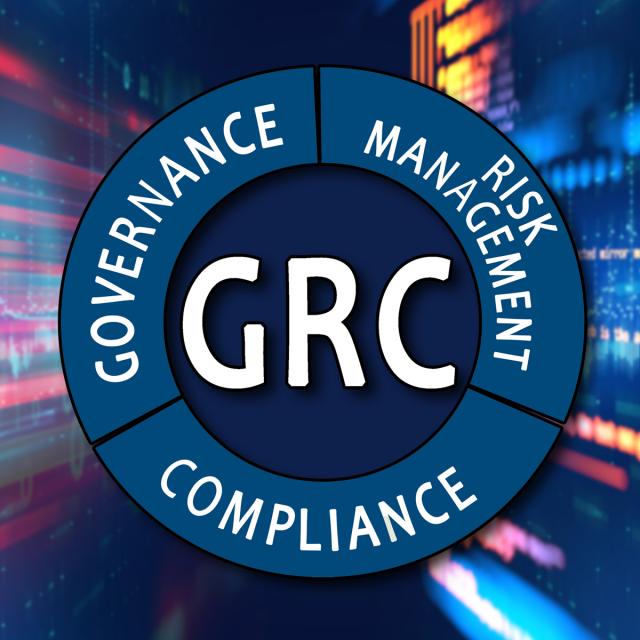
Managing cybersecurity is about managing risk, specifically the risk to information assets of valued by an organization. This course examines the role of Governance, Risk Management, and Compliance (GRC) as part of the Cybersecurity management process, including key functions of planning, policies, and the administration of technologies to support the protection of critical information assets.

Jul 27th 2026
5-12 Weeks
Career planning: Your career, your life (Coursera) Coursera
Macquarie University

Career planning: Your career, your life (Coursera)

Are you satisfied with your career? Where do you see yourself in the future? No matter where you are on your professional journey, careful planning will help you reach your goals. This course will help you adapt to rapidly evolving job markets by enhancing your self-knowledge and confidence to explore wider career opportunities.

Jul 27th 2026
5-12 Weeks
Successful Interviewing (Coursera) Coursera
University of Maryland, College Park

Successful Interviewing (Coursera)

The goal of hiring managers is not just to hire people who need a job. It’s to hire people who believe in their organization, its mission and the work that’s involved in the job position. Every hiring manager knows: Hire people to do a job and they’ll work for your money. Hire people who believe in the work and they’ll work for their passion. And this is not a case of “fake it until you make it.” You have to be genuine about your belief in an organization and its mission. That means you have to have researched the industry, the company, and the position – and be able to show how your goals in life align with the company’s mission.

Aug 3rd 2026
5-12 Weeks
Software Developer Career Guide and Interview Preparation (Coursera) Coursera
IBM

Software Developer Career Guide and Interview Preparation (Coursera)

This course is designed to prepare you to enter the job market as a software developer. It provides guidance about the regular functions and tasks of developers, as well as the opportunities of the profession and some options for career development. It explains practical techniques for creating essential job-seeking materials such as a resume and a portfolio, as well as auxiliary tools like a cover letter and an elevator pitch.

Aug 10th 2026
3 Weeks
The Cybersecurity Culture Blueprint: A Proactive Approach (Coursera) Coursera
LearnQuest

The Cybersecurity Culture Blueprint: A Proactive Approach (Coursera)

In today's rapidly evolving digital landscape, the importance of cybersecurity cannot be overstated. Threats to organizations, both large and small, are on the rise, and the consequences of security breaches can be devastating. It's no longer enough to rely solely on technical solutions; a resilient cybersecurity culture is essential.

Aug 3rd 2026
4 Weeks
Gobierno Digital (Coursera) Coursera
Inter-American Development Bank - IDB

Gobierno Digital (Coursera)

La revolución digital ya está presente en muchos aspectos de nuestra vida, ¿y en nuestros gobiernos? Para seguir el ritmo de ciudadanos hiperconectados y del comercio que ahora es cada vez más digital, los gobiernos no se pueden quedar atrás. Muchos países tienen un alto nivel de interés: el 75% de gobiernos ya cuentan con una estrategia de gobierno digital. Sin embargo, estos esfuerzos no se han traducido a la práctica ya que, en 2017, solo el 7% ciudadanos latinoamericanos hizo un trámite en línea.

Aug 10th 2026
4 Weeks