Cultural Heritage and the City (FutureLearn)

Cultural Heritage and the City (FutureLearn)

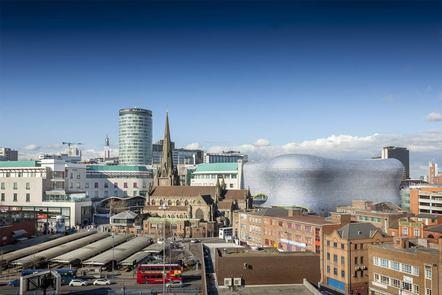
Discover how cities develop their own unique cultures and explore key concepts related to cultural heritage. Cultural heritage is usually discussed in national or religious terms: we speak of Italian culture, Greek civilization, Islamic art, and so on. But today cities are creating their own heritage through museums, galleries, markets of artistic goods, and urban networks.

Class Deals by MOOC List - Click here and see FutureLearn's Active Discounts, Deals, and Promo Codes.

Cities project themselves as cultural hubs representing and connecting entire regions, for example Doha and the UAE, Singapore and Southeast Asia, Los Angeles and North America.
Using these and other examples, through this course you’ll explore exactly what is meant by urban cultural heritage and key concepts related to it.

Syllabus

Week 1: Cultural Heritage in an Urbanising World
Week 2: The Governance of Heritage
Week 3: Heritage and Urban Change

What will you achieve?
By the end of the course, you'll be able to...

  • Explain what cultural heritage is, its different types and how it has emerged as an area of public policy
  • Identify the key actors of cultural heritage governance
  • Evaluate the impacts of cultural heritage projects on cities
  • Explain the tensions between urban development and cultural heritage
  • Compare the governance of heritage in different cities or countries

Who is the course for?
This course is for anyone interested in cultural heritage and cities, but it might be of particular interest to students of archaeology, sociology, and related subjects; urban practitioners like planners and community activists; or cultural heritage professionals like those working in tourism.

Go to Class
MOOC List is learner-supported. When you buy through links on our site, we may earn an affiliate commission.

Related Courses

Global Geordies: The North East of England and the World (FutureLearn) FutureLearn
Northumbria University Institute of the Humanities

Global Geordies: The North East of England and the World (FutureLearn)

Get an introduction to the hidden history, culture and people of the North East of England. Where was the light bulb invented? What about the first steam locomotive, or hydroelectricity? They were all invented in the North East of England. This course introduces you to the historical, technological and cultural connections between the people and places of the North East and the wider world.

No sessions available
5-12 Weeks
Bringing Urban Nature Into the Cities of Tomorrow (FutureLearn) FutureLearn
RMIT University,EIT Community

Bringing Urban Nature Into the Cities of Tomorrow (FutureLearn)

Learn why bringing nature into cities is essential for future urban planning, and how to do it successfully. See how nature can protect cities against extreme weather and other threats. There are many challenges facing cities today, including rapid population growth, climate change, extreme weather threats, food security, and the social and economic impact that these issues bring. This course from RMIT will show you how effective urban nature can be in overcoming these challenges.

Self Paced
2 Weeks
Political Economy of Institutions and Development (Coursera) Coursera
Leiden University

Political Economy of Institutions and Development (Coursera)

This course is part of the SDG initiative addressing the UN Sustainable Development Goals, specifically for the following SDGs [1, 8, 10 and 16]. We hope you will join in our efforts to reach the SDG’s in small but measurable and actionable ways, cooperating with Development Done Differently. Expand your impact. You can create a better world. In today’s world, politics and economics are interconnected, but what is the nature of this connectivity?

Sep 21st 2026
5-12 Weeks
Management of International Development: Towards Agenda 2030 (Coursera) Coursera
Università Bocconi

Management of International Development: Towards Agenda 2030 (Coursera)

Welcome! This course provides participants with the opportunity to explore the multifaceted concept of international development in order to be able to interpret and lead its challenges, opportunities and constant evolutions. Starting from an in-depth analysis of the current international development architecture, its key actors and trends, the course then illustrates the main international organizations' governance systems; identifies their funding and financing tools necessary to implement development programs and achieve sustainable development goals; and explains how to effectively leverage on human capital to drive organizational success and be ‘fit for purpose’ in an ever changing international development scenario.

Sep 14th 2026
5-12 Weeks
Cultures and Identities in Europe (FutureLearn) FutureLearn
European University Institute - EUI

Cultures and Identities in Europe (FutureLearn)

What does it mean to be European? Discover European cultures, identities and policies with this course. What is European identity? What do we understand and promote as European culture? On this course you will answer these questions and others as you critically consider the formation of diverse identities and cultures in Europe.

Oct 3rd 2022
3 Weeks
Culture in the Digital Age (FutureLearn) FutureLearn
European University Institute - EUI

Culture in the Digital Age (FutureLearn)

How has the cultural sector been affected by technology? Has tech created new opportunities? Get answers with this course. Explore the affects of digital technology on the cultural sector. In the last two decades, the cultural sector has undergone a radical transformation due to the rise of new media technologies. The digital revolution has radically transformed the daily practice of international cultural relations.

Nov 14th 2022
3 Weeks
Enlightening the Dark Ages: Early Medieval Archaeology in Italy (FutureLearn) FutureLearn
University of Padova

Enlightening the Dark Ages: Early Medieval Archaeology in Italy (FutureLearn)

Learn what innovative methods and tools applied to the material culture of the past can tell us about the Early Middle Ages. Discovering the cultural heritage of Medieval Europe through archaeology On this archaeology course, you will explore what we can learn about the past through material culture. It focuses on the history of Medieval Europe, from the end of the Roman Empire in the West.

Self Paced
4 Weeks
Chinese Politics Part 2 - China and the World (Coursera) Coursera
The Hong Kong University of Science and Technology - HKUST

Chinese Politics Part 2 - China and the World (Coursera)

One of the most significant changes in the world in the past 30 years is the opening of China to the outside world and its engagement with that world. In the initial years of the opening, external forces influenced China’s economy, regional balances, bureaucracy, as well as the political authority of local leaders in the coastal areas.

Sep 14th 2026
5-12 Weeks
New Zealand History, Culture and Conflict: A Museum Perspective (FutureLearn) FutureLearn
Museum of New Zealand Te Papa Tongarewa

New Zealand History, Culture and Conflict: A Museum Perspective (FutureLearn)

Discover the social history of Aotearoa New Zealand, learning how the country’s bicultural national consciousness was formed. Identify the factors that have contributed to New Zealand’s cultural identity. New Zealand’s social history is built on a foundation of exploration and colonial conflict. On this three-week course, you’ll access artefacts, treasures, and exhibitions within Te Papa Tongarewa’s collections to discover how New Zealand culture has evolved over time, identifying key historical moments that have impacted the formation of a national identity.

Self Paced
3 Weeks
Introduction to Intercultural Studies: Language and Culture (FutureLearn) FutureLearn
University of Leeds

Introduction to Intercultural Studies: Language and Culture (FutureLearn)

Explore intercultural communication by understanding the relationship between language and cultural identity. Examine the relationship between language, nationality and cultural identity. On this course you will analyse why language is a social construction and examine how it relates to cultural identity.

Self Paced
2 Weeks